
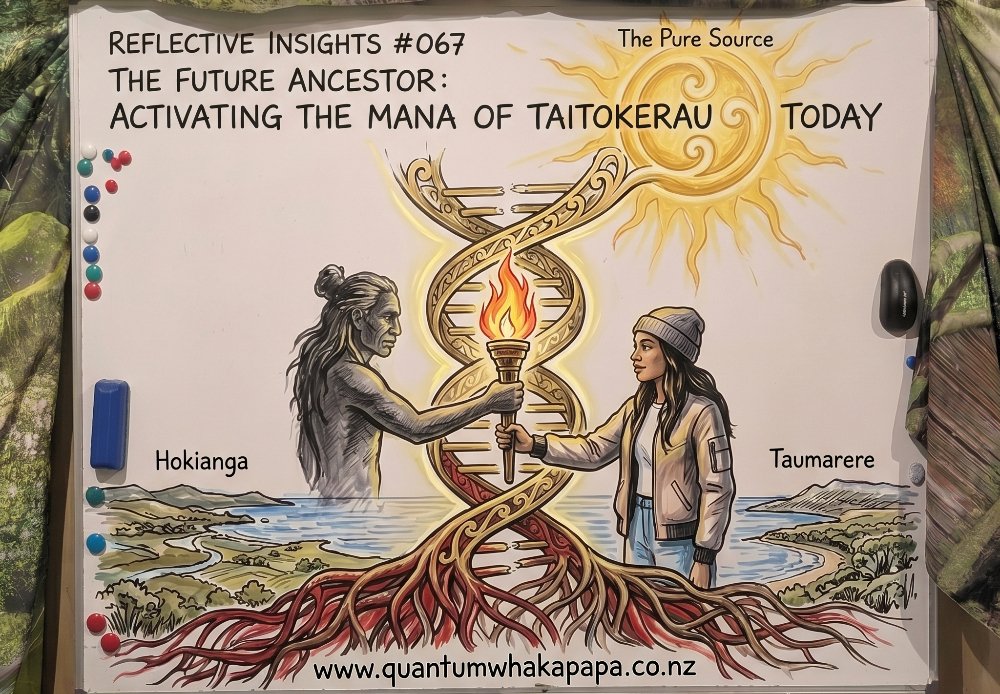
REFLECTIVE INSIGHTS #067 - THE FUTURE ANCESTOR: ACTIVATING THE MANA OF TAITOKERAU TODAY
The Moment of Choice
We have spent weeks walking alongside the brilliant leaders, grandmothers, scholars, and navigators of our past. As Tāngata whenua, born, raised, and living in Taitokerau, we know these stories are not dusty relics in a museum. They are the living blueprints for our lives today. Now, we arrive at the most important realisation of our entire journey: we are the future ancestors. The choices we make right now in our local shops, our homes, and our marae will decide the world our grandchildren inherit. It is time to clear away the political BS of dependency and activate the natural abundance that has always belonged to the North.
For generations, outside systems have tried to force our region into a framework of artificial scarcity. We have been taught to look at our communities through a lens of struggle, waiting for top-down government funding or bureaucratic permission to fix our neighbourhoods. But true local action doesn’t look outward to the system for answers; it looks inward to the grassroots. When we ground ourselves in the absolute reality of whanaungatanga, we realise that our well-being is entirely relational. If the soil is healthy, the water is clear, and the people are united, there is no corporate greed or extractive system that can drain our collective life force.
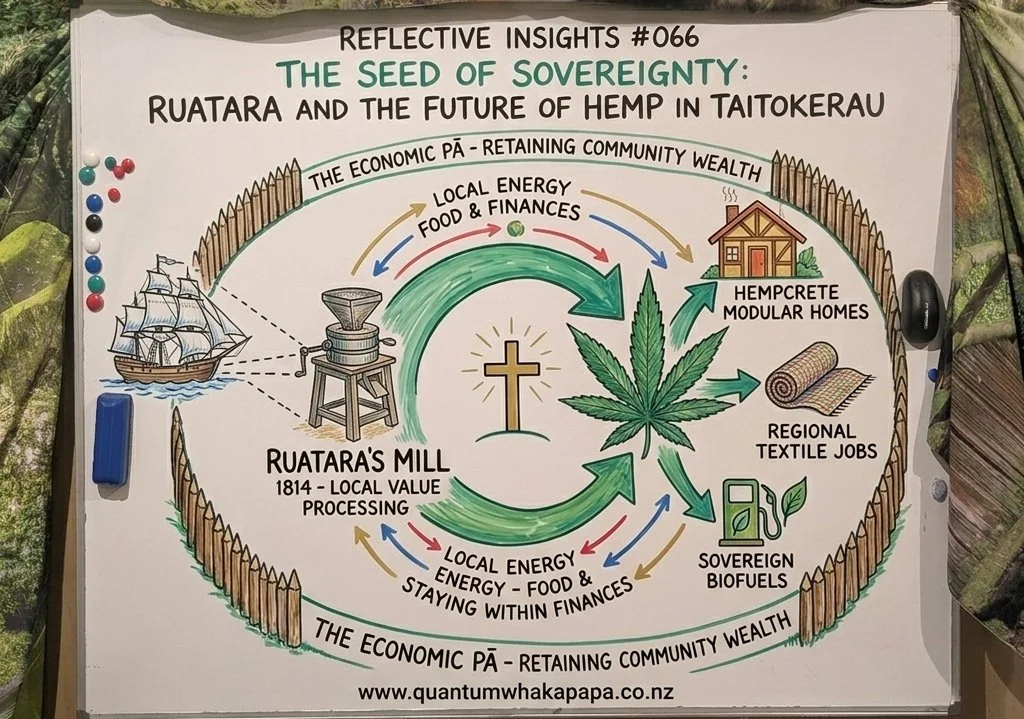
REFLECTIVE INSIGHT #066 - THE SEED OF SOVEREIGNTY: RUATARA AND THE FUTURE OF HEMP IN TAITOKERAU
A Vision of Abundance
When we walk upon the whenua of Te Tai Tokerau, we are walking on land destined for abundance. Real progress does not come from waiting for central government handouts or large offshore corporations to invest in our towns. It begins at the roots, right in the soil, through the collective action of our whānau, hapū, and iwi. For too long, our local economy has relied on sending our raw resources away, while our families miss out on the long term benefits. True equity is about how the pie is shared, ensuring that our social investment creates a lasting return for the community. The blueprint for this self-reliance was given to us generations ago by our ancestors, who understood that our environment and our well-being are completely intertwined.
To anchor our agricultural path forward, we look to the original instructions of creation left for us in the sacred scriptures:
"And God said, 'Behold, I have given you every herb yielding seed, which is on the surface of all the earth, and every tree, which bears fruit yielding seed; to you it shall be for meat.'" - Ethiopian Orthodox Bible (Genesis 1:29)
Ge'ez text: ወይቤሎሙ፡ እግዚአብሔር፡ ናሁ፡ ወሀብኩክሙ፡ ኵሎ፡ ሣዕረ፡ ዘይዘራዕ፡ ዘርአ፡ ዘውስተ፡ ኵሉ፡ ገጸ፡ ምድር፡ ወኵሎ፡ ዕፀወ፡ ዘቦቱ፡ ፍሬ፡ ዘርዕ፡ ዘይዘራዕ፡ ለክሙ፡ ይዅን፡ መብልዕ።
Te Reo Maori, Paipera Tapu, 1868 translation: A i mea te Atua, Na, kua hoatu e ahau ki a koutou nga otaota katoa e whai hua ana, i runga i te mata o te whenua katoa, me nga rakau katoa, he hua rakau tona huri e whai hua ana; hei kai ma koutou.
The Legacy of Ruatara
We carry a proud history of innovation in the North. We see this clearly in the story of Ruatara, a visionary young Ngāpuhi leader from the Bay of Islands. In the early 1800s, Ruatara traveled the world on whaling ships, enduring incredible hardships, starvation, and severe mistreatment from dishonest captains. Despite these trials, his heart remained fixed on the prosperity of his people. He spent months studying European farming techniques, carpentry, and practical trades. When he finally returned to Rangihoua around 1812, he brought with him tools and precious seed wheat, determined to establish a self-sustaining food supply and a valuable export crop for the North.
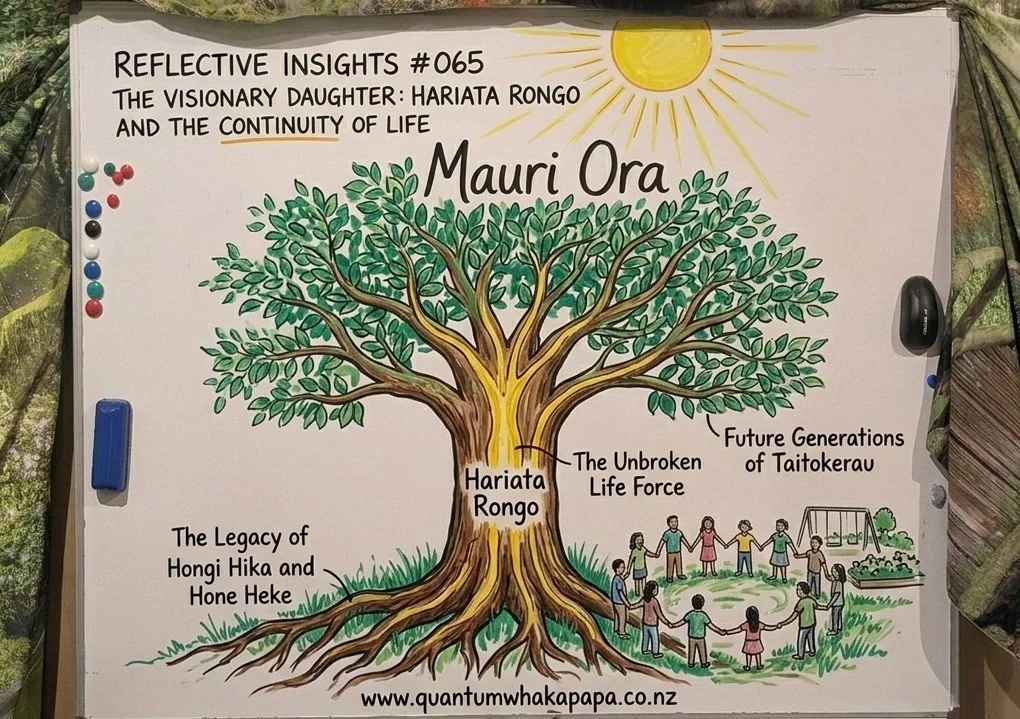
REFLECTIVE INSIGHTS #065 - THE VISIONARY DAUGHTER: HARIATA RONGO AND THE CONTINUITY OF LIFE
The Strength of the Daughter
When we look at the history of the North, we often focus on the names of the great chiefs who led the battles. But as people born, raised, and living in Taitokerau, we know that the true strength of our people is found in the family lines that keep our spirit alive through generations. Today, we are looking at Hariata Rongo, the visionary daughter of the famous chief Hongi Hika. She lived through times of massive upheaval, war, and change, yet she stood as a pillar of strength. Her life teaches us about continuity, the beautiful truth that no matter how many storms hit our family tree, the life force keeps flowing forward.
Keeping the Flame Alive
Hariata Rongo was not just the daughter of a great leader; she was a powerful leader in her own right. She married the influential chief Hōne Heke, bringing together two incredible family lines of the North. She understood that while a single generation might face wars and political arguments, the real work of a woman is to make sure the family line remains unbroken. She was incredibly practical and filled with foresight. She knew that when a community gets distracted by outside arguments and chaos, it is the quiet strength of the home that keeps the people safe. This ability to protect the family and keep the fire burning mirrors the beautiful pattern of Ihu (Yeshua), who came to give us life, and life in total abundance.
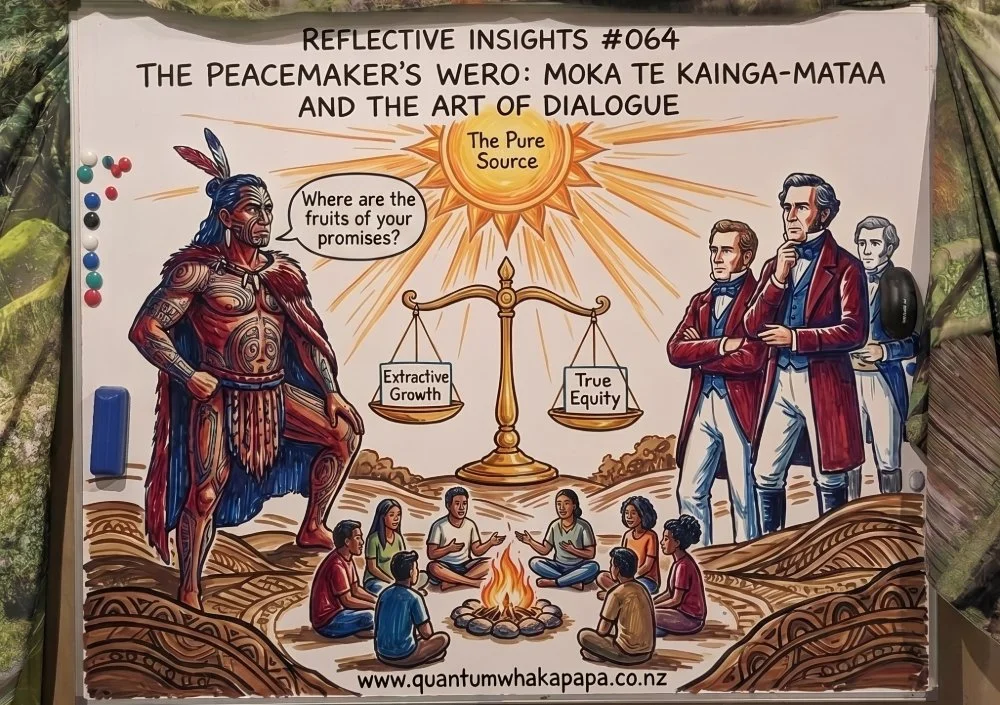
REFLECTIVE INSIGHTS #064 - THE PEACEMAKER’S WERO: MOKA TE KAINGA-MATAA AND THE ART OF DIALOGUE
Standing Firm on Truth
When you look closely at the true history of Taitokerau, you quickly realise that our greatest victories didn’t come from staying quiet or backing down to keep the peace. The real turning points for our people always happened right on the grassroots soil of the marae, where bold, unfiltered truth was spoken straight into the face of raw power. Today, we are leaning into the fierce legacy of Moka Te Kainga-mataa, the great Patukeha chief who looked past the smooth talking colonial promises at Waitangi in 1840 and demanded an honest audit of the system before anyone dared to sign a piece of paper.
Channelling the True Signal
Moka stood up in front of Governor Hobson and famously questioned the smooth-talking promises being made. He pointed out the pre-existing land purchases and actions of European settlers that had already left his people squeezed. Moka was not trying to cause conflict, he was practicing the art of dialogue, holding a mirror up to power to see if the actions matched the words. This level of visionary pragmatism is exactly what we need today. It directly matches the model left to us by Ihu (Yeshua's name in the Paipera Tapu), who walked into spaces of intense systemic pressure and always prioritised the weightier matters of justice, mercy, and truth.
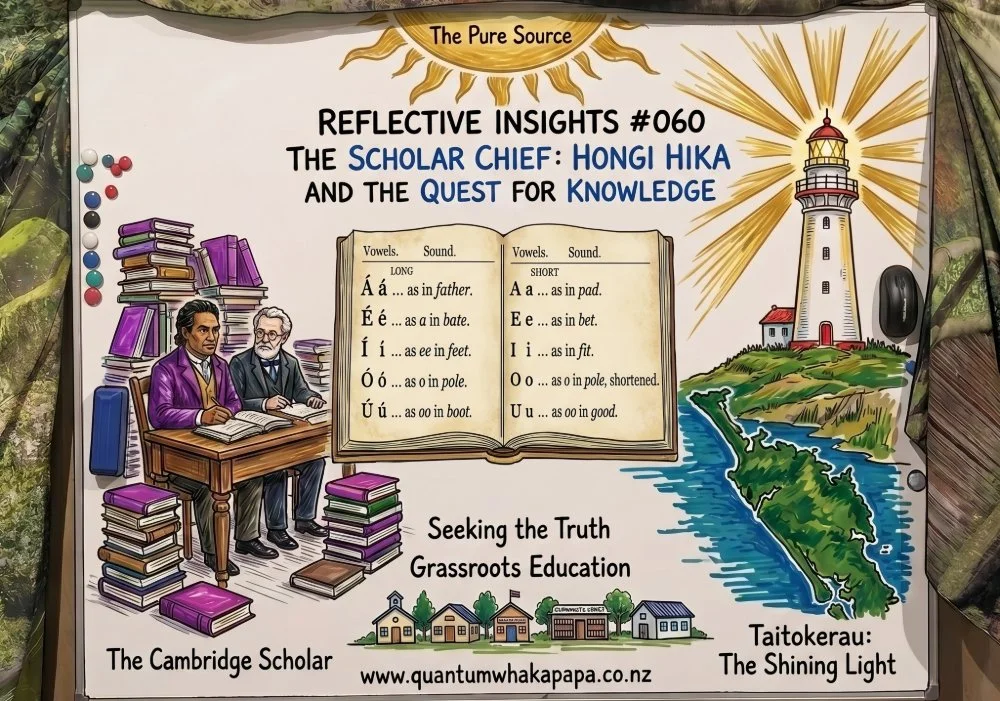
REFLECTIVE INSIGHT #060 - THE SCHOLAR CHIEF: HONGI HIKA AND THE QUEST FOR KNOWLEDGE
A Mind For Learning
When people talk about the great Ngāpuhi chief Hongi Hika, they usually talk about muskets and battles. History books often paint him as just a fierce warrior who wanted to conquer his enemies. But there was another side to Hongi Hika that people rarely mention. He was an incredibly smart man with a deep hunger for learning. He understood that true power doesn’t come from weapons, it comes from knowledge, literacy, and understanding how the world works.
The Cambridge Journey
In 1820, Hongi Hika made the long journey across the ocean to England. He went there to see the world, but also to bring back tools that could help his people thrive. While he was there, he did something amazing. He went to Cambridge University and worked with a clever professor named Samuel Lee. Together, they spent weeks sitting down and figuring out how to turn the spoken sounds of Te Reo Māori into written words on paper. Hongi Hika was the main architect behind the first Māori grammar book and dictionary. He was a scholar chief, using his brilliant mind to preserve our language for future generations.
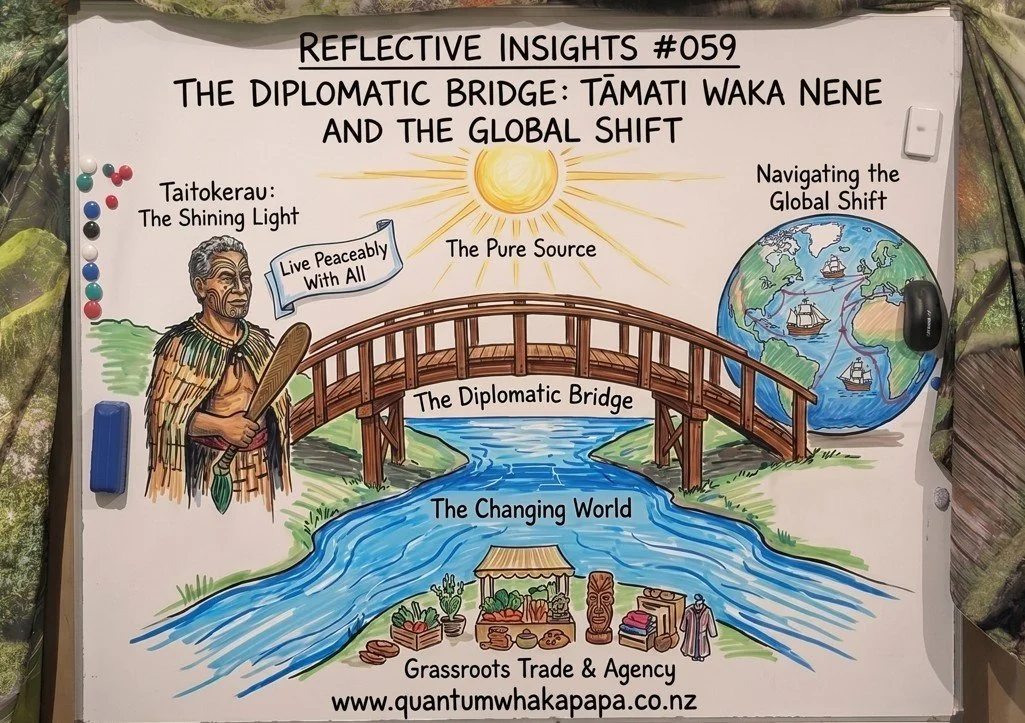
REFLECTIVE INSIGHT #059 - THE DIPLOMATIC BRIDGE: TĀMATI WAKA NENE AND THE GLOBAL SHIFT
The World is Changing
When we look at our history in Taitokerau, we see moments where the whole world shifted. Our old people did not live in a bubble, they saw huge changes coming across the ocean. Today, we look at Tāmati Waka Nene, a paramount chief of Ngāti Hao from the Hokianga. He was a man who understood that change was inevitable. He did not run away from it, and he did not just fight it. Instead, he chose to become a diplomatic bridge, helping our people navigate a massive global shift.
A Path for Safety
Waka Nene was a very powerful leader and a brave warrior, but he was also a pragmatic thinker. By the time 1840 arrived, he saw that European traders, whalers, and settlers were arriving in large numbers. He realised that without some kind of law and order, there would be chaos on the land. When he spoke at the signing of Te Tiriti o Waitangi, he argued that having a Governor would protect our whānau from lawless outsiders. He chose to look at the big picture, trying to find a safe way for our people to trade and grow in a changing world.
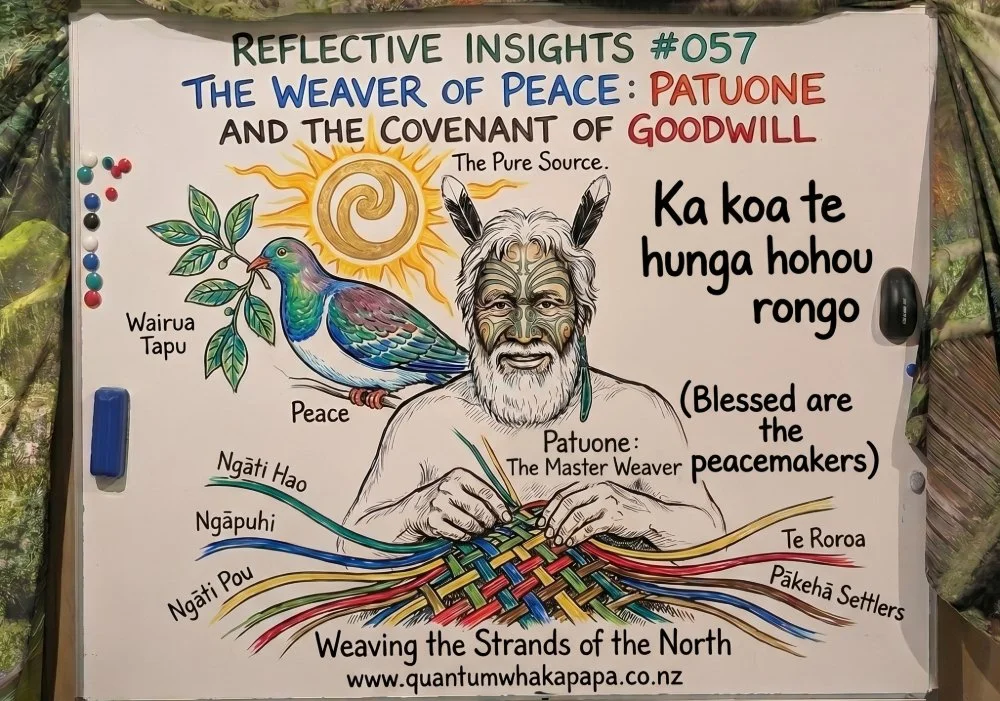
REFLECTIVE INSIGHT #057 - THE WEAVER OF PEACE: PATUONE AND THE COVENANT OF GOODWILL
The Peacemaker’s Heart
As we keep walking through the lives of our great ancestors, we come to a man who spent his entire life building bridges. Eruera Maihi Patuone was a paramount chief of the Hokianga and the older brother of Tāmati Waka Nene. He lived a very long life, witnessing the arrival of the first Europeans right through to the late 1800s. While some leaders are remembered mostly for their skill in battle, Patuone is remembered for something even more powerful, his absolute dedication to peace, love, and goodwill to all people.
Weaving the Strands
Patuone was a master at weaving people together. He understood that fighting and division only drain the life out of a community. Whenever there was trouble between different hapū, or between Māori and the new Pākehā settlers, Patuone would step into the middle of the conflict. He did not do this out of weakness. He was a brave warrior, but he chose to use his mana to create safety and harmony. He looked at the world as a place where everyone should have a fair share of the pie, realising that a community can only flourish when there is peace.
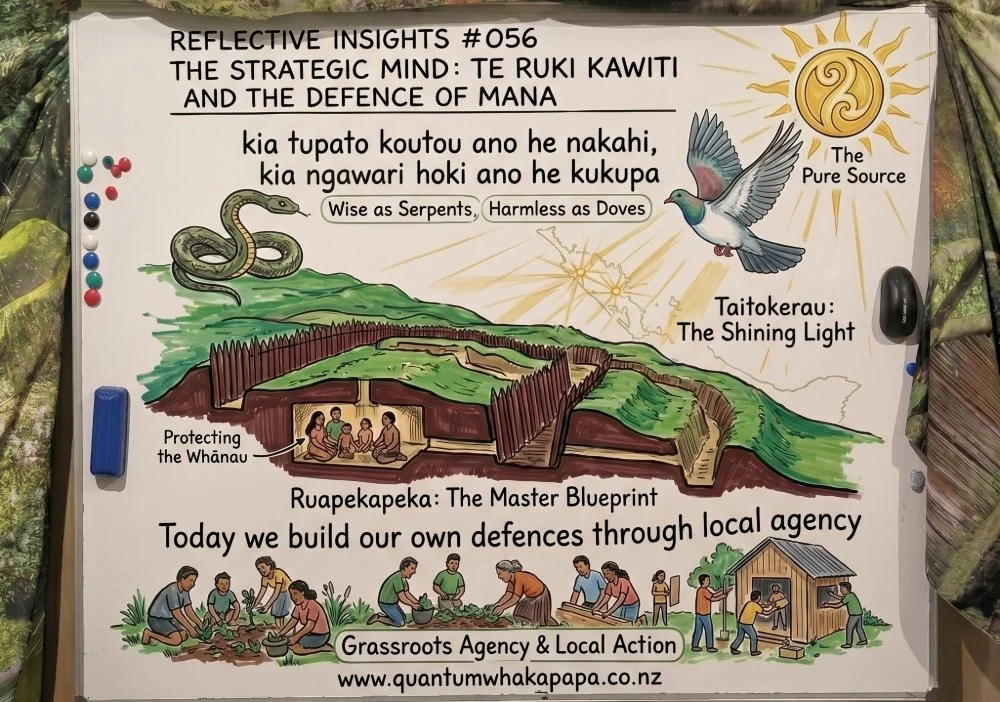
REFLECTIVE INSIGHT #056 - THE STRATEGIC MIND: TE RUKI KAWITI AND THE DEFENCE OF MANA
The Master Planner
As we journey deeper into the lives of our ancestors, we come to a man of quiet brilliance and incredible foresight. Te Ruki Kawiti, the great chief of Ngāi Hine, is often remembered alongside Hone Heke as a warrior. But Kawiti was much more than a fighter, he was a master planner. He possessed a strategic mind that understood how to protect the people, how to outsmart a bigger enemy, and how to preserve our mana when it was under direct attack.
A Shield for the Whānau
When the colonial government pushed its way into the North, Kawiti did not just rush into battle blindly. He looked at the heavy weapons and the massive resource of the British military, what we recognise as the Babylonian system, and he designed a way to keep his people safe. He invented a brand-new type of fortress at places like Ōhaeawai and Ruapekapeka. He built deep underground bunkers, complex trenches, and thick walls made of puriri logs and flax. He did not build these to conquer others, he built them as a shield to protect the collective well-being of his whānau and hapū.
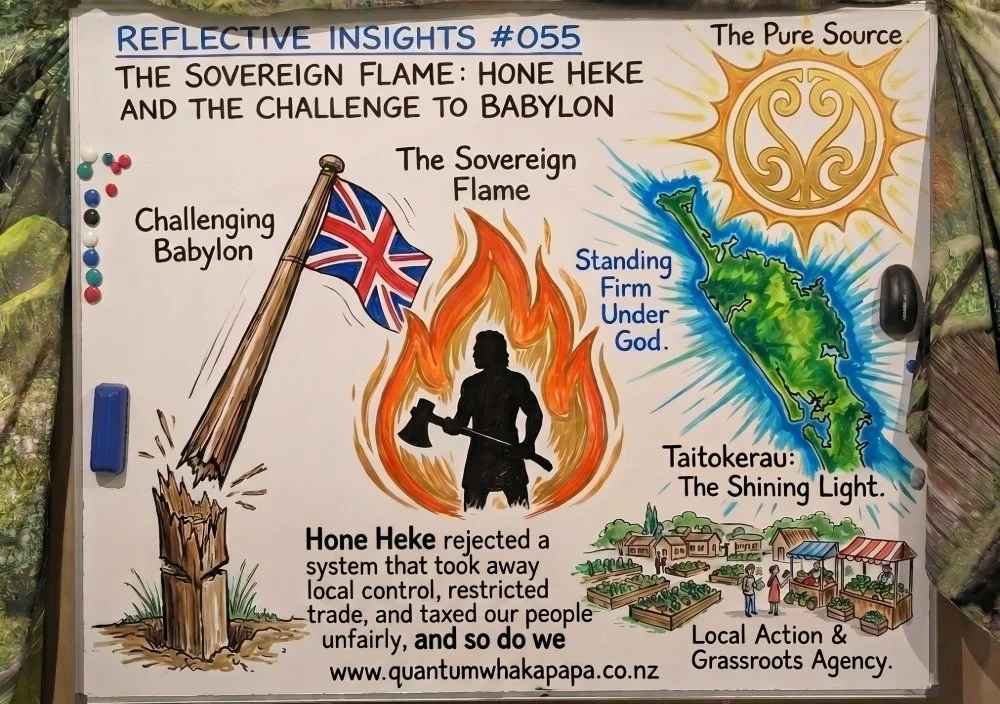
REFLECTIVE INSIGHT #055 - THE SOVEREIGN FLAME: HONE HEKE AND THE CHALLENGE TO BABYLON
The Fire Inside
We are continuing our walk through the lives of our great ancestors. Today, we look at Hone Heke Pōkai, a man whose name is known all over the world. When people think of Heke, they often think of an angry warrior chopping down a flagpole. But his story is much deeper than that. He carried what I call a sovereign flame, a bright fire in his heart for true freedom, peace, and the right of our people to look after themselves under the guidance of God.
The Broken Promises
Hone Heke was the very first chief to sign Te Tiriti o Waitangi in 1840. He signed it because he believed it was a sacred covenant that would protect the land and the people. But it did not take long for him to see the truth. The new colonial government began to set up a system that took away local control, restricted trade, and taxed our people unfairly. This is what we call the "Babylonian" system, a heavy setup that wants to control everything from the top down and squeeze out local agency. Heke saw through the political BS and decided he could not sit quietly.
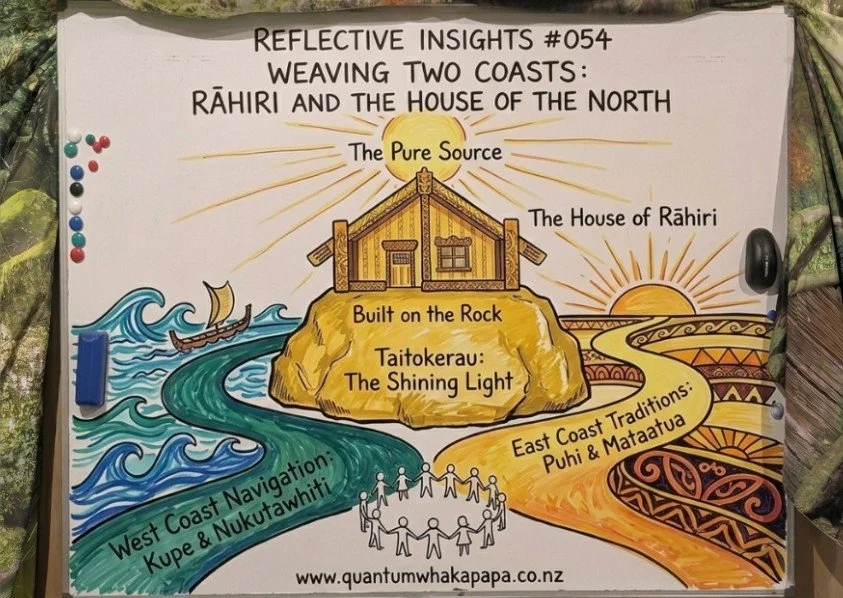
REFLECTIVE INSIGHT #054 - WEAVING TWO COASTS: RĀHIRI AND THE HOUSE OF THE NORTH
The Meeting of Rivers
When we look at the life of our great ancestor Rāhiri, we are looking at the very foundation of who we are as a people. He was born at Whiria pā, right near Opononi in the Hokianga. His life tells a story about bringing different worlds together. He wasn't just a leader of one small area, he was the bridge between the west coast and the east coast. The House We Live In
Rāhiri represents a beautiful coming together of family lines. His father, Tauramoko, descended from Kupe and Nukutawhiti, the great ocean navigators of the west. His mother, Te Hauangiangi, was the daughter of Puhi, the captain of the Mataatua canoe from the east. Because he carried the blood of both sides, he became the anchor for all of us. There is an old saying in the North that reminds us of this truth: “Mehemea he uri koe no Ngāpuhi, kahore koe i heke ia Rāhiri, he hoiho koe! “ (If you are Ngāpuhi and do not descend from Rāhiri, then you are a horse!) He built the house that shelters all our families today.
A Firm Foundation
To build a house that lasts for hundreds of years, you need a foundation that cannot be shaken. This is a law that comes from the highest place. Ihu (Yeshua's name in the Paipera Tapu) taught us that the strength of any structure depends entirely on what it is built upon. If we build our communities on pride or division, they will wash away when the storms come. But if we build on love, unity, and shared identity, we stand firm.
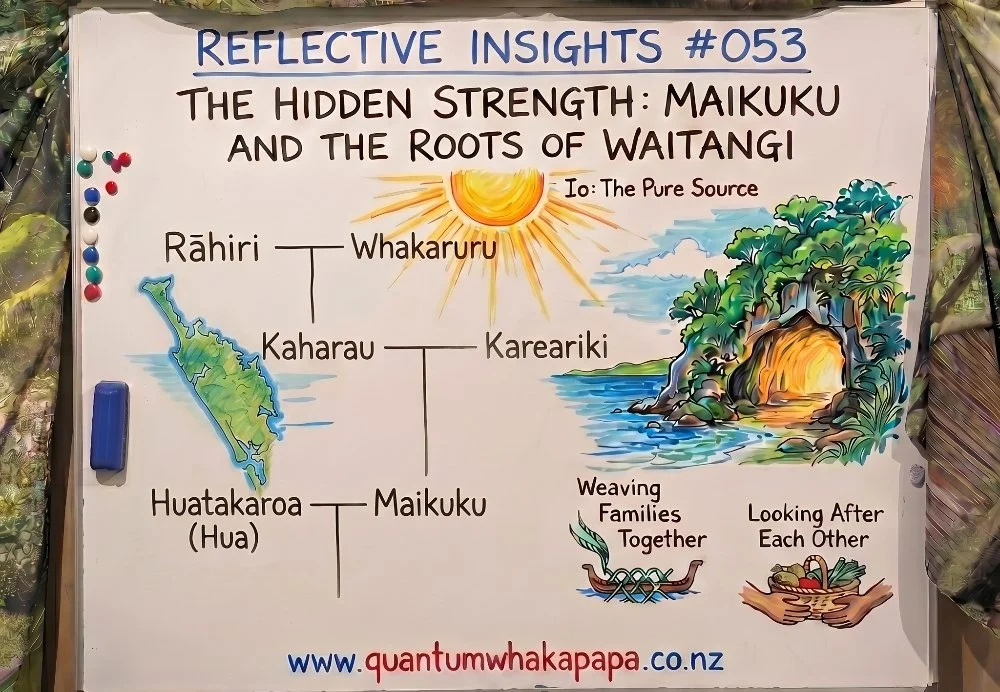
REFLECTIVE INSIGHT #053 - THE HIDDEN STRENGTH: MAIKUKU AND THE ROOTS OF WAITANGI
Learning From Our Past
To understand where we are going in the North, we have to look at the ground we stand on. Our dream of a better life for our kids isn’t something we need to copy from overseas. It is already here, hidden in the stories of our old people. We start this journey by looking at Maikuku. She was a woman of high rank and the granddaughter of the great leader Rāhiri. Her story shows us how different groups of people can come together to build one strong family.
The Power of Quiet
Maikuku lived in a cave at Waitangi, known as Te Ana o Maikuku. Because she was so special and carried a high level of tapu, she stayed in this quiet place. Today, we are always busy and surrounded by noise. We think we have to be loud to be important. But Maikuku reminds us that there is a special kind of strength that grows when we are quiet and still. It is like when Ihu (Yeshua's name in the Paipera Tapu) went away from the crowds to pray. He knew that to lead people, you first have to connect with the Spirit.
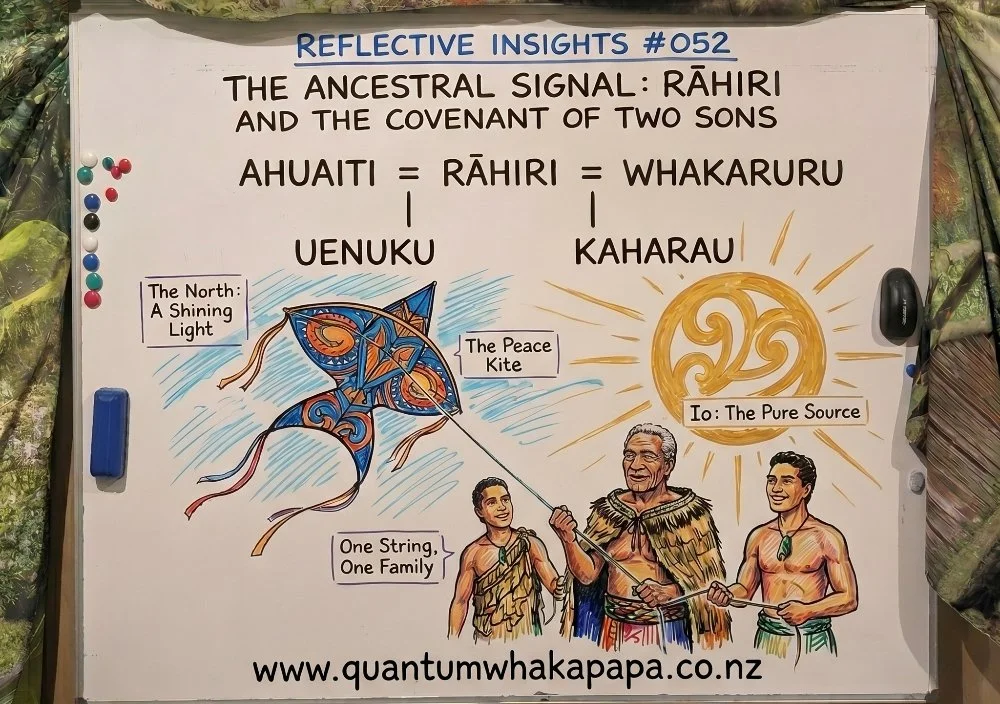
REFLECTIVE INSIGHTS #052 - THE ANCESTRAL SIGNAL: RĀHIRI AND THE COVENANT OF TWO SONS
Finding Our Way Home
The world can be a very confusing place lately, with so much noise and fighting. It feels like we are losing our way. This series is about tuning out that noise and listening to the wisdom our ancestors left for us. I call this the "Ancestral Signal." It is a way of living that is already in our blood. By looking at our Ngāpuhi tupuna, we aren't just talking about history, we are looking for the map that shows us how to build a better life for our whānau right here in Taitokerau.
Where it all Began
Everything for us starts with Rāhiri. He is the father of Ngāpuhi. He was a great leader because he knew how to bring different groups of people together. He didn't try to make everyone the same, but he showed them how to live as one big family. He understood that if we want the North to be a "shining light" to the world, we first have to make sure our own foundations are strong. This lesson was most clear when he dealt with his two sons, Uenuku-kuare and Kaharau.
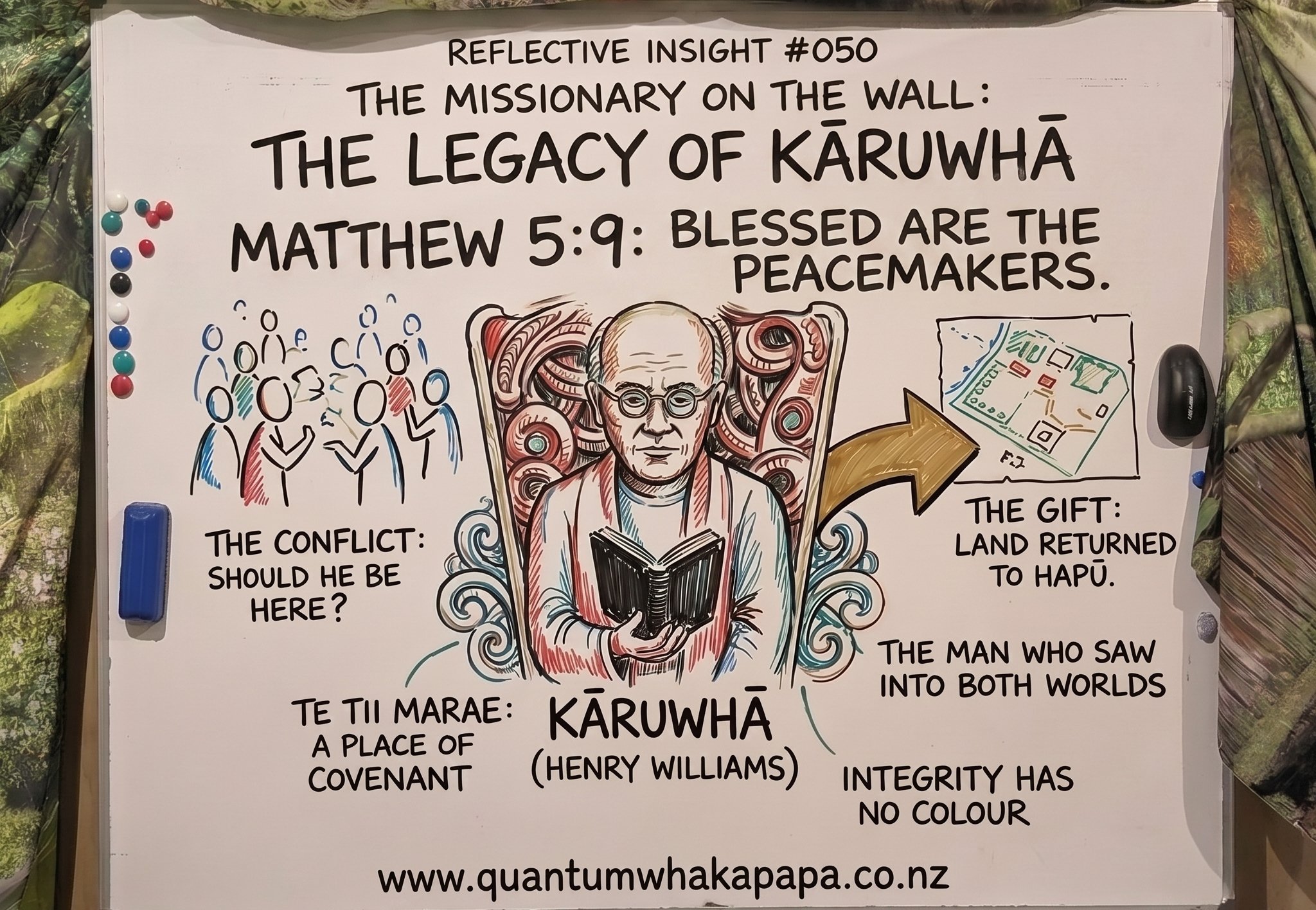
REFLECTIVE INSIGHT #050 - THE MISSIONARY ON THE WALL: THE LEGACY OF KĀRUWHĀ
A Personal Discovery
Kia ora. Even though I was born and raised right here in Taitokerau, I only had my first pōwhiri onto Te Tii Marae last month. It was a huge privilege to finally stand in that space and learn about the history and the conflict surrounding a very specific carving.
When you walk into the wharenui at Te Tii, your eyes are often drawn to the back wall. Sitting in a place of great honour is a carving of a bald Pākehā man with glasses, holding a Bible. For many, this is a point of debate. Why is a European man in a space usually reserved for Māori ancestors?
The Man Known as Kāruwhā
The man in the carving is the Reverend Henry Williams. Our ancestors called him Kāruwhā (Four Eyes) because of his glasses. He wasn’t just a visitor, he lived among Ngāpuhi for over 40 years. He was a translator, a peacemaker, and a man who navigated the difficult waters between the British Crown and the Rangatira of the North.
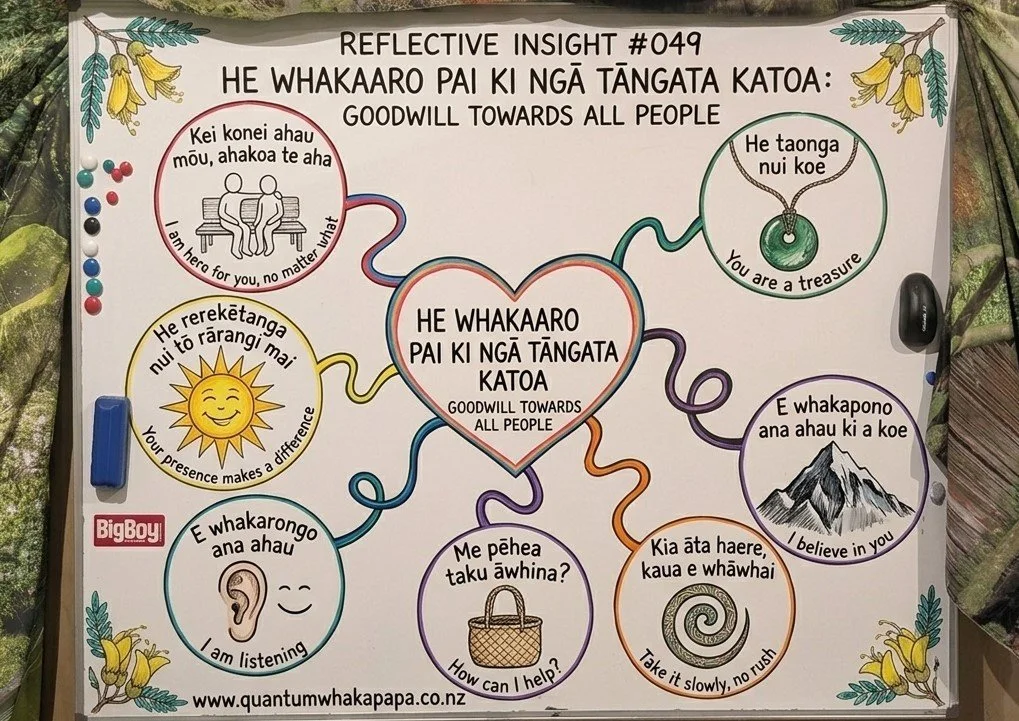
REFLECTIVE INSIGHT #049 - HE WHAKAARO PAI KI NGĀ TĀNGATA KATOA: GOODWILL TOWARDS ALL PEOPLE
Our Shared Connection
Everything in this world is tied together. From the soil beneath our feet to the stars above, we are all part of one big, woven family. Because we are so closely linked, the way we carry ourselves matters more than we might think. When we walk into a room with a heavy heart or an angry spirit, others feel it. But when we choose to have "He Whakaaro Pai," or good will, we bring a sense of peace that can actually help heal the people around us. It is about realising that our kindness is a gift we give to the whole community.
Looking Out for Others
Many of our whānau in the North are going through some pretty rough times right now. Some are struggling to make ends meet, while others are dealing with loneliness or a dark cloud over their mental health. In times like these, we can’t just wait for a big government plan to fix things. We have to look out for each other right here, in our own streets and homes. By being a positive light, we help lift the heavy weight off someone else's shoulders. We give them a safe place to just be themselves, which is the first step toward getting their strength back.
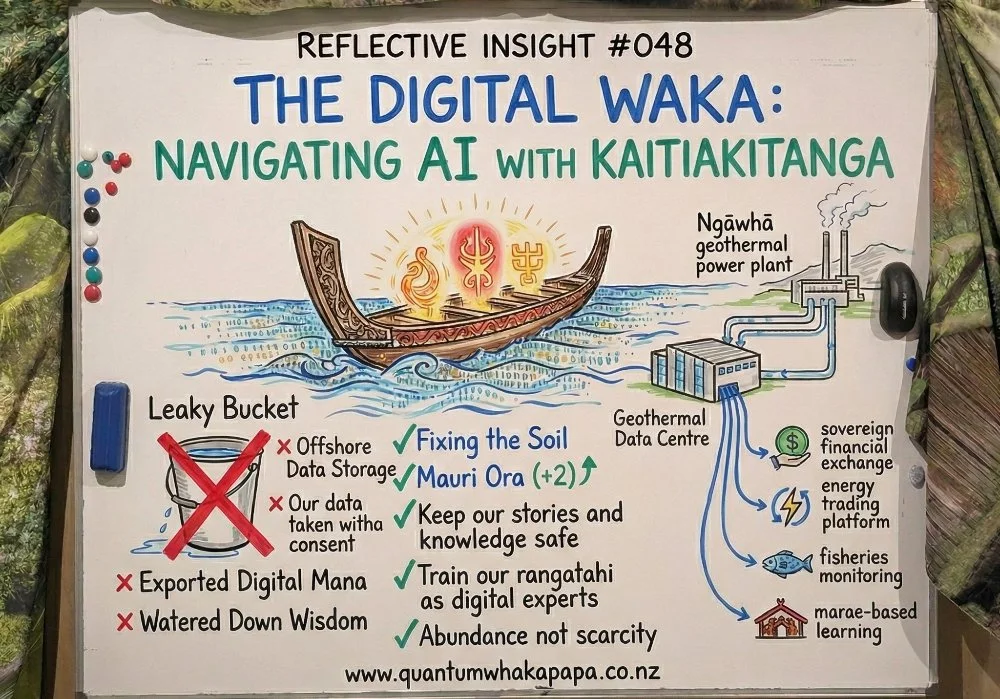
REFLECTIVE INSIGHT #048 - THE DIGITAL WAKA: NAVIGATING ARTIFICIAL INTELLIGENCE WITH KAITIAKITANGA
A Turning Point for Taitokerau
Our project defines the moment we are in as the Epistemological Singularity. While the sudden rise of artificial intelligence (AI) is a big part of it, this singularity is actually about something much deeper. It is a massive shift where the old colonial way of running the world is starting to break down, giving us a chance to bring our own ancestral logic and ways of living back to the centre. For nearly two hundred years, the system used in Aotearoa has treated the universe like a dead machine made of separate parts that can just be used for profit. This "Newtonian Error" has created a "Leaky Bucket" economy where our resources, our stories, and our life force (Mauri) are shipped overseas, leaving our communities struggling.
The Woven World
The research from our project shows that reality is actually a "Woven Universe" where everything is connected. This isn’t just a nice idea, it’s a physical fact of how the world works. If we look at science and our own understanding of whanaungatanga, we see that the health of the land and the digital mana of the people cannot be separated. AI is a powerful tool that can either speed up the loss of our cultural meanings or it can be a "Digital Waka," helping us carry our wisdom safely into the future.
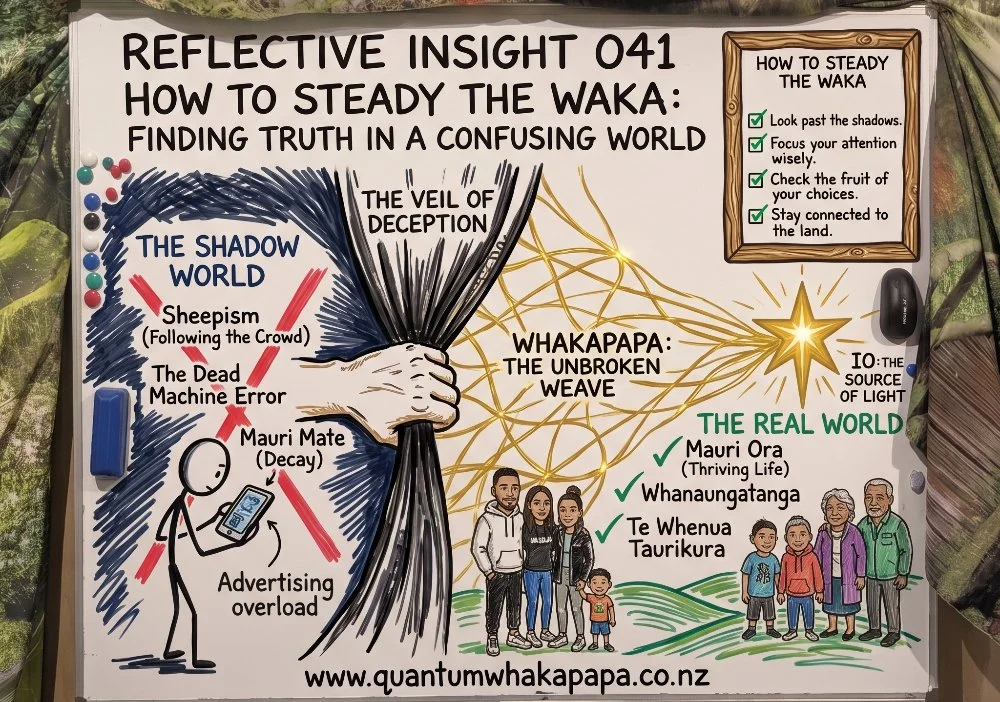
REFLECTIVE INSIGHT #041 - HOW TO STEADY THE WAKA: FINDING TRUTH IN A CONFUSING WORLD
Finding Your Balance
To truly heal our lives and look after our local communities here in the North, we must first be able to figure out what is actually real and true. Our latest research project serves as a practical, everyday guide to help us do exactly that. It shows that truth isn't just a list of cold, boring facts hidden away in an old textbook. Instead, truth is an active, living relationship, a blank canvas of endless possibilities that we help paint every single day through our personal choices and our connection to the divine Creator, Io.
This post offers a simple summary of how we can combine the hard facts of modern science with the deep spirit of our family roots (Whakapapa) to keep our boat steady when the world around us feels full of lies and distractions. This is a big, important foundation for our community, so please keep an eye out for a full series where I will unpack these discoveries even further very soon.
More Than Just Numbers on a Page
Most of us were taught in school to look at truth in a very rigid way. We were told that a statement is only true if it matches a cold, unfeeling statistic. But our research proves that finding the truth is never that stiff or mechanical. It is about building a strong web of healthy beliefs and understanding what actually allows our families to smile, grow, and thrive together in our local environment. For us here in the North, truth isn't a distant object to be watched through a window; it is something we experience firsthand by paying attention to the positive patterns of real life around us.
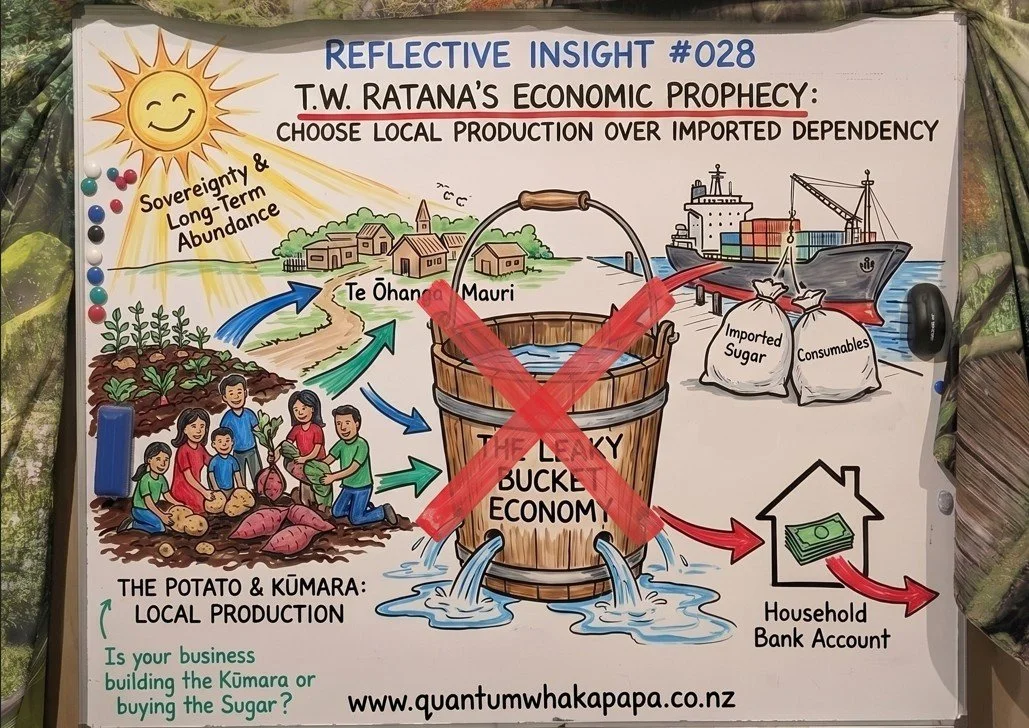
REFLECTIVE INSIGHT #028 - DON’T TRADE AWAY OUR LAND OR OUR FUTURE: T.W. RATANA’S POTATO, FLOUR, AND SUGAR WARNING
A Simple Warning for Our Survival
There’s a prophecy from the prophet T.W. Ratana that has been weighing heavily on my heart lately. On the surface, it sounds like a simple talk about groceries, but when you look closer, it’s a serious warning about the survival of our people.
Ratana warned his followers never to barter away their long-term future for cheap things that don’t last. He spoke of a time when our land, our actual life force, would be traded away for everyday items like "flour, sugar, potatoes," or "flour, sugar, tea, and tobacco." This wasn't just a lesson about what to keep in the kitchen pantry; it was a warning about how our local wealth slips right through our fingers. He saw a future where we would give up our ability to grow our own food and look after ourselves, trading it for cheap, imported goods that leave us empty in the end.
Making vs. Consuming
The way we look at things here in the North, the things we grow ourselves, like the potato or the kūmara, represent Indigenous Production. This is about what we plant, what we create, and the energy we keep within our own community borders. Growing our own food builds life and order. When we make things for ourselves, we are fixing the soil and ensuring that our well-being is in our own hands.
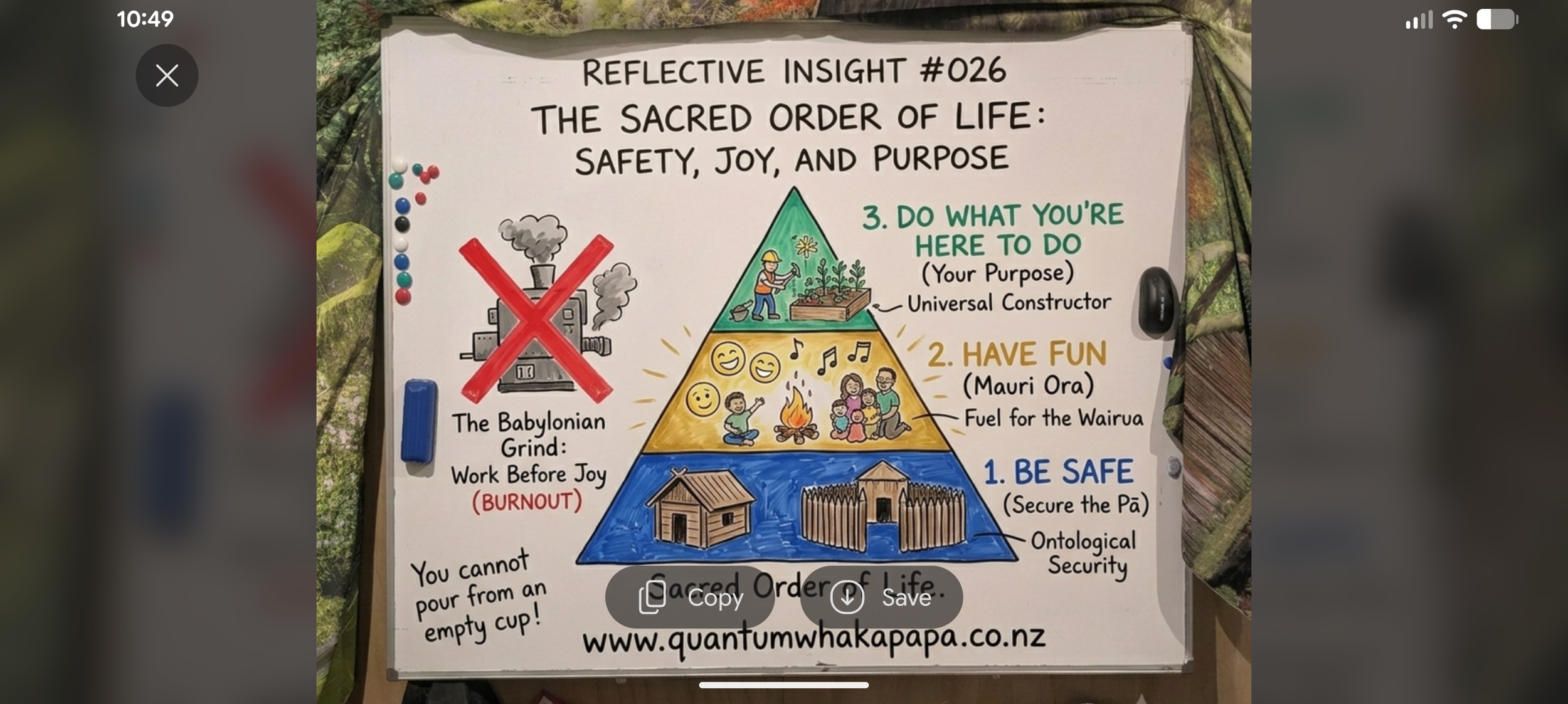
REFLECTIVE INSIGHT #026 - THE SACRED ORDER: SAFETY, FUN, AND PURPOSE
A Simple Rule for Life
Here is a deep truth that has been sitting on my heart lately, especially when I look at the heavy challenges facing our beautiful home in the North. This wisdom actually came from my youngest child, who was only eleven at the time. It is a incredibly simple rule of thumb for life, a hierarchy of basic human needs that our modern world constantly gets twisted:
1. Be safe.
2. Have fun.
3. Do what you are here to do.
The major hurdle we face today under the constant pressure of a cold, demanding system is that we frequently swap numbers two and three. We put the "grind" before our joy, and by doing that, we severely damage the very spirit, the wairua, that fuels our actual purpose in life.
1. Safety First
The very first step can never be negotiated: Be safe. In my ongoing research, I talk a lot about building the Economic Pā. Historically, the pā was a secure place of defense, shelter, and storage that ensured the long-term survival of the family group.
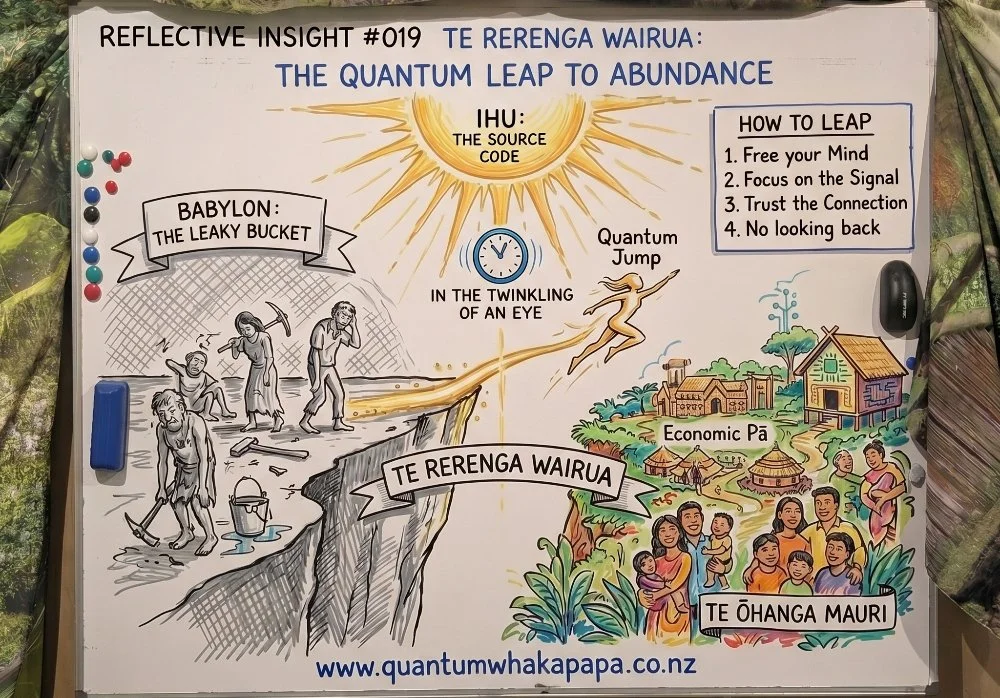
REFLECTIVE INSIGHT #019 - TE RERENGA WAIRUA AND THE QUANTUM LEAP
The Leaping Place
At the very top of the North, we have a place called Te Rerenga Wairua, the "Leaping Place of Spirits." It is a sacred spot where the Tasman Sea and the Pacific Ocean crash together. Our stories tell us this is where the spirit leaves this physical world and jumps into the next. But this isn't just a story about what happens when we die. It is a powerful metaphor for how we change our reality right now. In the North, we are standing at a "leaping place" in our history.
What is a Quantum Leap?
In modern science, there is a concept called a "quantum leap." Usually, when something moves from A to B, it has to travel through the space in between. But in the world of tiny atoms, something strange happens. An atom can "jump" from one state to another instantly, without ever being in the middle. It is a "now you're here, now you're there" moment. This is exactly what we need for Te Tai Tokerau. We don't just need small, slow improvements to a broken system; we need a jump into a completely new way of being.
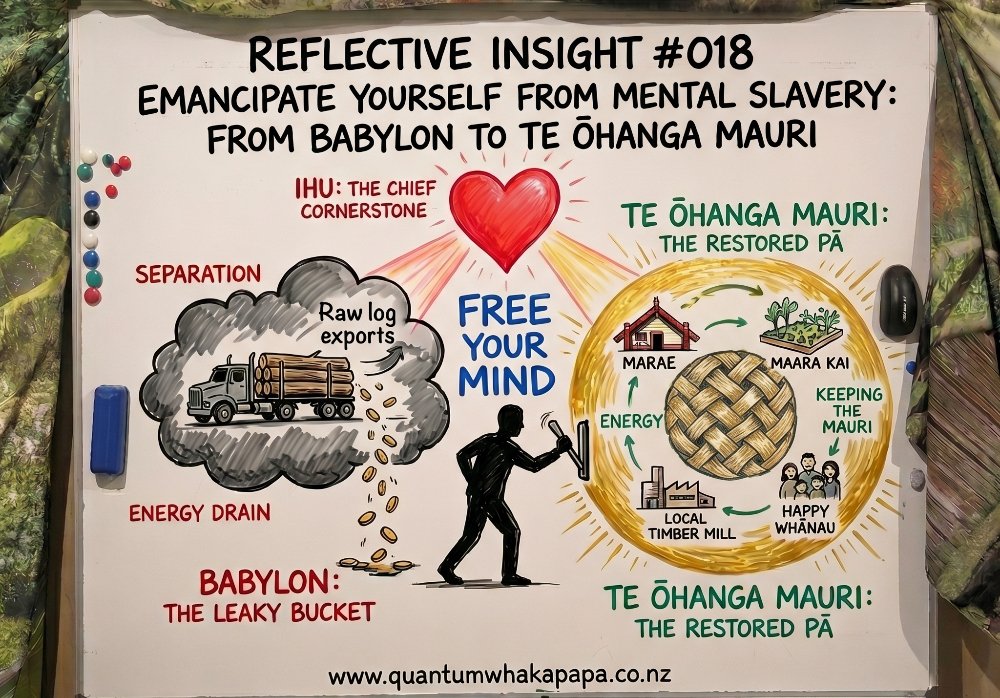
REFLECTIVE INSIGHT #018 - FREE YOUR MIND: THE CHOICE BETWEEN BABYLON AND TE ŌHANGA MAURI
The Choice is Ours
We often talk about "the system" as if it’s a faceless machine we can't control. But our ancestors and the prophets had a much sharper name for it: Babylon. As the song says, we need to free our minds from a way of thinking that keeps us as slaves to a broken system. In Taitokerau, we are at a crossroads. We have to choose: do we stay in the "Leaky Bucket" of Babylon, or do we finally build Te Ōhanga Mauri?
The Babylonian Way: A Leaky Bucket
Babylon is a system built on a big mistake, the idea that we are all separate and should just grab whatever we can for ourselves. In the North, we see this in the way we trade our logs. We send 61% of our raw timber away to the other side of the world. We are sending our "energy" away, and in return, we get paper money that we immediately spend on imported goods. This creates disorder. It leaves our roads broken and our families struggling, while the real wealth is built somewhere else. It is a system that takes our life force and leaves us with the waste.