
ECONOMICS
The Economy of Life Force
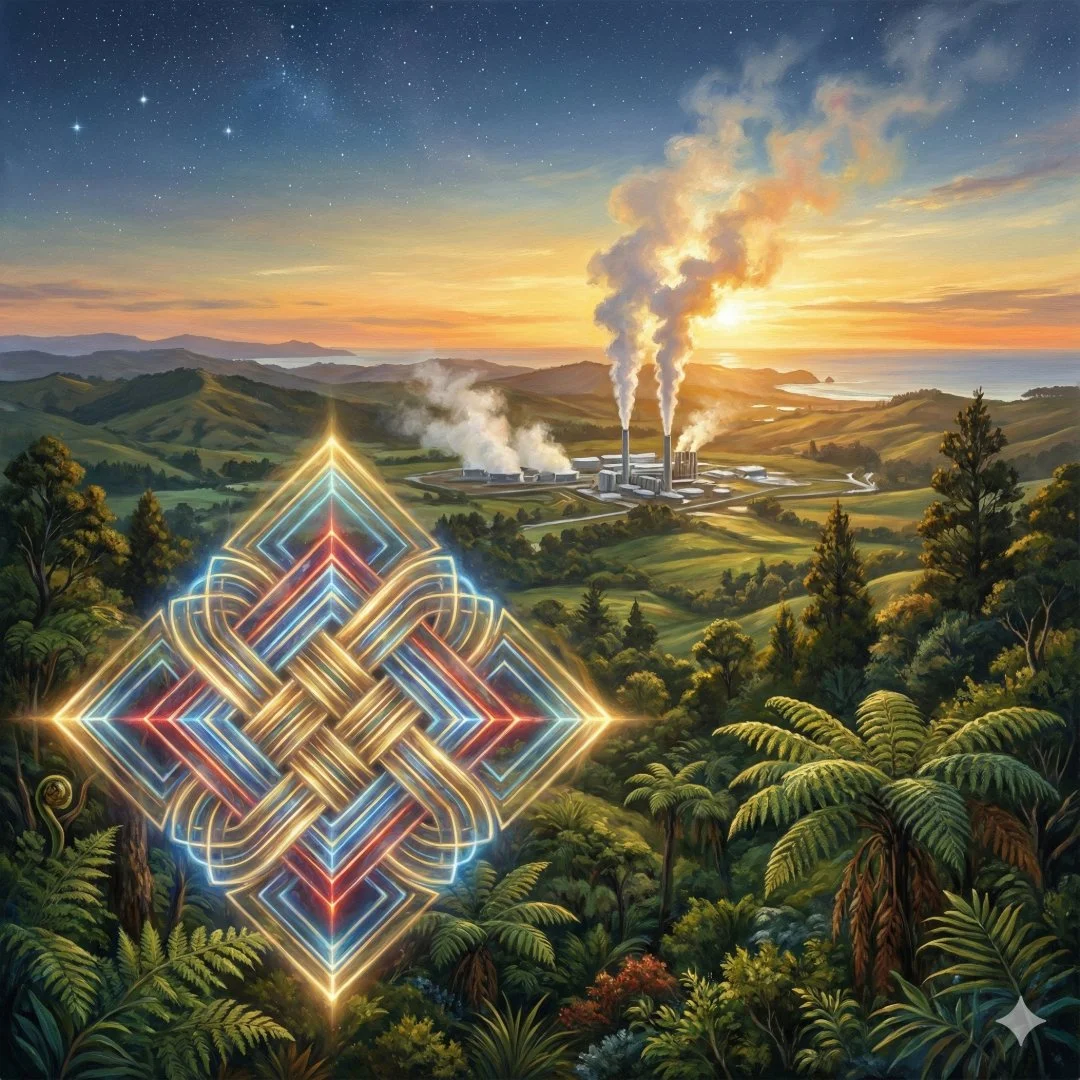
The Glitch in the System
The bank account might say we’re struggling, but our history says we’re billionaires. The problem isn’t us; it’s the old operating system we’re running on. We’ve inherited an economic model that treats the world like a machine made of separate parts. It views the land as something to be mined and the people as "consumers" to be used. This is a bad explanation of how life works. It ignores the truth: you can't have a healthy business on a dying planet.
The Leaky Bucket
Right now, the North is like a leaky bucket. We export 61% of our timber as raw logs, shipping away the sunlight, rain, and soil that grew them. In return, we get a bit of cash that leaks right back out of the region to pay for imported goods. We’re essentially exporting our "order" and keeping the "disorder", the silt in our rivers and the struggle in our streets. It’s an engine that consumes our life force instead of building it.
Building the Economic Pā
We’re moving toward a new way of doing business called Ekonomia, the simple act of looking after our collective home. We are building "Economic Pā": circular systems where nothing is wasted and everything is connected. If the land thrives, the people thrive. It’s about turning the North into a powerhouse that stores its own energy and wealth rather than shipping it away.
The Mauri Model
To make sure we stay on track, we’ve stopped using old, lopsided metrics. Instead, we use the Mauri Model. Every project we take on has to pass the "Life Force" test across four key areas:
The Land (Te Taiao): Does it heal the environment?
The Culture (Te Ahurea): Does it respect our stories?
The People (Te Tangata): Does it actually help our whānau?
The Purse (Te Pūtea): Is it financially smart and sustainable?
If it takes away from any of the four, we don't do it. It’s that simple.