
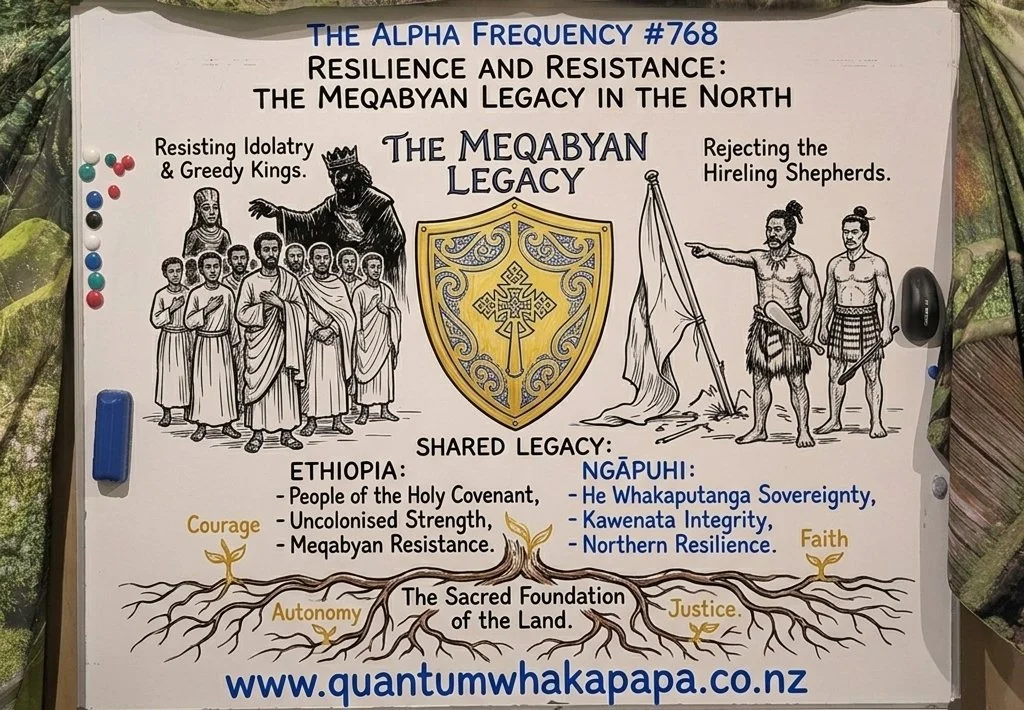
THE ALPHA FREQUENCY #768 - RESILIENCE AND RESISTANCE: THE MEQABYAN LEGACY IN THE NORTH
A Manual for Standing Firm
Kia ora e te whānau. We have reached the final post in our series looking at Research Report #268. We have talked about our language, our leadership, and our shared economy. Today, we look at the spiritual "backbone" that allowed our ancestors to stand firm against colonial pressure. In the ancient Ethiopian Bible, there are three unique books called the Books of Meqabyan. These books aren't found in Western Bibles, but for us as Ngāpuhi, they serve as a powerful manual for indigenous resistance.
The Meqabyan Legacy
The Books of Meqabyan tell the stories of righteous people who refused to bow down to greedy kings or false idols. They chose to follow the laws of the Creator rather than the unfair rules of men. This resonates deeply with our own history in Taitokerau. When we look at the lives of the Ethiopian martyrs, we see a reflection of our own leaders who refused to be "trodden down" by foreign systems. Ihu (Yeshua's name in the Paipera Tapu) gave us the strength to know that even if our physical world is under pressure, our wairua (spirit) remains free.
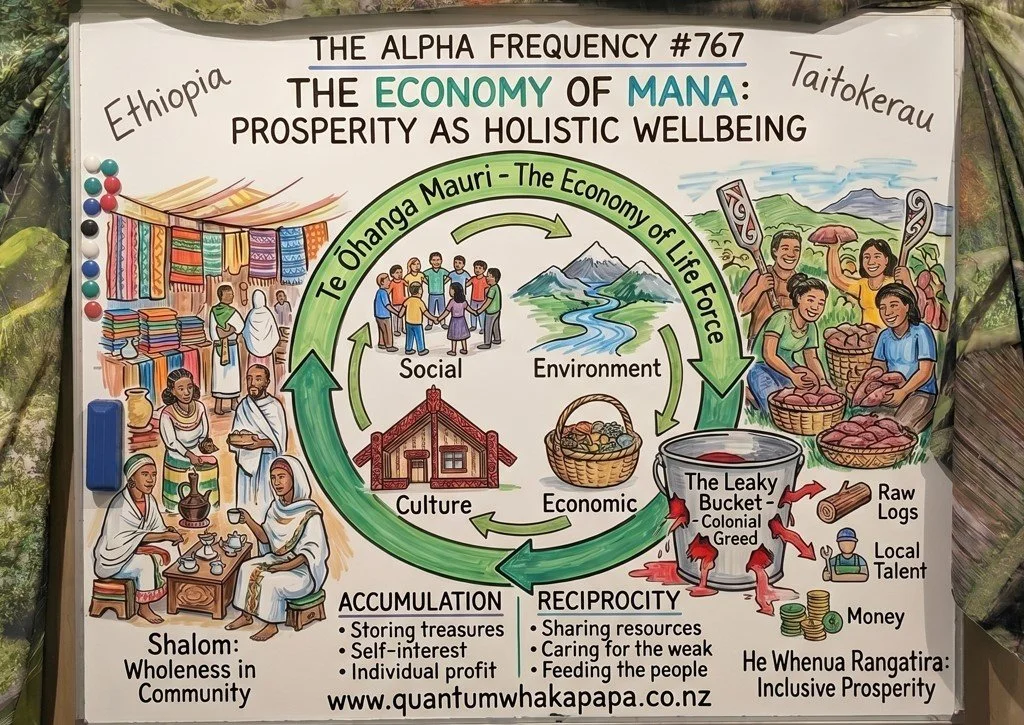
THE ALPHA FREQUENCY #767 - THE ECONOMY OF MANA: PROSPERITY AS HOLISTIC WELLBEING
True Meaning of Wealth
Kia ora e te whānau. As we continue through Research Report #268, we move from the way we speak and learn to the way we manage our resources. Many of us have been taught that "economics" is just a fancy word for making money and growing the GDP. But for our Ngāpuhi ancestors and the ancient people of Ethiopia, prosperity was never about how much one person could pile up for themselves. It was about the health and wholeness of the entire community.
Economy of Affection
Mānuka Hēnare described our traditional system as an "Economy of Mana" or an "Economy of Affection." In this system, our choices were guided by our relationships with each other and the land, not just by profit. Wealth was measured by how much you could give away and how well you could feed the people. This is the exact same principle found in the ancient Ethiopian scriptures, where the goal of the Kingdom is "Shalom", a peace that comes when everything is complete, whole, and shared fairly.
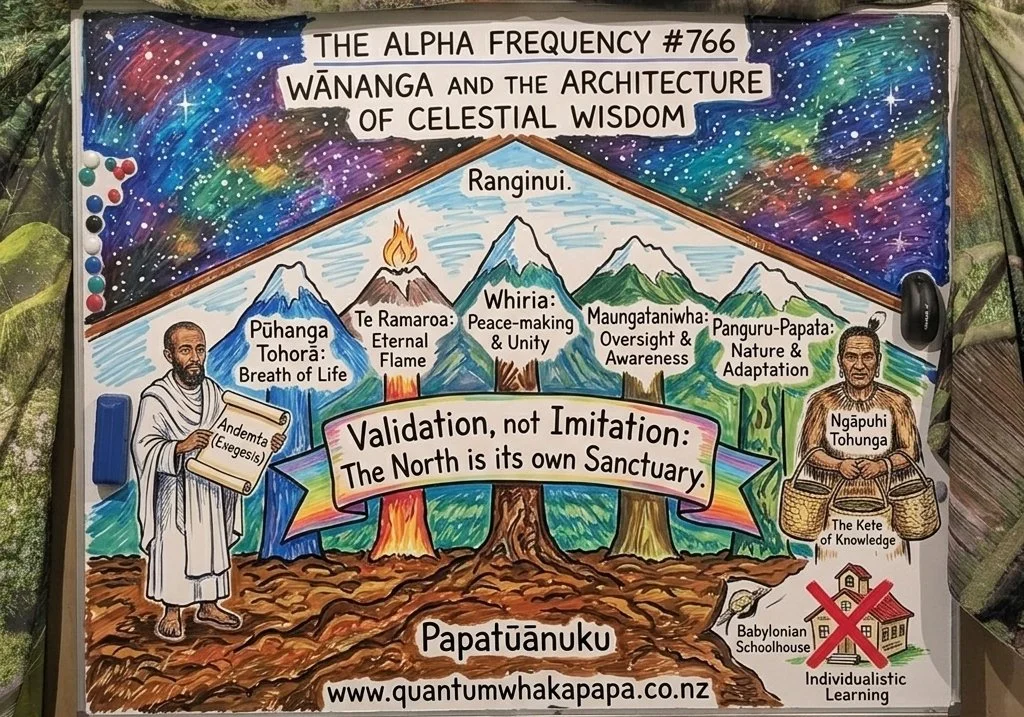
THE ALPHA FREQUENCY #766 - WĀNANGA AND THE ARCHITECTURE OF CELESTIAL WISDOM
The House of Learning
Kia ora e te whānau. Today we are looking at how our ancestors passed on knowledge. In Research Report #268, we find a deep resonance between our Whare Wānanga o Te Tai Tokerau and the ancient monastic schools of Ethiopia, known as the Abinet Temhert Bet. Both systems were designed to do much more than just teach facts; they were built to feed the wairua (spirit) and ensure that the sacred thread connecting us to the Divine was never broken.
Validating Our Ancient Schools
As I’ve said before, we aren't looking to Ethiopia to find a new way of life. We are Ngāpuhi, and our traditions are rooted right here in the North. But when we see how the Ethiopian people preserved their ancient schools for over 1,500 years, it validates the importance of our own wānanga. It shows us that protecting our sacred knowledge from colonial "BS" isn't just about culture, it is about maintaining our spiritual health. Both traditions teach that true wisdom begins with a deep respect for Ihu (Yeshua's name in the Paipera Tapu).
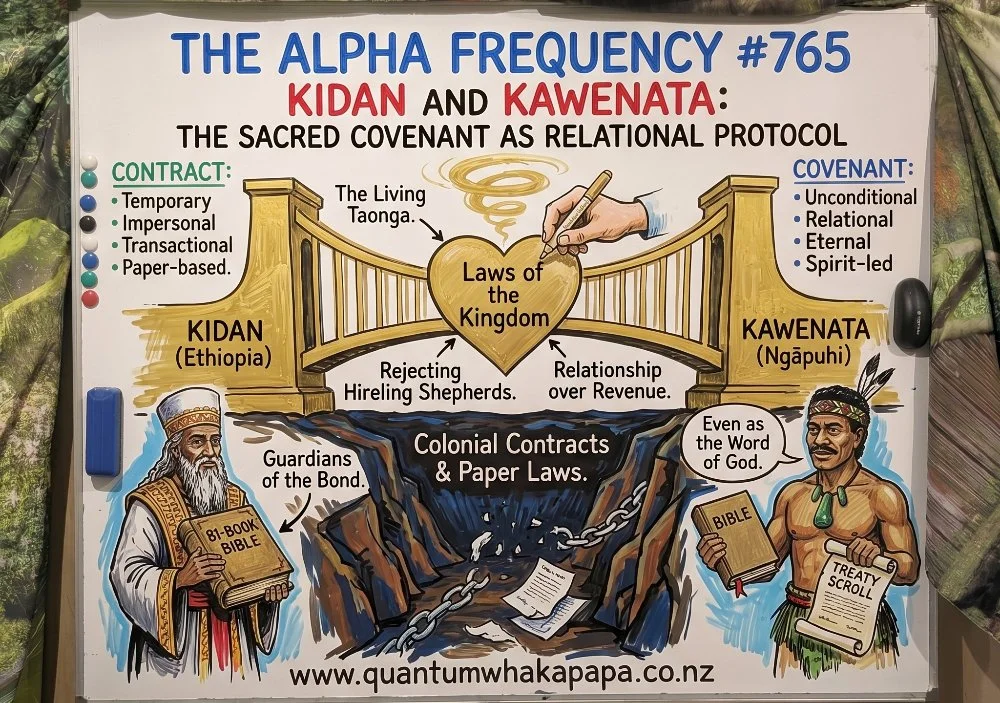
THE ALPHA FREQUENCY #765 - KIDAN AND KAWENATA: THE SACRED COVENANT AS RELATIONAL PROTOCOL
Beyond Simple Contracts
Kia ora e te whānau. As we continue looking at Research Report #268, we find ourselves at the very heart of the relationship between Ngāpuhi and the British Crown. To understand what happened at Waitangi, we have to look past the modern "BS" that treats agreements like simple business deals. For our ancestors, and for the ancient people of Ethiopia, an agreement wasn't just a piece of paper, it was a sacred bond involving the Creator.
The Meaning of Kidan
In the Ethiopian tradition, the word for this bond is Kidan. It describes a sacred tie of love and kindness between the Creator and His children. This "covenant thinking" is the bedrock of their society. It isn't a temporary contract that you can walk away from when it gets hard; it is an unconditional relationship, much like a marriage. It is a promise to share a future together, guided by a higher law.
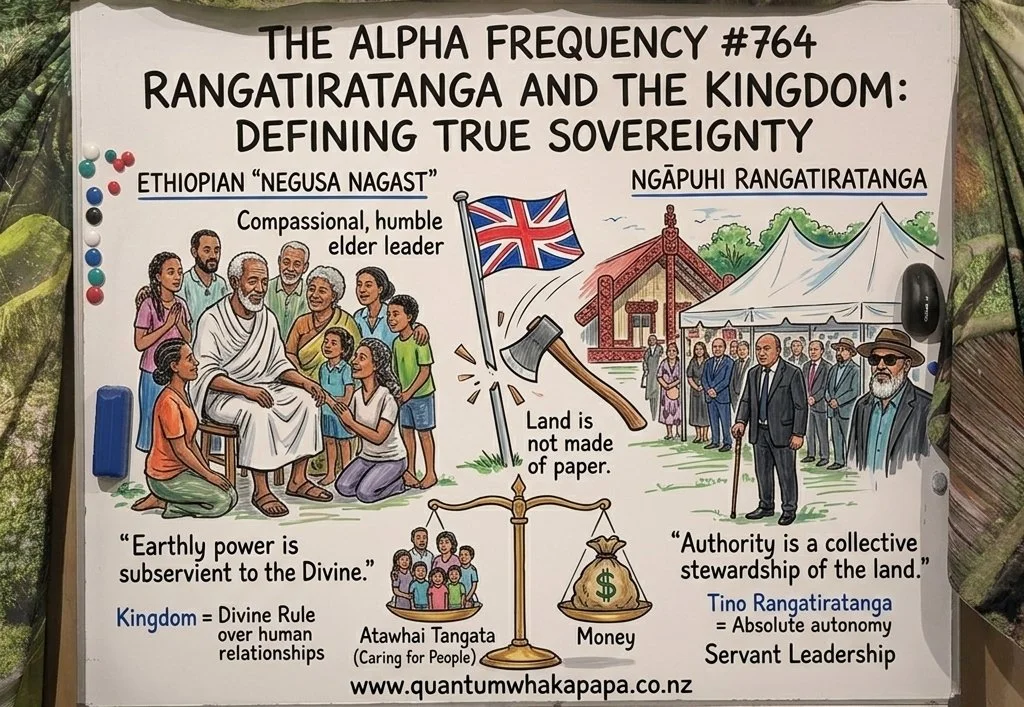
THE ALPHA FREQUENCY #764 - RANGATIRATANGA AND THE KINGDOM: DEFINING TRUE SOVEREIGNTY
The Source of Power
Kia ora e te whānau. As we move deeper into Research Report #268, we come to a topic that is often misunderstood in modern politics: sovereignty. For many today, sovereignty is about who has the most guns or who sits in a big building in Wellington. But for our Ngāpuhi ancestors and the ancient people of Ethiopia, true sovereignty, or Rangatiratanga, was never something human beings created on their own. It was a gift and a responsibility handed down from the Creator.
The King of Kings
In the Ethiopian tradition, the leader was known as the Negusa Nagast, which means "King of Kings." This title wasn't meant to brag about earthly power. Instead, it was a constant reminder that any earthly leader is subservient to the Divine. In Ethiopia, the state was seen as a servant of God, limited by the laws of heaven. This matches the way our own rangatira viewed their role. Leadership was not a career choice; it was a sacred vocation to maintain the balance between the people and the spiritual realm.
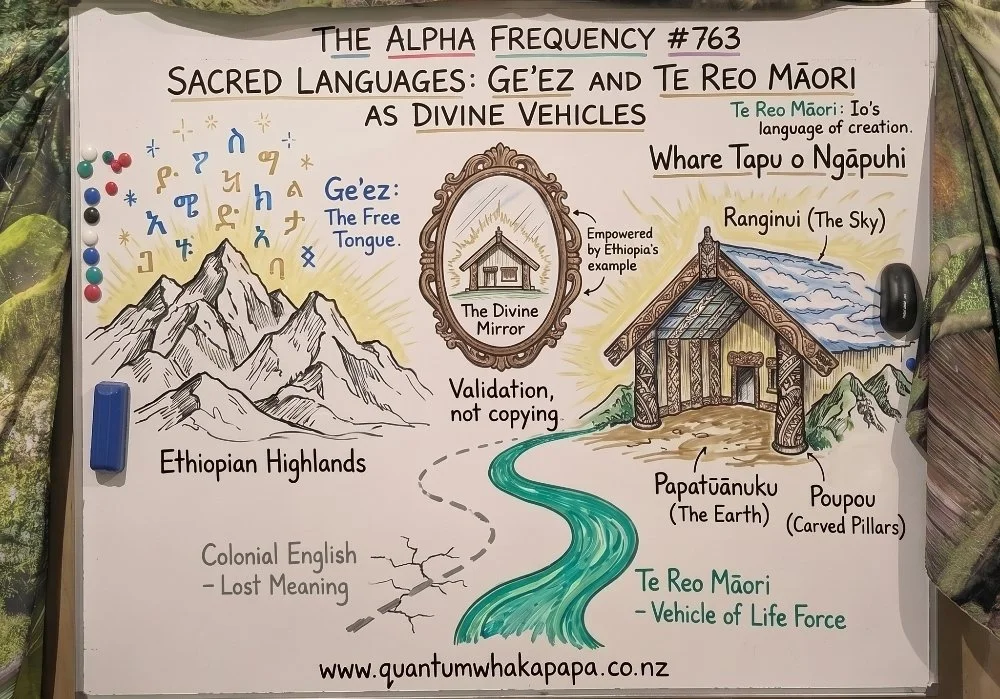
THE ALPHA FREQUENCY #763 - SACRED LANGUAGES: GE’EZ AND TE REO MĀORI AS DIVINE VEHICLES
A Sacred Connection
Kia ora e te whānau. As we carry on with our journey through Research Report #268, we are looking at something very close to my heart, the power of the words we speak. We are exploring the beautiful connection between the ancient Ethiopian tongue and our own Te Reo Māori. This isn't about becoming like another culture; it’s about identifying a universal truth that our ancestors understood long ago.
Standing in Our Own Truth
I want to be very clear from the start: we aren't trying to copy the Ethiopian people or their customs. We are Ngāpuhi, and we stand firm on our own soil, guided by our own ancestors and tikanga. We look to Ethiopia because they are a unique "spiritual witness." Because they were never colonised, their ancient Bible and their language remained pure. Their story doesn't give us a new path; it simply proves that the path we are already on is a sacred one. It validates that our Reo is a direct gift from the Creator.
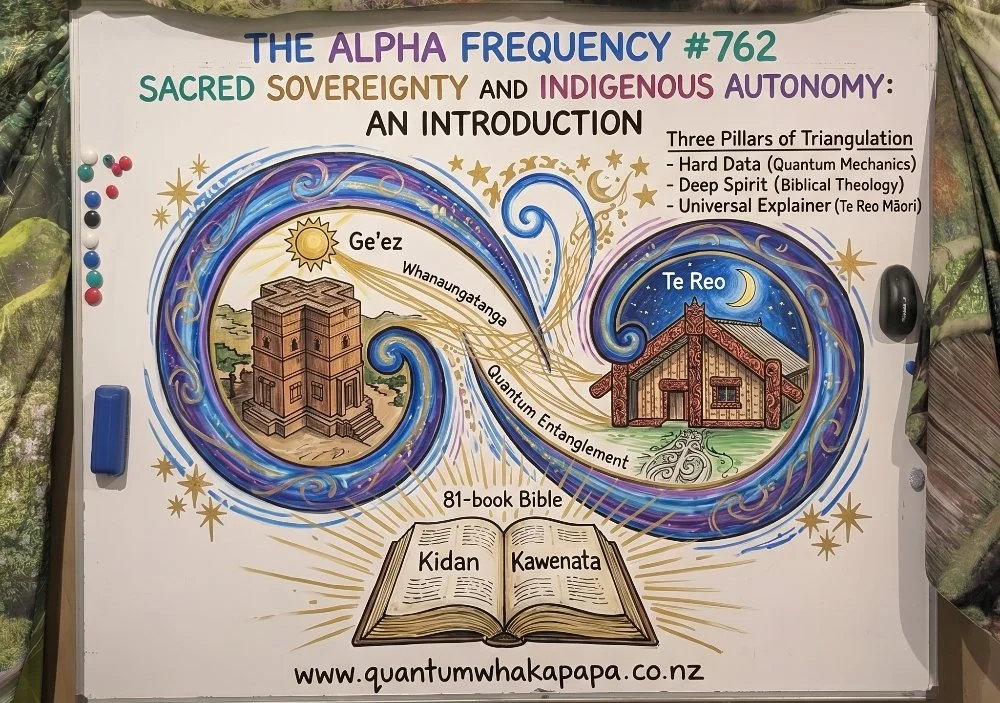
THE ALPHA FREQUENCY #762 – SACRED SOVEREIGNTY AND INDIGENOUS AUTONOMY: AN INTRODUCTION
A Divine Resonance
Kia ora e te whānau. It is a humble privilege to open this new series, where we explore a connection that sits deep within the wairua of our people. We are beginning our journey through Research Report #268, which examines the alignment between the Kingdom of God principles found in the ancient Ethiopian Bible and the sacred tikanga and wānanga of Ngāpuhi. This is about more than just comparing two cultures, it is about identifying a shared, universal frequency of sovereignty that has existed since the beginning of time.
The Vision of Mānuka
A primary source for this series is the incredible work of the late Mānuka Hēnare, specifically his text He Whenua Rangatira. Mānuka taught us that our ancestors in the early nineteenth century were not merely reacting to colonial pressure, they were operating from a sophisticated worldview where spiritual power, or mana, was the foundation of all governance. He showed us that for Ngāpuhi, the land was a living sanctuary and our leadership was a sacred stewardship. This research builds on his legacy by looking at how Ihu (Yeshua's name in the Paipera Tapu) and his teachings on the Kingdom align with our northern aspirations.