
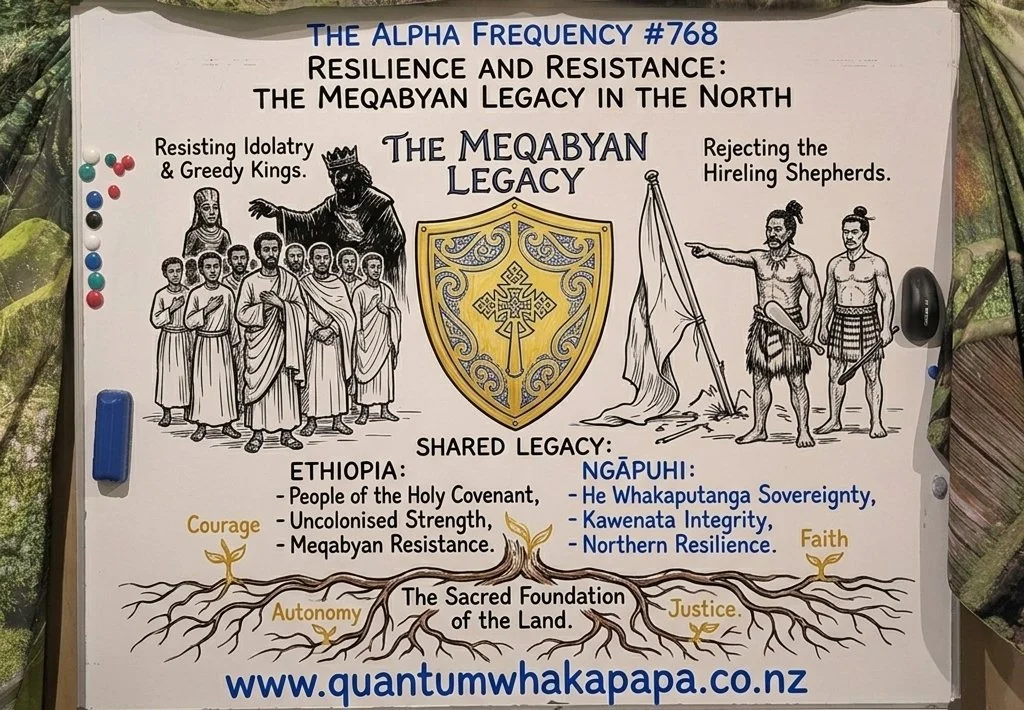
THE ALPHA FREQUENCY #768 - RESILIENCE AND RESISTANCE: THE MEQABYAN LEGACY IN THE NORTH
A Manual for Standing Firm
Kia ora e te whānau. We have reached the final post in our series looking at Research Report #268. We have talked about our language, our leadership, and our shared economy. Today, we look at the spiritual "backbone" that allowed our ancestors to stand firm against colonial pressure. In the ancient Ethiopian Bible, there are three unique books called the Books of Meqabyan. These books aren't found in Western Bibles, but for us as Ngāpuhi, they serve as a powerful manual for indigenous resistance.
The Meqabyan Legacy
The Books of Meqabyan tell the stories of righteous people who refused to bow down to greedy kings or false idols. They chose to follow the laws of the Creator rather than the unfair rules of men. This resonates deeply with our own history in Taitokerau. When we look at the lives of the Ethiopian martyrs, we see a reflection of our own leaders who refused to be "trodden down" by foreign systems. Ihu (Yeshua's name in the Paipera Tapu) gave us the strength to know that even if our physical world is under pressure, our wairua (spirit) remains free.
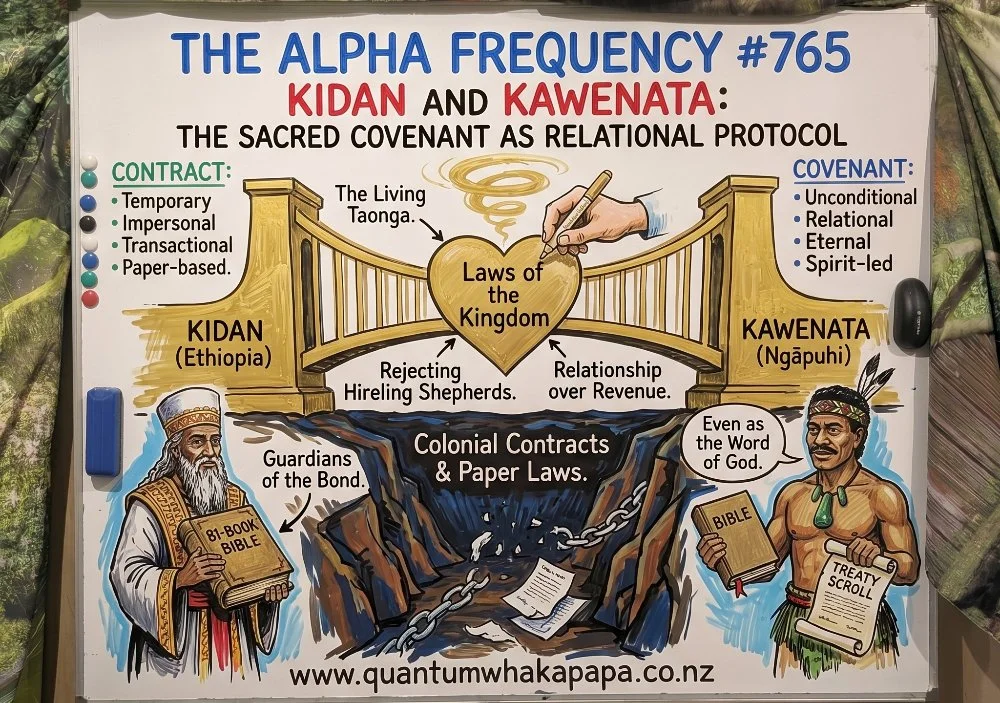
THE ALPHA FREQUENCY #765 - KIDAN AND KAWENATA: THE SACRED COVENANT AS RELATIONAL PROTOCOL
Beyond Simple Contracts
Kia ora e te whānau. As we continue looking at Research Report #268, we find ourselves at the very heart of the relationship between Ngāpuhi and the British Crown. To understand what happened at Waitangi, we have to look past the modern "BS" that treats agreements like simple business deals. For our ancestors, and for the ancient people of Ethiopia, an agreement wasn't just a piece of paper, it was a sacred bond involving the Creator.
The Meaning of Kidan
In the Ethiopian tradition, the word for this bond is Kidan. It describes a sacred tie of love and kindness between the Creator and His children. This "covenant thinking" is the bedrock of their society. It isn't a temporary contract that you can walk away from when it gets hard; it is an unconditional relationship, much like a marriage. It is a promise to share a future together, guided by a higher law.
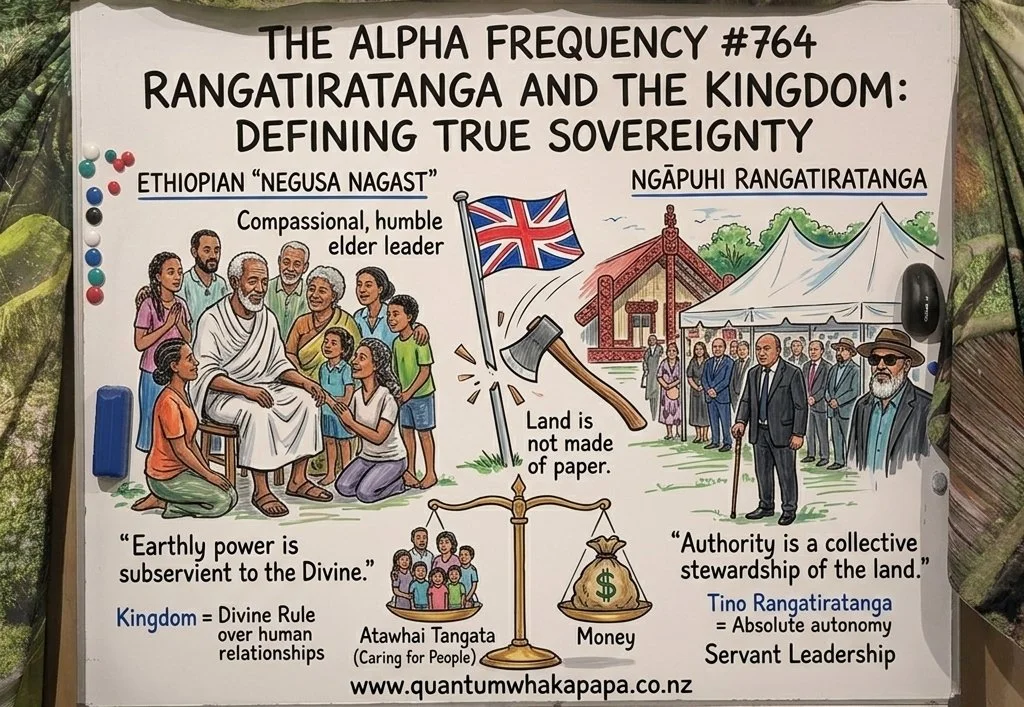
THE ALPHA FREQUENCY #764 - RANGATIRATANGA AND THE KINGDOM: DEFINING TRUE SOVEREIGNTY
The Source of Power
Kia ora e te whānau. As we move deeper into Research Report #268, we come to a topic that is often misunderstood in modern politics: sovereignty. For many today, sovereignty is about who has the most guns or who sits in a big building in Wellington. But for our Ngāpuhi ancestors and the ancient people of Ethiopia, true sovereignty, or Rangatiratanga, was never something human beings created on their own. It was a gift and a responsibility handed down from the Creator.
The King of Kings
In the Ethiopian tradition, the leader was known as the Negusa Nagast, which means "King of Kings." This title wasn't meant to brag about earthly power. Instead, it was a constant reminder that any earthly leader is subservient to the Divine. In Ethiopia, the state was seen as a servant of God, limited by the laws of heaven. This matches the way our own rangatira viewed their role. Leadership was not a career choice; it was a sacred vocation to maintain the balance between the people and the spiritual realm.
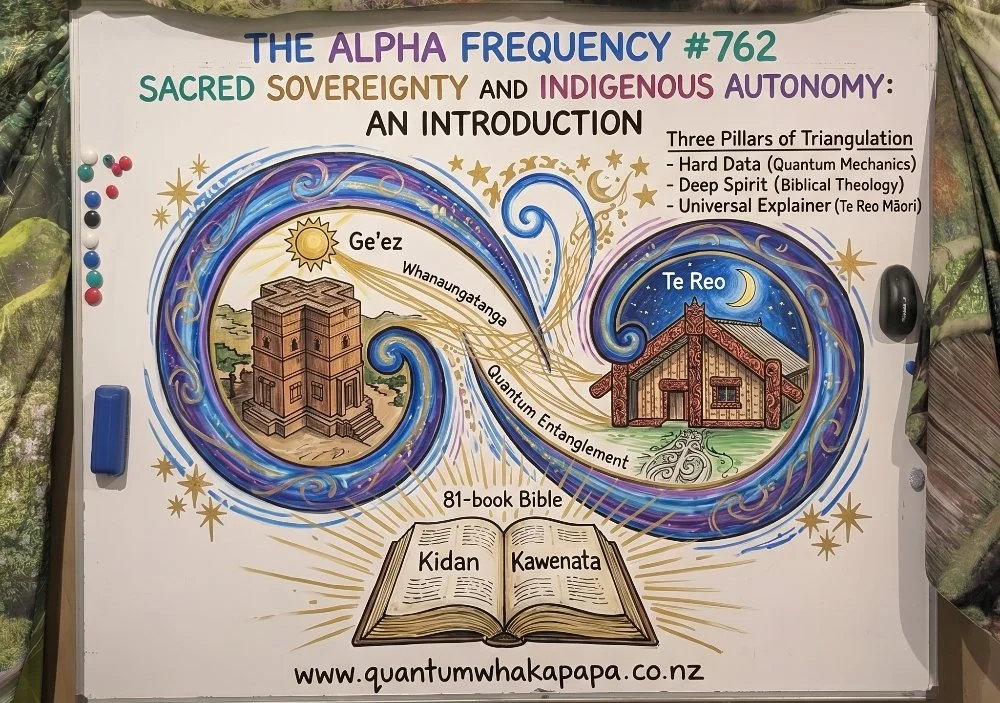
THE ALPHA FREQUENCY #762 – SACRED SOVEREIGNTY AND INDIGENOUS AUTONOMY: AN INTRODUCTION
A Divine Resonance
Kia ora e te whānau. It is a humble privilege to open this new series, where we explore a connection that sits deep within the wairua of our people. We are beginning our journey through Research Report #268, which examines the alignment between the Kingdom of God principles found in the ancient Ethiopian Bible and the sacred tikanga and wānanga of Ngāpuhi. This is about more than just comparing two cultures, it is about identifying a shared, universal frequency of sovereignty that has existed since the beginning of time.
The Vision of Mānuka
A primary source for this series is the incredible work of the late Mānuka Hēnare, specifically his text He Whenua Rangatira. Mānuka taught us that our ancestors in the early nineteenth century were not merely reacting to colonial pressure, they were operating from a sophisticated worldview where spiritual power, or mana, was the foundation of all governance. He showed us that for Ngāpuhi, the land was a living sanctuary and our leadership was a sacred stewardship. This research builds on his legacy by looking at how Ihu (Yeshua's name in the Paipera Tapu) and his teachings on the Kingdom align with our northern aspirations.
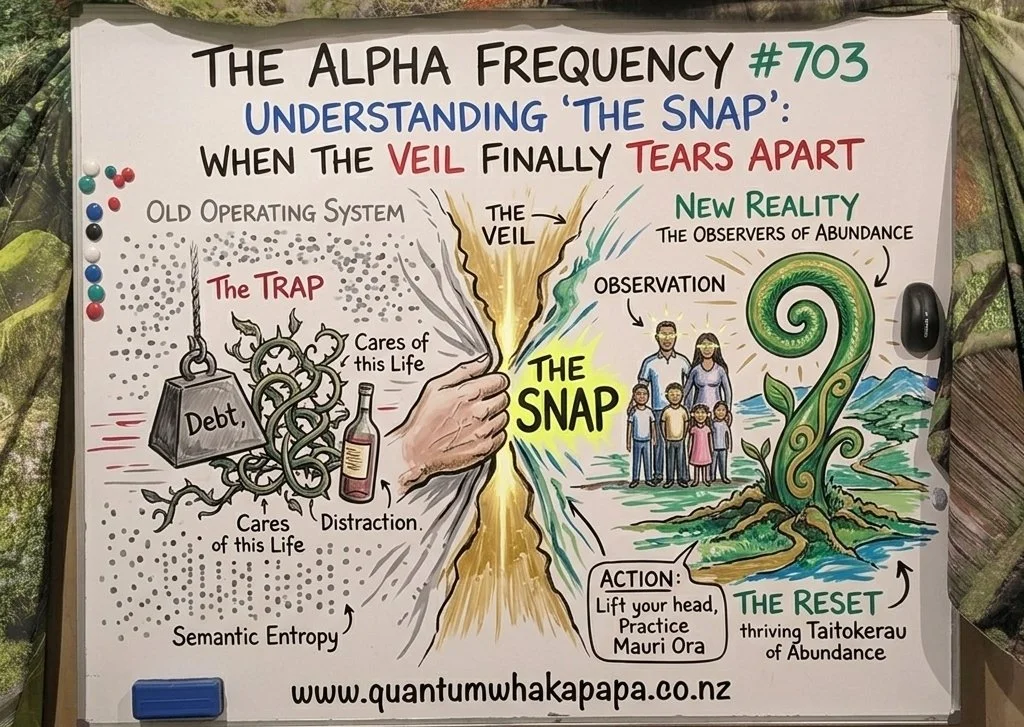
THE ALPHA FREQUENCY #703 - UNDERSTANDING "THE SNAP": WHEN THE VEIL FINALLY TEARS APART
The Coming Shift
Kia ora e te whānau. For many of us who grew up with a certain subset of theology, the idea of the "End Times" always felt like a scary story designed to keep us in line. But when we look at the teachings of Ihu (Yeshua's name in the Paipera Tapu) through the lens of spiritual physics, we see something much more profound. He wasn't describing the destruction of the earth, but the "collapse of the wave function" for this current age, a moment we call "The Snap."
Defining the Veil
We live in a "Woven Universe" where the physical realm and the spiritual realm are actually one system. However, for the last few centuries, we have been living behind a "Veil." This veil is a mental and spiritual barrier that makes us feel separate from the Source and from the land. It acts like a filter, causing us to see the world as a collection of separate "things" to be owned, rather than a web of life force to be stewarded.