
BUSINESS CONCEPTS
These are provided as concepts to demonstrate the application of the “Mauri Model”, and as a creative outlet. If you have any ideas you would like to gift to the project please used the Contact Us form or our socials (links at the bottom of the page).
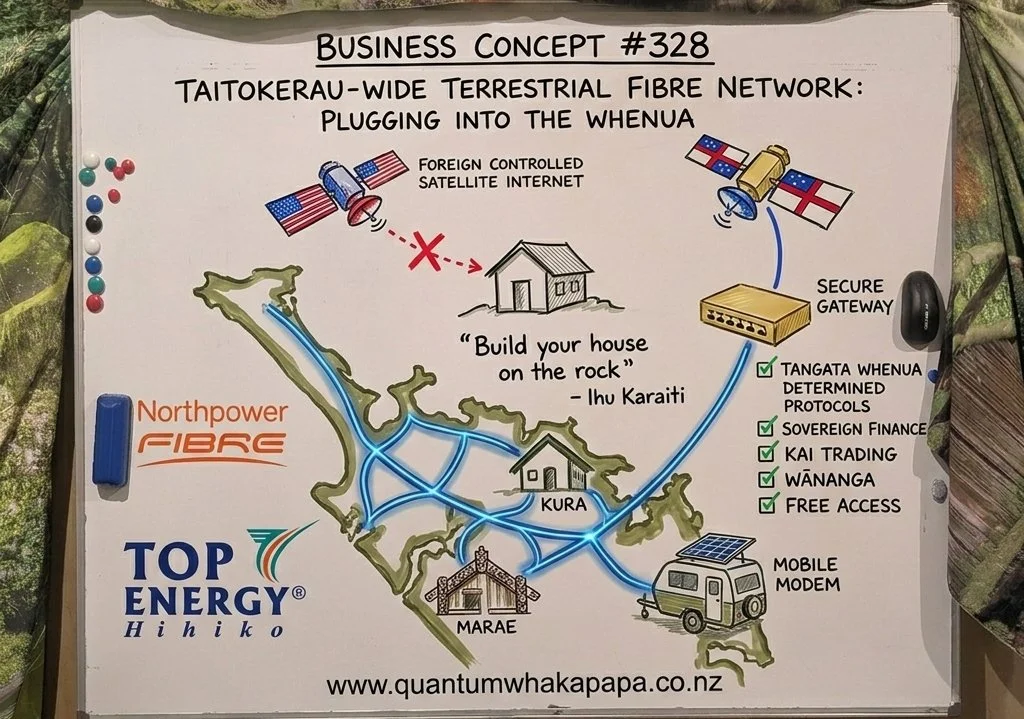
BUSINESS CONCEPT #328 - TAITOKERAU-WIDE TERRESTRIAL FIBRE NETWORK: PLUGGING INTO THE WHENUA
A signal from the soil
When we think about the internet, we usually look up at the sky. These days, everyone is talking about Starlink and how those little satellites are zooming over our heads. It is amazing tech, and for many of our rural whānau in the deep valleys of the North, it certainly plugs a gap. But I have been watching something else happening quietly right under our feet.
Northpower Fibre and Top Energy are continuing to roll out land-based fibre cables. Some people say this is a waste of money now that the sky is full of satellites. I couldn't disagree more. I believe that terrestrial, or land-based, fibre is going to be a key part of our sovereignty as Ngāpuhi and tāngata whenua.
Why the land matters
There is a big difference between a signal that comes from a foreign-owned satellite and a signal that travels through a physical cable buried in our own whenua. When our data travels through the soil, it stays connected to our identity.
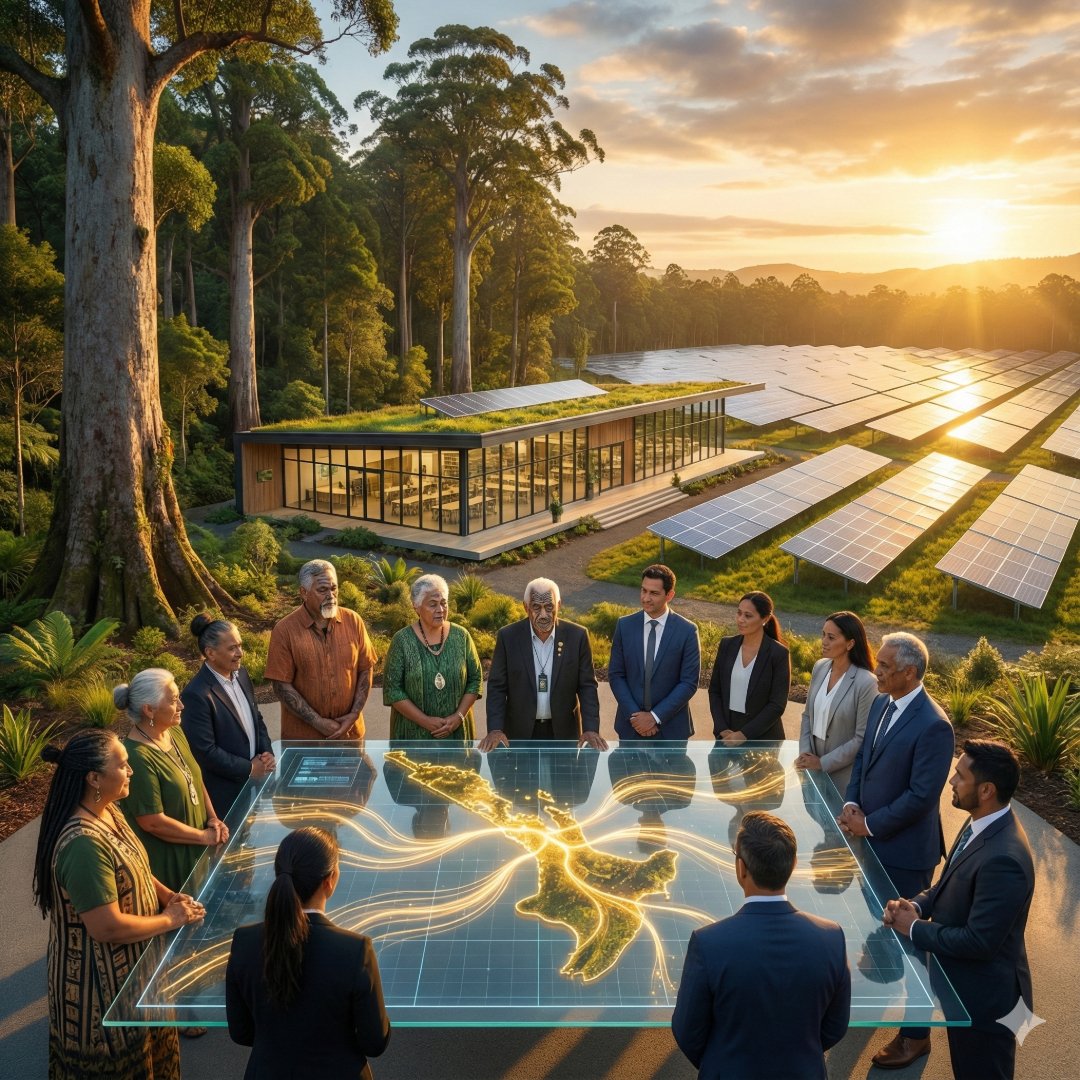
BUSINESS CONCEPT #304 - TAI TOKERAU MUTUAL KIWISAVER FUND
Tai Tokerau Mutual is a regional, community-owned investment fund that repatriates Northland’s KiwiSaver wealth to finance high-yield, negentropic local projects. We serve the people of Te Tai Tokerau by transforming passive retirement savings into active "Impact Capital" for housing, energy, and food sovereignty.
The Problem: Northland’s estimated $3.8 billion KiwiSaver pool is currently subject to "Capital Flight," managed by offshore fund managers who invest in global equities with no local benefit, while our region suffers from a lack of affordable housing and infrastructure.
The Solution: A regional "Community-Saver" model that allocates 40% of its portfolio to direct Northland impact assets—such as solar farms, build-to-rent social housing on Māori land, and high-value horticulture—plugging the "Leaky Bucket" and keeping wealth circulating within Taitokerau.
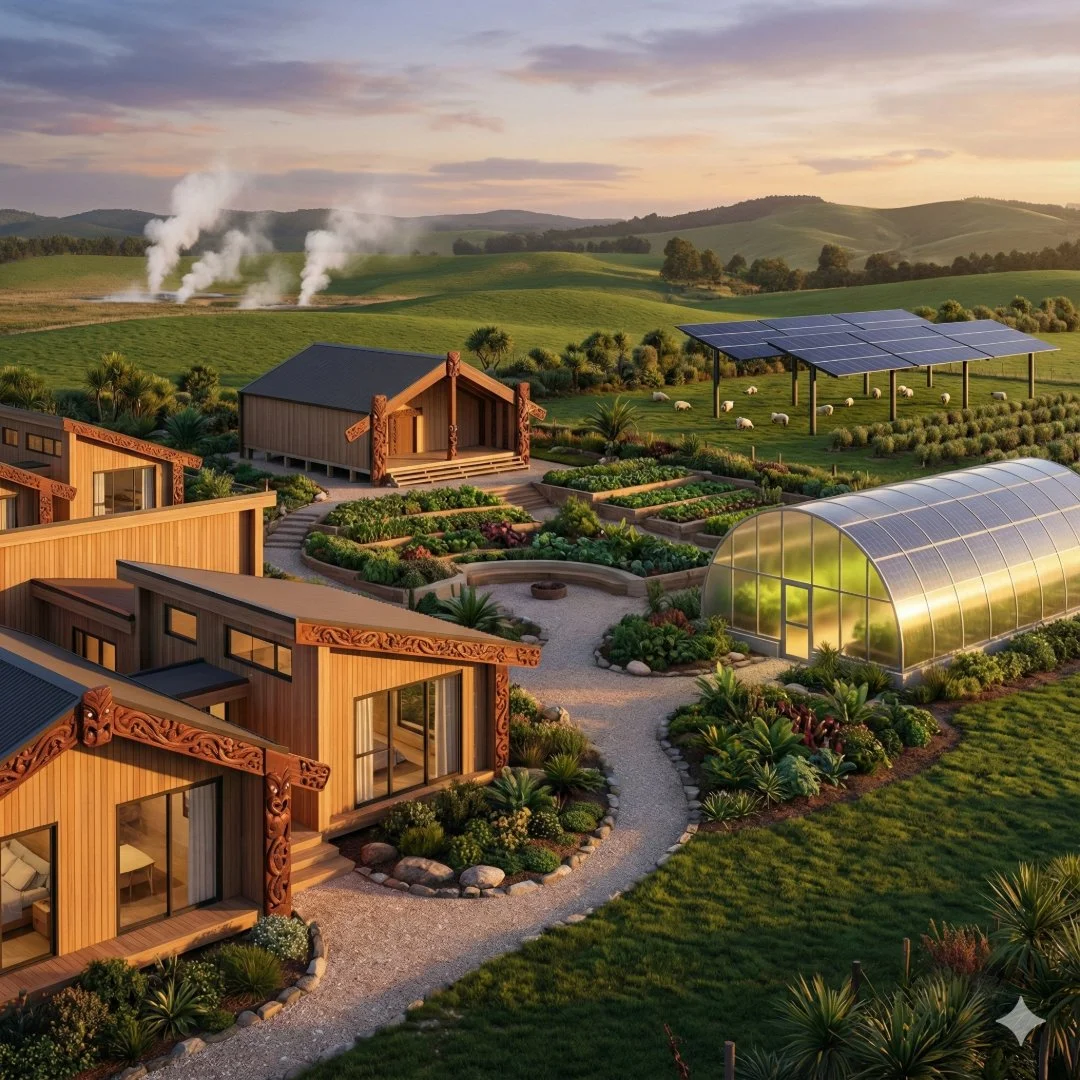
BUSINESS CONCEPT #302 - THE PAPAKĀINGA ECONOMIC PĀ
The Papakāinga Economic Pā is a community-led housing development model that transitions whānau from being passive consumers of debt to active architects of their own sovereign reality. It integrates high-performance modular housing with a communal lifestyle that prioritises intergenerational well-being and energy sovereignty.
The Problem: Current housing is treated as a "Babylonian" financial asset to be leveraged and extracted, leading to high-entropy living conditions where whānau are isolated from their land and each other.
The Solution: We implement "Zion" abundance by re-weaving the village structure, using the Mauri Model to ensure the home serves as an "ancestor" that provides health, safety, and cultural connection.
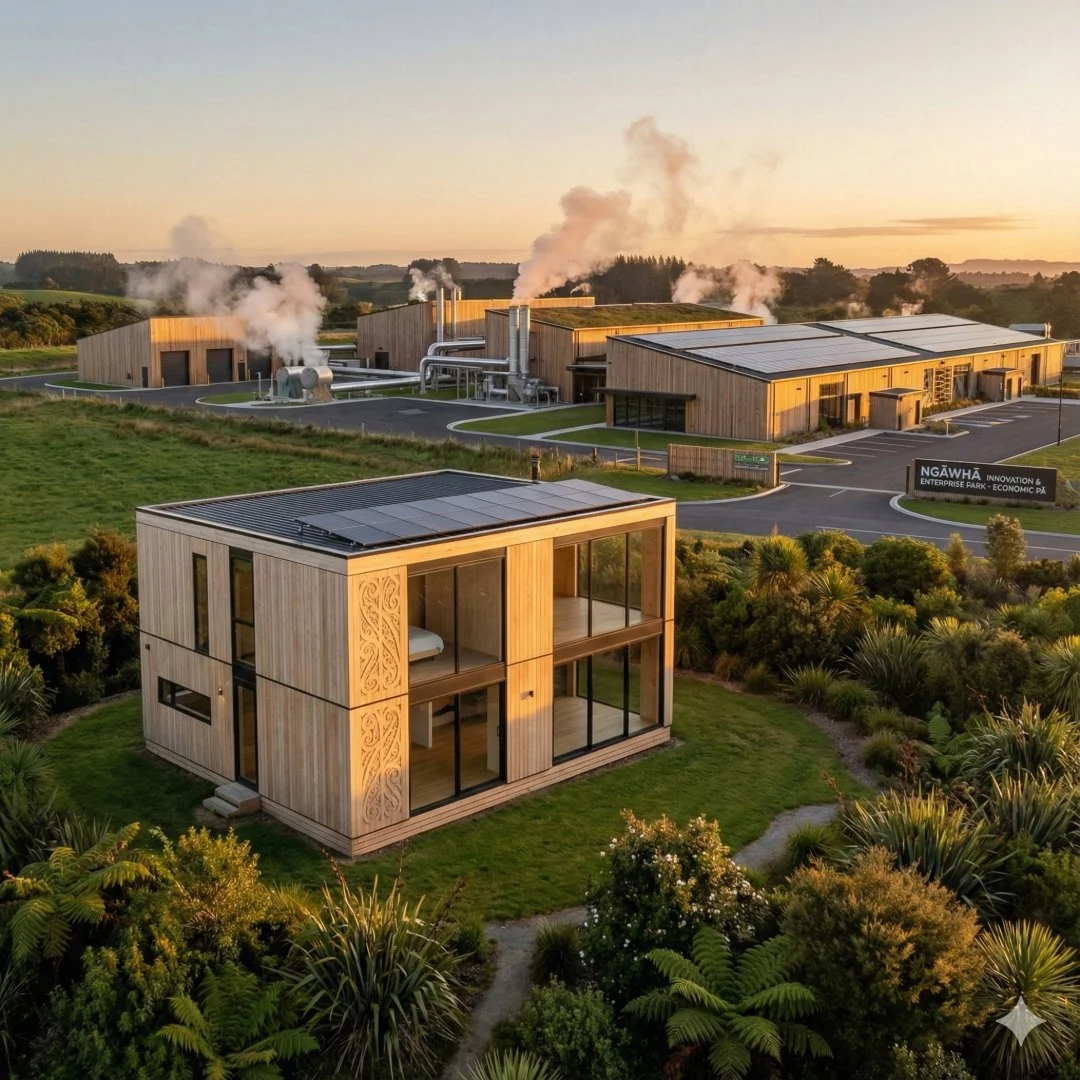
BUSINESS CONCEPT #301 - CIRCULAR TIMBER AND HOUSING HUB
The Circular Timber & Housing Hub is a vertically integrated "Economic Pā" that processes Northland-grown timber locally to manufacture high-performance, modular homes specifically designed for Māori freehold land. By repatriating regional capital to fund local production, we provide whānau with warm, sovereign housing while plugging the economic "leaky bucket" of raw log exports.
The Problem: Northland currently exports 61% of its timber as raw logs, losing the "value-add" revenue to offshore processors while whānau face a chronic shortage of warm, dry homes. Furthermore, building on Māori freehold land is often blocked by traditional banks that refuse to lend against multiply-owned titles.
The Solution: We shift from extraction to Ekonomia. By processing timber using geothermal heat at Ngāwhā, we create cross-laminated timber (CLT) panels for prefabricated modular homes. These units are designed for easy assembly on whenua Māori and utilise a Circular Financial System that bypasses traditional banking hurdles through regional "Community-Saver" investment.