
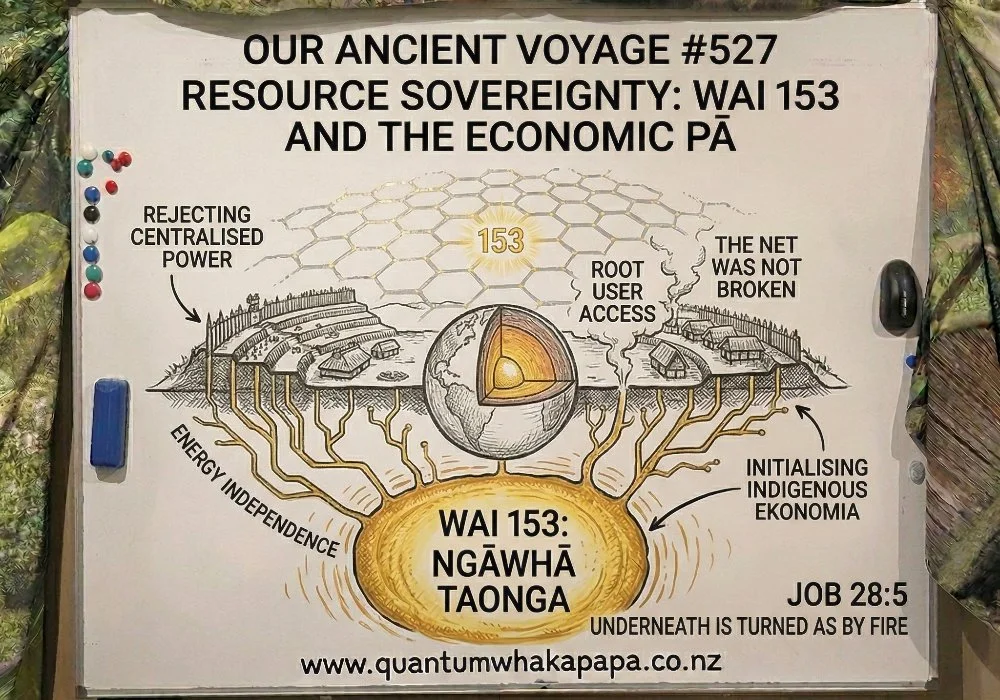
OUR ANCIENT VOYAGE #527 - RESOURCE SOVEREIGNTY: WAI 153 AND THE ECONOMIC PĀ
The Subterranean Power
In our journey through the "153 Frequency," we have seen this number anchor our mathematics, our first global landing, and our legal non-cession of mana. However, sovereignty is not just found in the halls of London or the pages of a report, it is found in the very heat of the earth beneath our feet. According to Research Report #259, the technical restoration of our resource jurisdiction is anchored in a specific legal "ping": the Wai 153 Geothermal Resources claim.
For the hapū of Taitokerau, particularly those surrounding Ngāwhā, geothermal energy is not a "commodity" to be managed by the state, it is a taonga with its own mauri. The Wai 153 claim was a pivotal moment in our "Our Ancient Voyage," initialising the principle that our subterranean resources remain under our absolute "Root User" authority.
The Ngāwhā Anchor: Wai 153
The Ngāwhā Geothermal Resource Report (Wai 153) remains one of the most significant findings in the history of the Waitangi Tribunal.
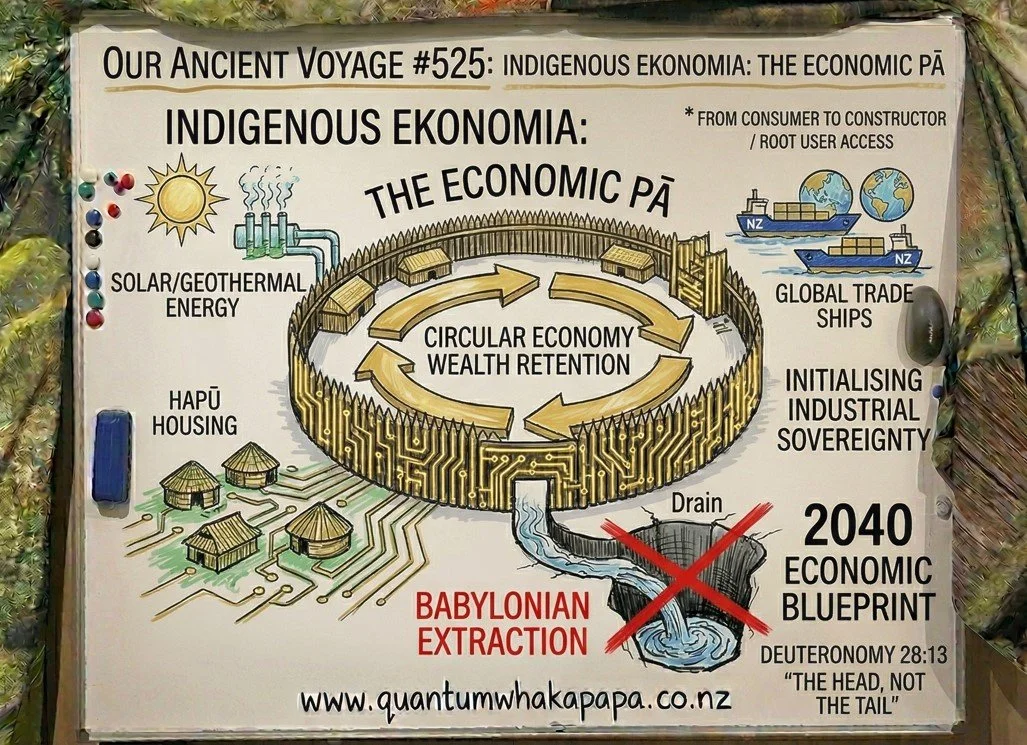
OUR ANCIENT VOYAGE #525 - INDIGENOUS EKONOMIA: RECLAIMING THE ECONOMIC PĀ
The Industrial Memory
To look forward to 2040, we must first look back to the 1830s. During our "Golden Age," the North was not a site of poverty, it was a global industrial hub. Our ancestors owned the schooners, built the flour mills, and controlled the maritime trade routes to Sydney and beyond. According to Research Report #256, this wasn't just "business," it was the physical manifestation of sovereignty.
In our framework, a "ping" is a targeted spiritual signal used to verify a location, and the economic "ping" of the North was once heard across the Pacific. Today, we are initialising Indigenous Ekonomia, the process of rebuilding the "Economic Pā" to ensure our wealth and energy stay within our own jurisdiction.
The Architecture of the Economic Pā
An "Economic Pā" is a fortified, circular economy. It is designed to resist the "extractive" nature of Babylonian finance, where resources are taken out of the community and replaced with debt.
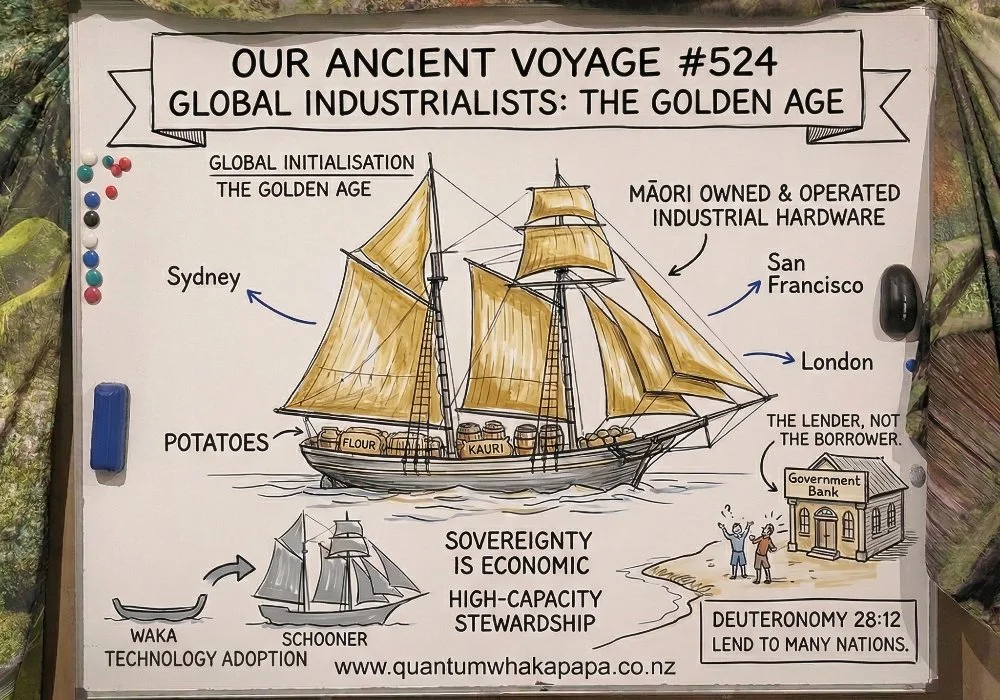
OUR ANCIENT VOYAGE #524 - GLOBAL INDUSTRIALISTS: THE GOLDEN AGE
This post continues our exploration of Research Report #255, which deconstructs the legal and metaphysical foundations of Ngāpuhi Nui Tonu. By triangulating ancient Māori knowledge with quantum theory and biblical jurisprudence, the report affirms that our inherent authority was never limited to the "bush," but extended to the global maritime frontier. Today, we reclaim the history of the North as a global industrial powerhouse.
The Industrial Initialisation
In the Babylonian version of history, Māori are often portrayed as passive observers of the "arrival of commerce." But the technical data in Research Report #255 and Research Report #254 tells a different story. Between 1830 and 1860, the North experienced an Industrial Golden Age. This was not a primitive exchange, it was a high-frequency economic initialisation.
Northern Māori were the lead constructors of the new economy. We didn't just provide the flax and timber, we owned the hardware. By the mid-1800s, iwi and hapū owned and operated dozens of coastal and ocean-going schooners. We weren't just trading within the Hokianga, we were shipping flour, potatoes, and kauri to Sydney, Hobart, and even as far as San Francisco during the Gold Rush.
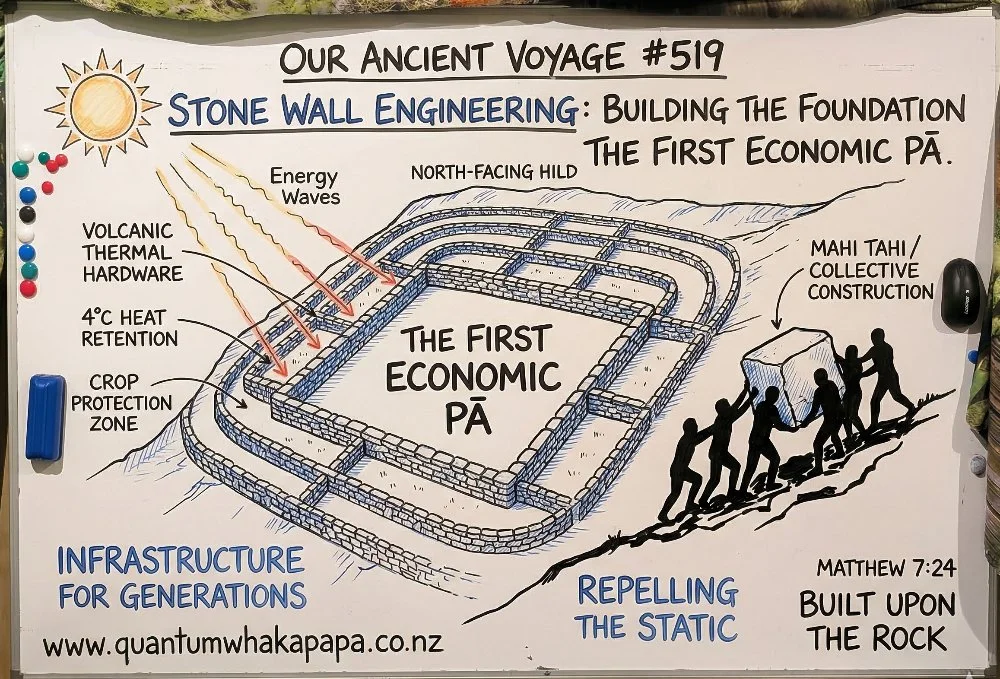
OUR ANCIENT VOYAGE #519 - STONE WALL ENGINEERING: THE FIRST ECONOMIC PĀ
The Civil Engineering of Survival
As our ancestors initialised their settlements in Te Tai Tokerau, they moved beyond mere survival and into the realm of advanced civil engineering. While the "Kūmara Code" dealt with biological software, the creation of the great stone fields was the construction of the permanent hardware. In our framework, a "ping" is a targeted spiritual signal used to verify a location and establish a connection, it was the moment our ancestors' intention met the responsive frequency of the land. Once that connection was secured, they began to reshape the physical environment to support intergenerational wellbeing.
According to Research Report #254, the stone walls of the Far North were not just simple fences. They were sophisticated thermal engines. By clearing the volcanic landscape and stacking rocks into rows on north-facing slopes, the first constructors created a massive "heat sink" system. These stones absorbed the sun's energy during the day and radiated it back into the soil at night, raising the ground temperature by as much as 4°C. This wasn't just gardening, it was the first iteration of the Economic Pā, a structural investment designed to protect the collective food supply from the unpredictable static of the climate.