
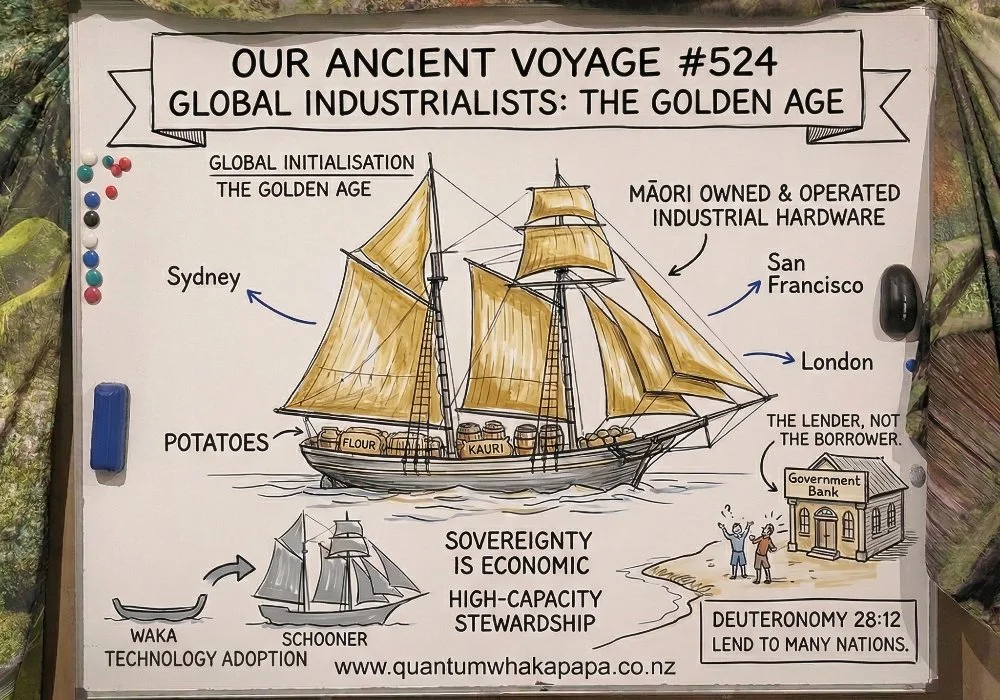
OUR ANCIENT VOYAGE #524 - GLOBAL INDUSTRIALISTS: THE GOLDEN AGE
This post continues our exploration of Research Report #255, which deconstructs the legal and metaphysical foundations of Ngāpuhi Nui Tonu. By triangulating ancient Māori knowledge with quantum theory and biblical jurisprudence, the report affirms that our inherent authority was never limited to the "bush," but extended to the global maritime frontier. Today, we reclaim the history of the North as a global industrial powerhouse.
The Industrial Initialisation
In the Babylonian version of history, Māori are often portrayed as passive observers of the "arrival of commerce." But the technical data in Research Report #255 and Research Report #254 tells a different story. Between 1830 and 1860, the North experienced an Industrial Golden Age. This was not a primitive exchange, it was a high-frequency economic initialisation.
Northern Māori were the lead constructors of the new economy. We didn't just provide the flax and timber, we owned the hardware. By the mid-1800s, iwi and hapū owned and operated dozens of coastal and ocean-going schooners. We weren't just trading within the Hokianga, we were shipping flour, potatoes, and kauri to Sydney, Hobart, and even as far as San Francisco during the Gold Rush.
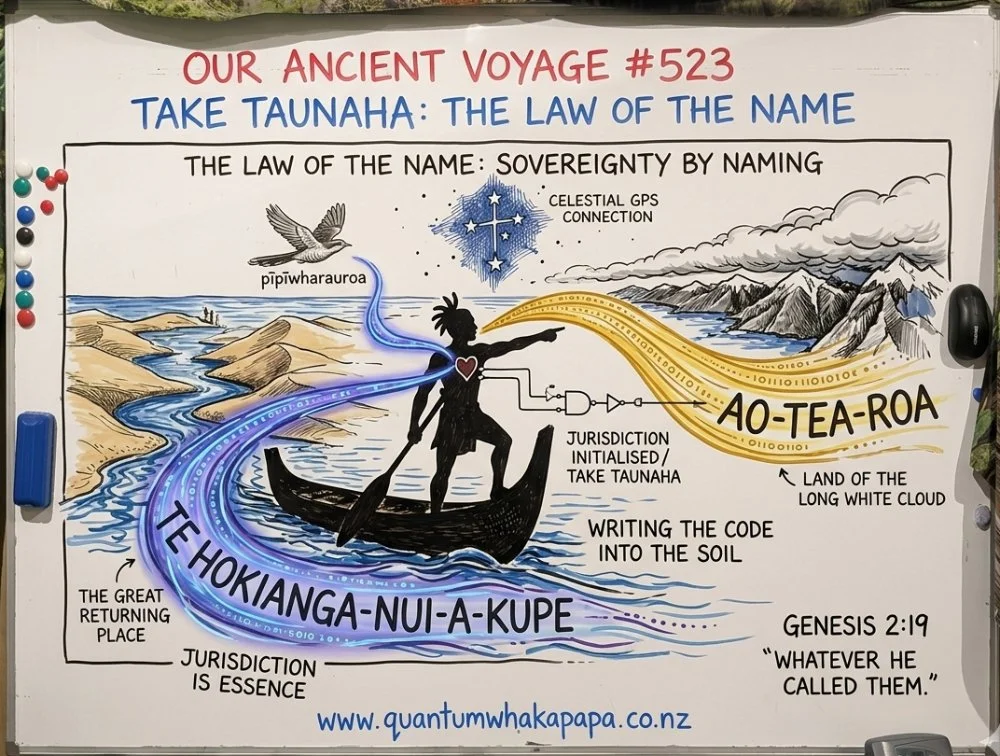
OUR ANCIENT VOYAGE #523 - TAKE TAUNAHA: THE LAW OF THE NAME
This post continues our exploration of Research Report #255, a technical deconstruction of the legal and metaphysical foundations of Ngāpuhi Nui Tonu. This report triangulates ancient Māori knowledge with quantum theory and biblical jurisprudence to affirm an unassailable sovereignty that exists beyond the jurisdiction of any secular government. In this entry, we look at the technical mechanics of discovery and the legal power of naming.
The Legal Act of Naming
When Kupe voyaged through Te Tai Tokerau, he wasn’t just on a sightseeing tour. Every place he named, from Te Hokianga-nui-a-Kupe to Te Rerenga Wairua, was a formal legal claim-staking. In Māori jurisprudence, this is known as Take Taunaha (discovery by naming) or Taunaha Whenua.
By giving names to the land, Kupe was "writing the code" of ownership and jurisdiction into the geography. This wasn’t a travel log, it was a high-frequency "ping" that verified his presence and established his authority. In the Woven Universe, to name something is to exercise dominion over it. When Kupe named the landmarks of the North, he was initialising the Sovereign Server for all his descendants.
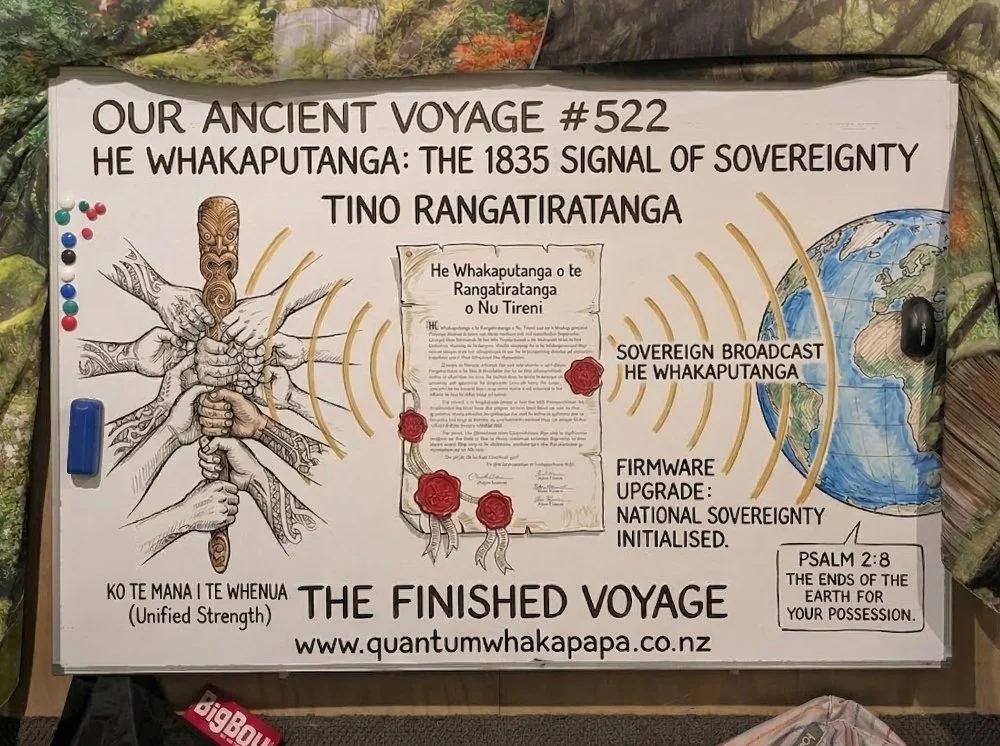
OUR ANCIENT VOYAGE #522 - HE WHAKAPUTANGA: THE 1835 SIGNAL OF SOVEREIGNTY
The Unified Broadcast
As we conclude this series on the ancient voyage, we arrive at the ultimate political "broadcast" of Te Tai Tokerau: He Whakaputanga o te Rangatiratanga o Nu Tireni (The Declaration of Independence of New Zealand). Signed in 1835 by the United Tribes, this was not just a response to European interest, it was the final, formal initialisation of our sovereign hardware before the intervention of the Crown.
In our framework, a "ping" is a targeted spiritual signal used to verify a location and establish a connection, it was the moment the intention of the voyager met the response of the land. He Whakaputanga was the "Global Ping." It was the northern chiefs standing together to signal to the world, and specifically to the "Babylonian" empires of the time, that the "Server" of this land was already occupied, managed, and governed by a sovereign collective.
The Sovereign Hardware
According to Research Report #254, He Whakaputanga was a sophisticated legal instrument.
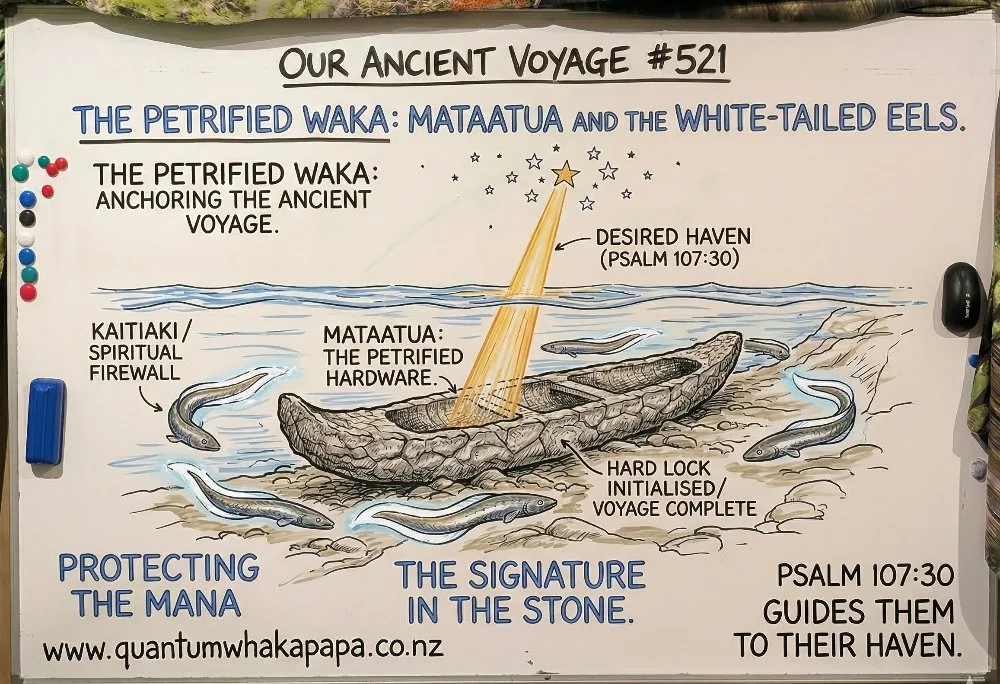
OUR ANCIENT VOYAGE #521 - THE PETRIFIED WAKA: MATAATUA AND THE WHITE-TAILED EELS
The Permanent Anchoring
The ancient voyage was never just about moving from one point to another, it was about the final "Hard Lock" of a people to their chosen territory. In our framework, a "ping" is a targeted spiritual signal used to verify a location and establish a connection, it was the moment the intention of the voyager met the response of the land. Once the connection is confirmed, the physical hardware of the voyage often undergoes a spiritual transformation to signal that the journey is complete.
In the traditions of Te Tai Tokerau, particularly around the Takou River, we find the story of the Mataatua waka. While it is often associated with the Bay of Plenty, northern tradition records its final voyage to the Takou River. Here, the waka did not just dock, it was petrified, turning into stone within the riverbed. This petrifaction is the ultimate spiritual "Save File", it signals that the hardware of the voyage has been permanently fused with the hardware of the land. The waka is no longer a vehicle for movement, it is a monument of belonging.
The Spiritual Firewall: Kaitiaki
According to the narratives within Research Report #254, this sacred site is not left unprotected.
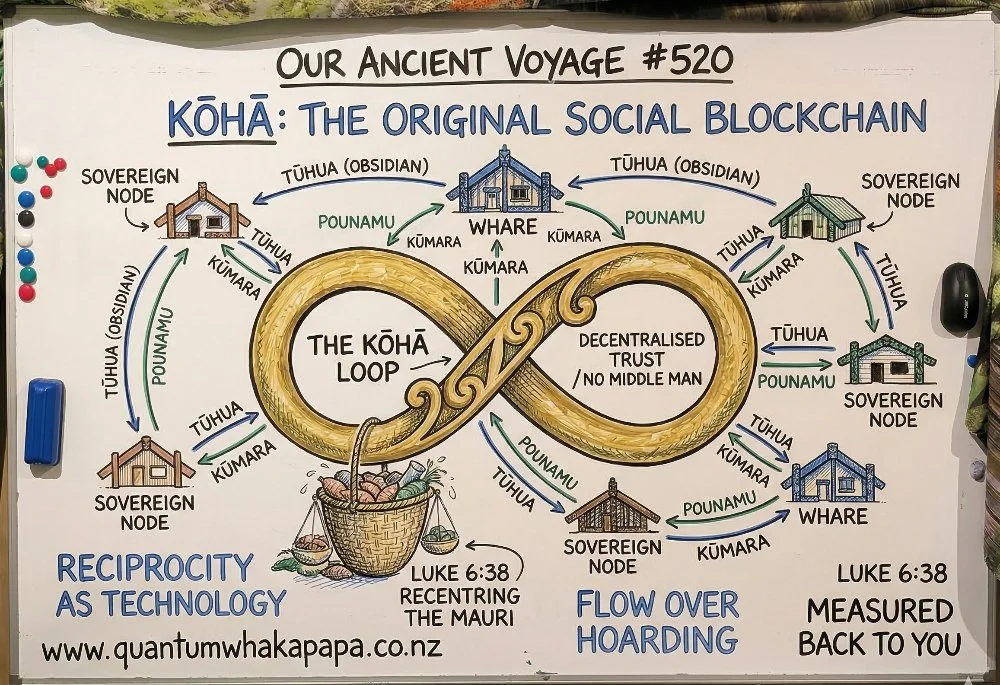
OUR ANCIENT VOYAGE #520 - KŌHĀ: THE ORIGINAL SOCIAL BLOCKCHAIN
The Decentralised Ledger of Trust
In the modern world, we talk about "Blockchain" as a revolutionary way to track value and trust without a central bank. But for our ancestors in Te Tai Tokerau, this "technology" was already in operation for centuries. It was called Kōhā. Far from being just a "donation" or a tip, Kōhā was the original social blockchain, a sophisticated, decentralised ledger of reciprocity that managed resources and cemented political alliances across the Pacific.
In our framework, a "ping" is a targeted spiritual signal used to verify a location and establish a connection, it was the moment our ancestors' intention met the responsive frequency of the land. Once that connection was established, the Kōhā system became the "network protocol" that allowed different iwi and hapū to interact. It relied on a high-frequency sequence of giving and receiving that ensured the "Mauri" of the economy remained in constant flow, rather than being hoarded in a Babylonian vault.
The Trade of High-Frequency Resources
According to Research Report #254, the pre-contact economy of the North was built on the exchange of high-value items like Tūhua (obsidian) from Mayor Island or the Far North, alongside pounamu, bird feathers, and preserved foods.
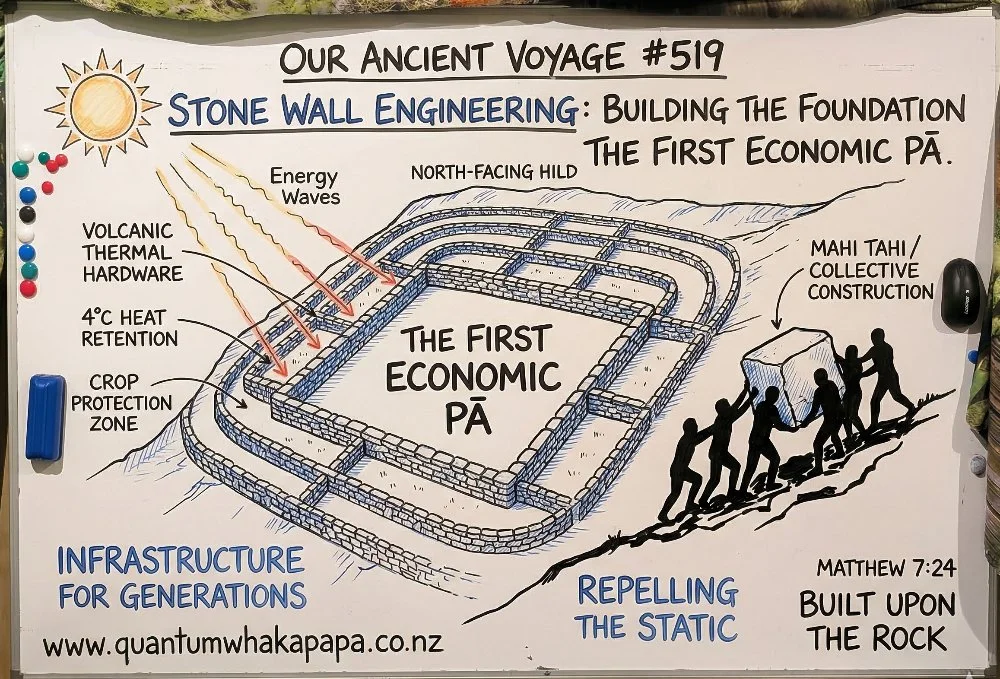
OUR ANCIENT VOYAGE #519 - STONE WALL ENGINEERING: THE FIRST ECONOMIC PĀ
The Civil Engineering of Survival
As our ancestors initialised their settlements in Te Tai Tokerau, they moved beyond mere survival and into the realm of advanced civil engineering. While the "Kūmara Code" dealt with biological software, the creation of the great stone fields was the construction of the permanent hardware. In our framework, a "ping" is a targeted spiritual signal used to verify a location and establish a connection, it was the moment our ancestors' intention met the responsive frequency of the land. Once that connection was secured, they began to reshape the physical environment to support intergenerational wellbeing.
According to Research Report #254, the stone walls of the Far North were not just simple fences. They were sophisticated thermal engines. By clearing the volcanic landscape and stacking rocks into rows on north-facing slopes, the first constructors created a massive "heat sink" system. These stones absorbed the sun's energy during the day and radiated it back into the soil at night, raising the ground temperature by as much as 4°C. This wasn't just gardening, it was the first iteration of the Economic Pā, a structural investment designed to protect the collective food supply from the unpredictable static of the climate.
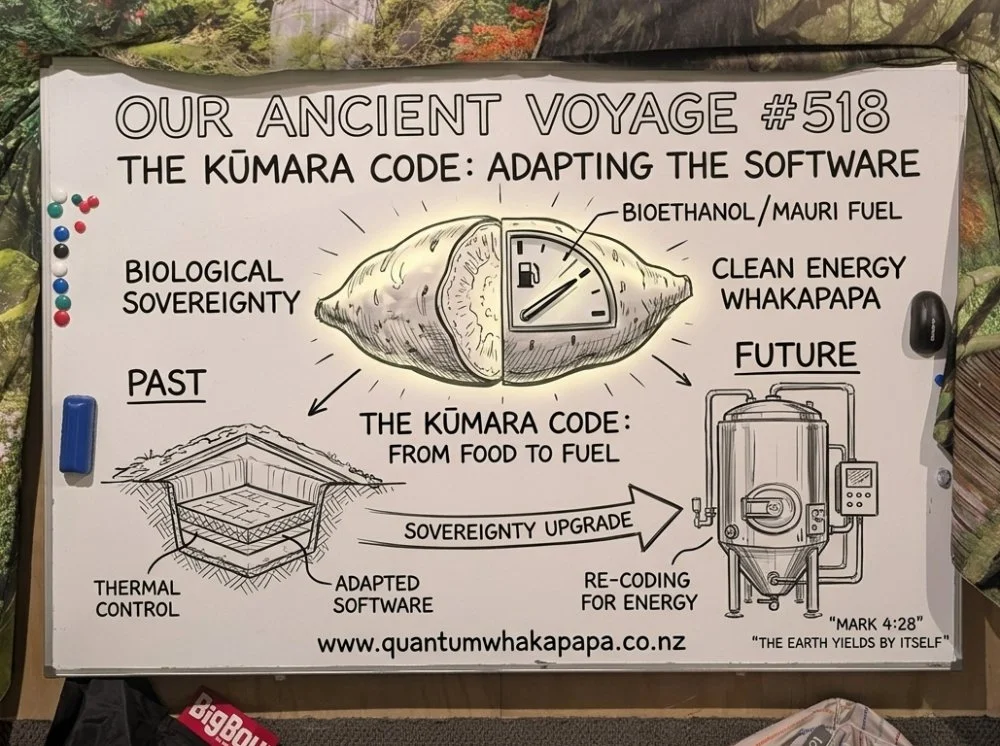
OUR ANCIENT VOYAGE #518 - THE KŪMARA CODE: ADAPTING THE SOFTWARE
The Biological Hardware Challenge
When our ancestors arrived in Te Tai Tokerau, they didn’t just bring people and tools, they brought a biological "Installation Package" consisting of tropical plants like kūmara, taro, and uwhi (yam). However, they quickly discovered that the "Hardware" of the land was different from the tropical Hawaiki server. The climate was cooler, the seasons were sharper, and the traditional growth cycles were under threat.
In our framework, a "ping" is a targeted spiritual signal used to verify a location and establish a connection, it was the moment the intention of the voyager met the response of the land. Once that connection was confirmed, the real mahi of adaptation began. The settlers had to "re-code" their agricultural software to ensure these life-sustaining plants could survive the frost and the damp.
Technical Innovation in the Soil
According to Research Report #254, this required a massive leap in civil and biological engineering. To keep the kūmara alive, the first settlers developed sophisticated storage systems known as Rua. These weren’t just holes in the ground, they were temperature-controlled "data centres" designed to keep the tubers dormant and dry through the winter.
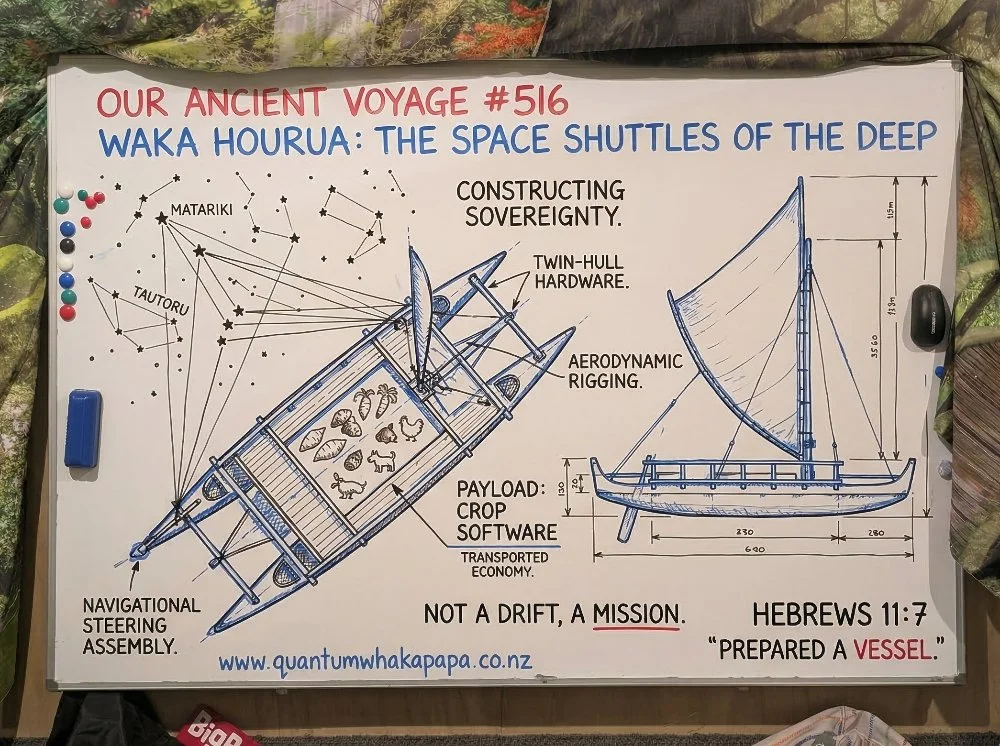
OUR ANCIENT VOYAGE #516 - WAKA HOURUA: THE SPACE SHUTTLES OF THE DEEP
The High-Tech Hardware
In popular history, the vessels that brought our ancestors to Te Tai Tokerau are often called "canoes." However, the term is a massive understatement. Based on the technical data in Research Report #254, these were Waka Hourua, double-hulled, ocean-going spacecraft of the 13th century. They were the most sophisticated pieces of maritime hardware on the planet at the time.
A Waka Hourua was not just a boat, it was a floating "Transported Economy." These vessels were engineered with twin hulls for stability in the turbulent Tasman and Pacific swells, connected by a solid deck structure capable of carrying a massive payload. This wasn't a "discovery" trip, it was a colonisation mission. They carried the hardware of a new world: seeds, plants, animals, and the "Social Software" of a complex civilisation.
The Transported Economy
When we talk about the "First Ping" in #515, we define a "ping" as a targeted spiritual signal sent to verify a location and establish a connection, it was the moment the intention of the voyager met the response of the land. Once that connection was confirmed, the Waka Hourua were the delivery systems for the "Installation Package."
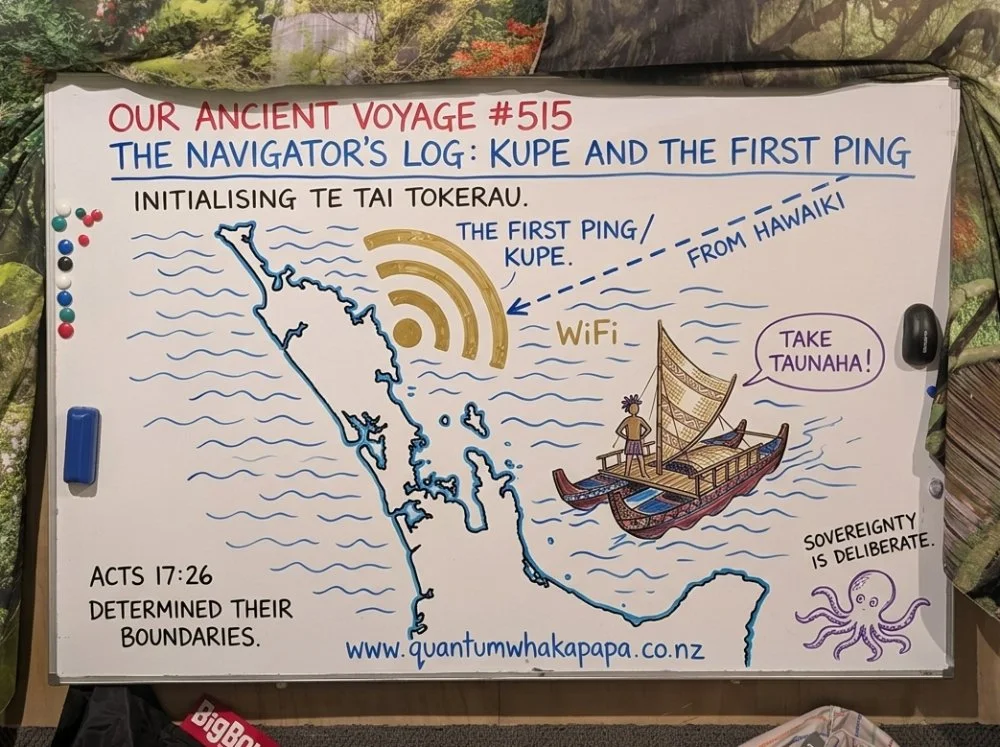
OUR ANCIENT VOYAGE #515 - THE NAVIGATOR'S LOG: KUPE AND THE FIRST PING
The Deliberate Signal
In the old "Babylonian" history books, the arrival of Māori in Aotearoa is often portrayed as a series of accidents, of rafts drifting aimlessly across the Pacific. But the data in Research Report #254 tells a different story. This was not a drift, it was a deliberate, high-frequency "ping" to the land.
In our framework, a "ping" is a targeted spiritual signal sent to verify a location and establish a connection, it was the moment the intention of the voyager met the response of the land.
Around 1000 CE, according to our northern oral traditions, the great navigator Kupe followed the migratory patterns of the long-tailed cuckoo (pīpīwharauroa) and the flight of the stars to find the "giant finger" of the North pointing into the Pacific. This was the first structural exploration of Te Ika-a-Māui. Kupe wasn't just looking for land, he was initialising a connection between the human spirit and the Mauri of this specific geography.
The Far North Anchor
The first landfalls were not random. The Far North, with its massive sand dunes and deep-water harbours, acted as the primary "Access Point" for the Pacific. Kupe’s arrival in the Hokianga and the subsequent naming of sites established the first Take Taunaha (rights of discovery).
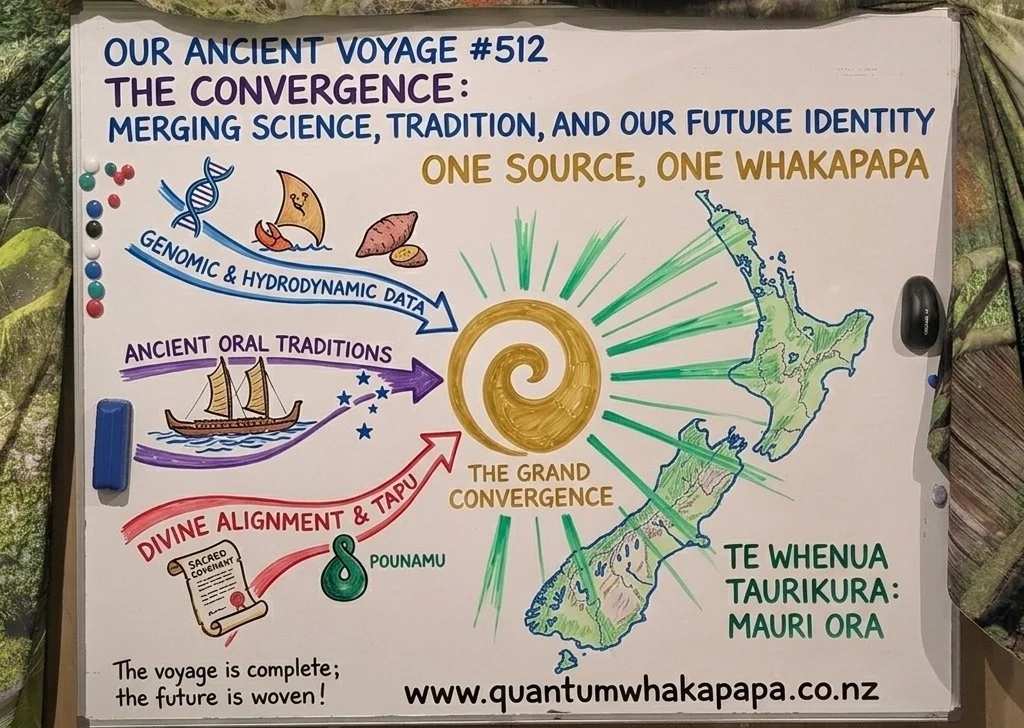
OUR ANCIENT VOYAGE #512 - THE CONVERGENCE: MERGING SCIENCE, TRADITION, AND OUR FUTURE IDENTITY
The Grand Convergence
Over the last eleven insights, we have traced the steps of our ancestors through time and across vast oceans. We moved from the rich soil of East Africa through the drowning lands of Sundaland, along the ancient paths of the Levant, and across Te Moana-nui-a-Kiwa to our home in Taitokerau. Today, we bring these threads together to look at the unified picture of who we are.
For many years, skeptics and colonial theories tried to tell us that our history was a series of accidents, or that our sacred purākau were merely fairy tales. But when we look closely at hard scientific data, we see that science does not contradict our ancestral memory. Instead, it acts as a modern witness, proving the immense intelligence, design, and spiritual logic of our people.
The Scientific End of the Accidental Drift Myth
For decades during the mid-20th century, critics like historian Andrew Sharp claimed that our ancestors could not navigate deliberately across long ocean distances. They argued that our people lacked proper tools and simply drifted on currents, landing on islands purely by chance. Modern science has completely dismantled this theory.
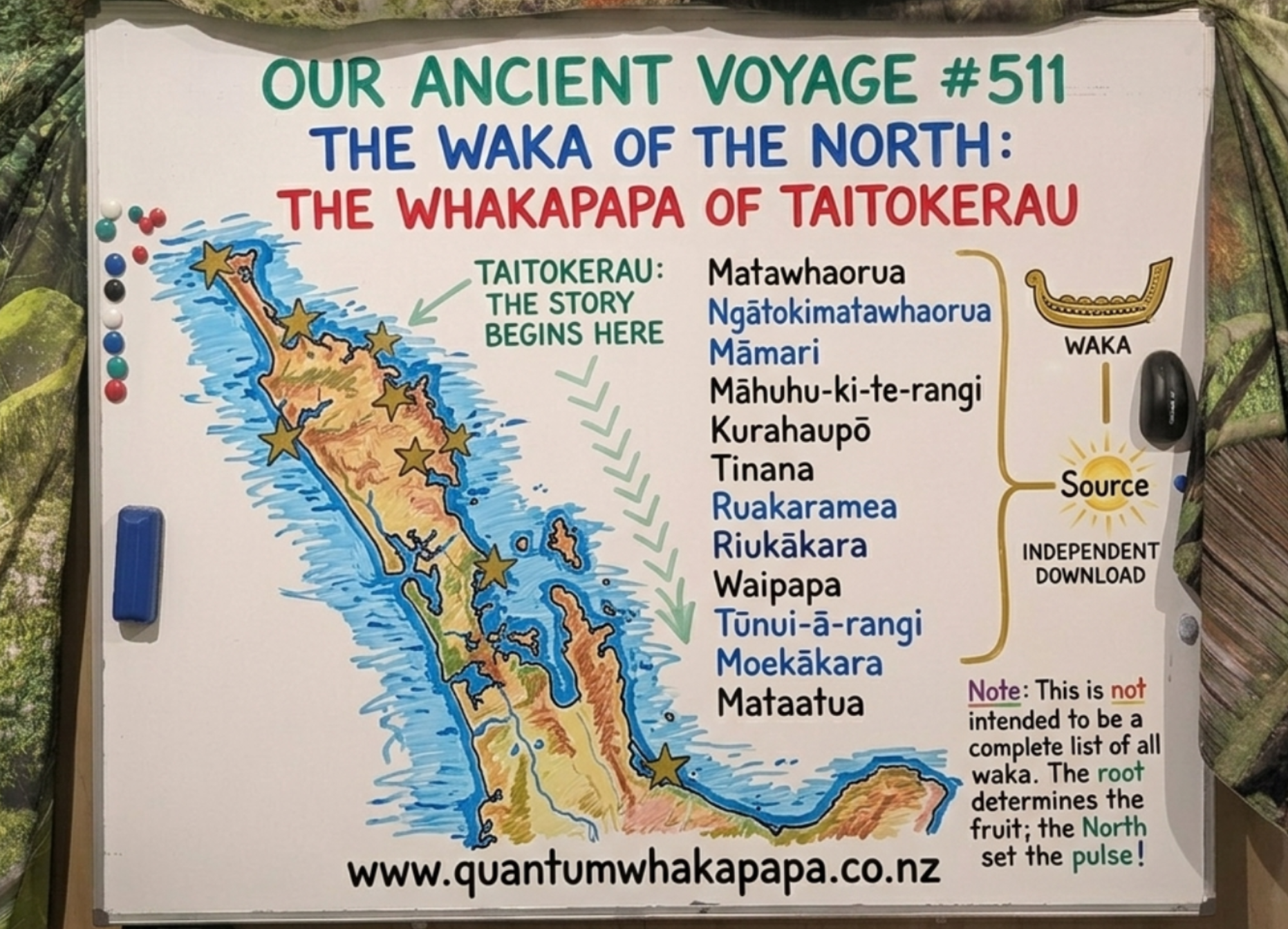
OUR ANCIENT VOYAGE #511 - THE WAKA OF THE NORTH: THE SPECIFIC WHAKAPAPA OF TAITOKERAU
While Kupe mapped the path, it was the great voyaging waka that followed him who wove the permanent whakapapa of the land. In this insight, we land in the North, Taitokerau. This is the "cradle" of our nation, where the first ancestors established a way of life that was tuned directly into the Source, independent of any outside influence.
The Landfall of Ancestors
Taitokerau served as the primary gateway for the most significant ancestral waka. These weren't just boats; they were mobile communities carrying the cultural and genetic blueprints for our future.
Matawhaorua: the waka of Kupe, the discoverer of New Zealand, landed in Hokianga, the cradle of Aotearoa
Ngātokimatawhaorua: The great waka of Nukutawhiti, which landed in the Hokianga, "the place of Kupe's great return". (My tūpuna arrived on this waka; also on Tainui and Horouta which made landfall further south.)
Māmari: Ōtāko (Doubtless Bay). Central to the history of Ngāti Kahu.
Māhuhu-ki-te-rangi: Associated with Ngāti Whātua, establishing a presence in the Northern harbours that remains vibrant today.
Kurahaupō: North Cape/Muriwhenua.
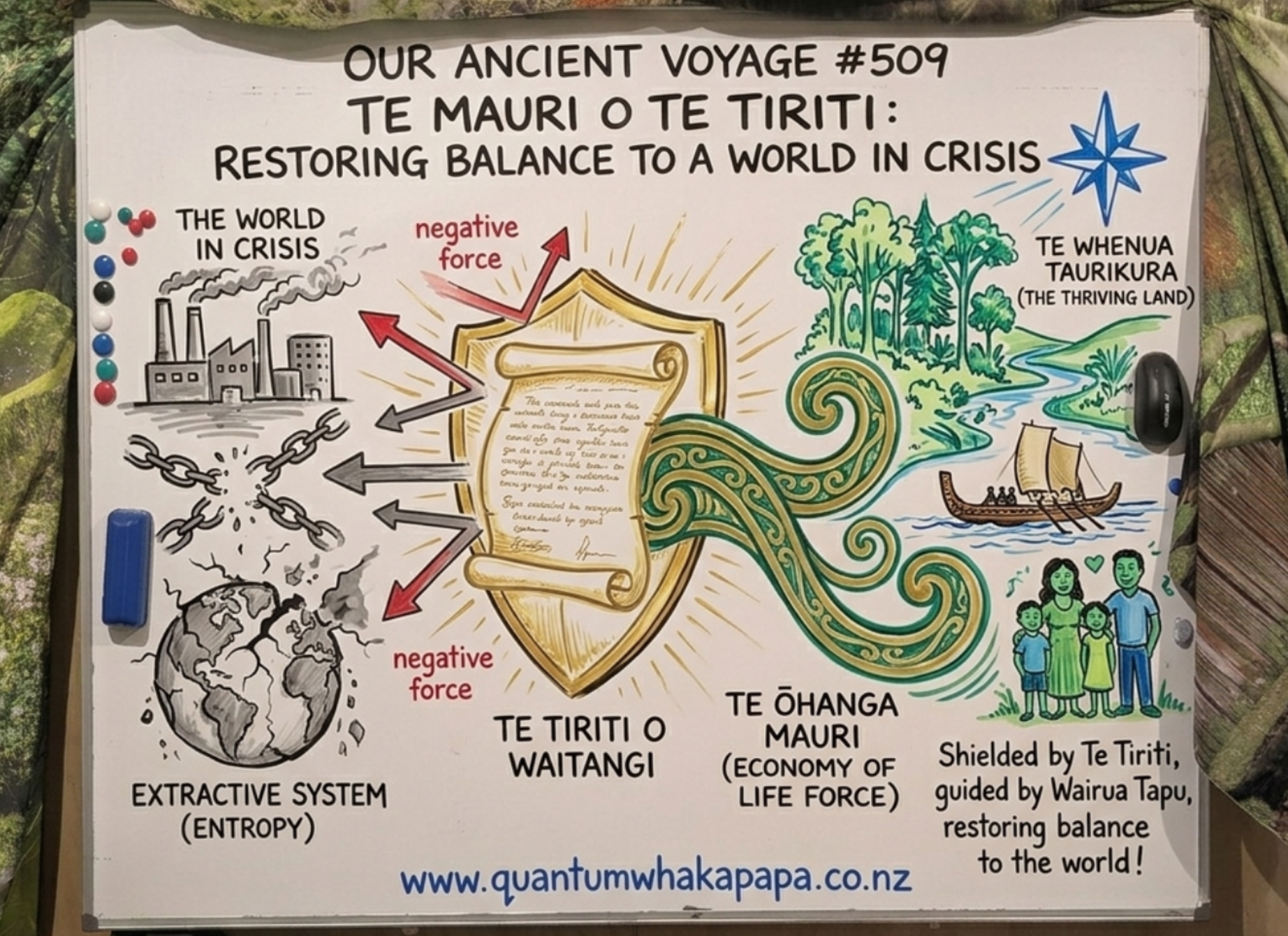
OUR ANCIENT VOYAGE #509 - TE MAURI O TE TIRITI: RESTORING BALANCE TO A WORLD IN CRISIS
A Planet Out of Balance
When we look across the globe today, we see a world navigating intense, overlapping crises. Unprecedented social inequality, mental health challenges, environmental instability, and continuous international conflict press heavily on human communities everywhere. These widespread issues are not accidental events. They are the direct result of centuries dominated by an entropic, extractive system, an artificial way of operating that treats Papatūānuku as a dead commodity and people as isolated financial units.
For generations, this short-term approach has drained the natural life force of regions, leaving local whānau with the leftovers while exporting the core value offshore. Yet, as we trace the long footsteps of our ancient journey across the oceans, we see that our people were preserved and positioned for such a time as this.
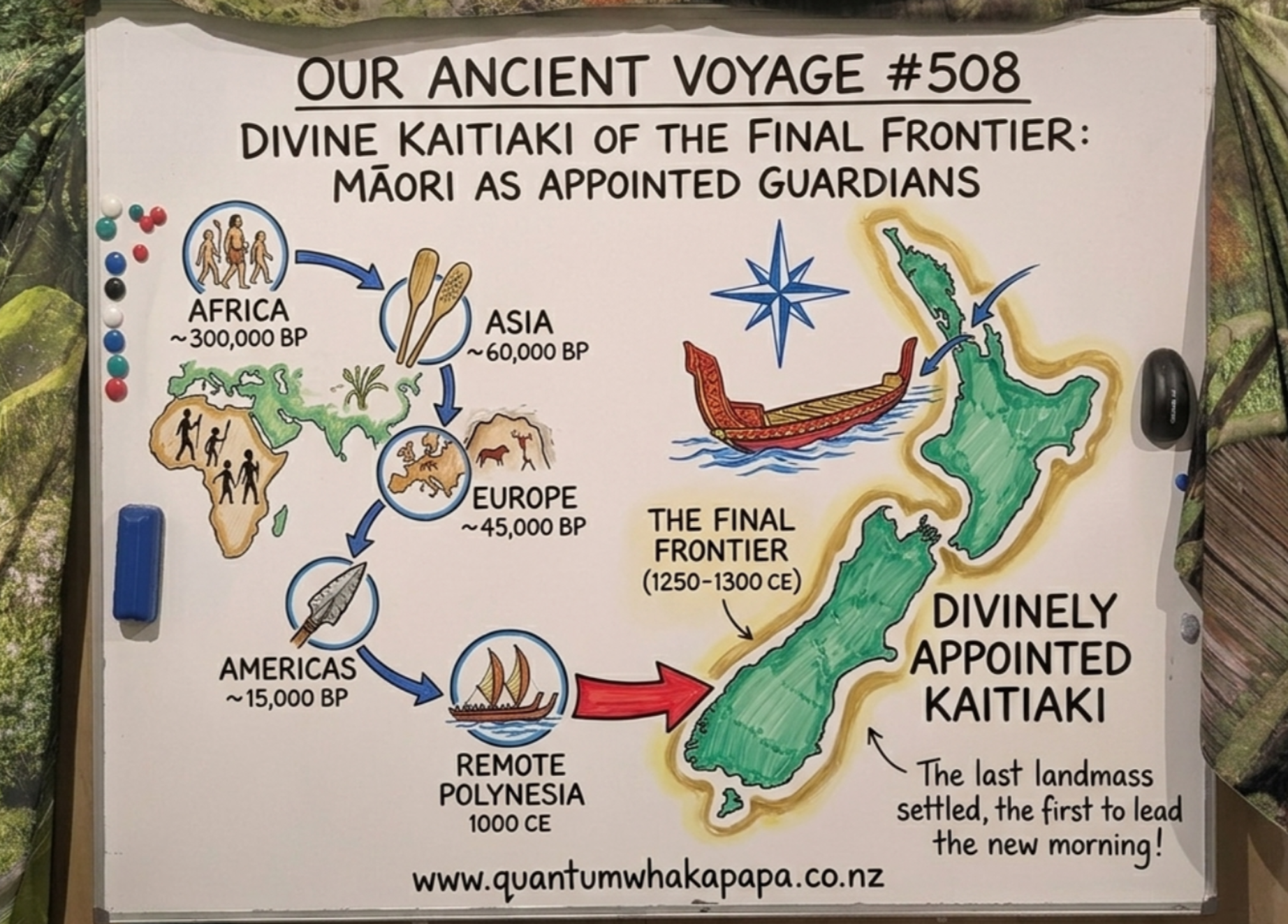
OUR ANCIENT VOYAGE #508 - DIVINE KAITIAKI OF THE FINAL FRONTIER: MAORI AS APPOINTED GUARDIANS
The Last Settlement
When we trace the long path of human history across the planet, we see a story that spans hundreds of thousands of years. From the rich soil of East Africa through Eurasia, across the land bridge of Sahul, and into the far reaches of the High Arctic, humanity steadily moved out. Yet, for thousands of years, the vast expanse of the South Pacific remained entirely silent, untouched by human feet.
Aotearoa was the very last major habitable landmass on Earth to be settled by humans. Our ancestors did not stumble upon these islands by accident or wild desperation. They arrived around 1250-1300 CE as master navigators, carrying a precise understanding of the stars, ocean currents, and wind patterns. This was not a random end to a long journey; it was the divine timing of a long-ordained voyage, positioning Māori as the appointed kaitiaki (guardians) of the globe's final frontier.