
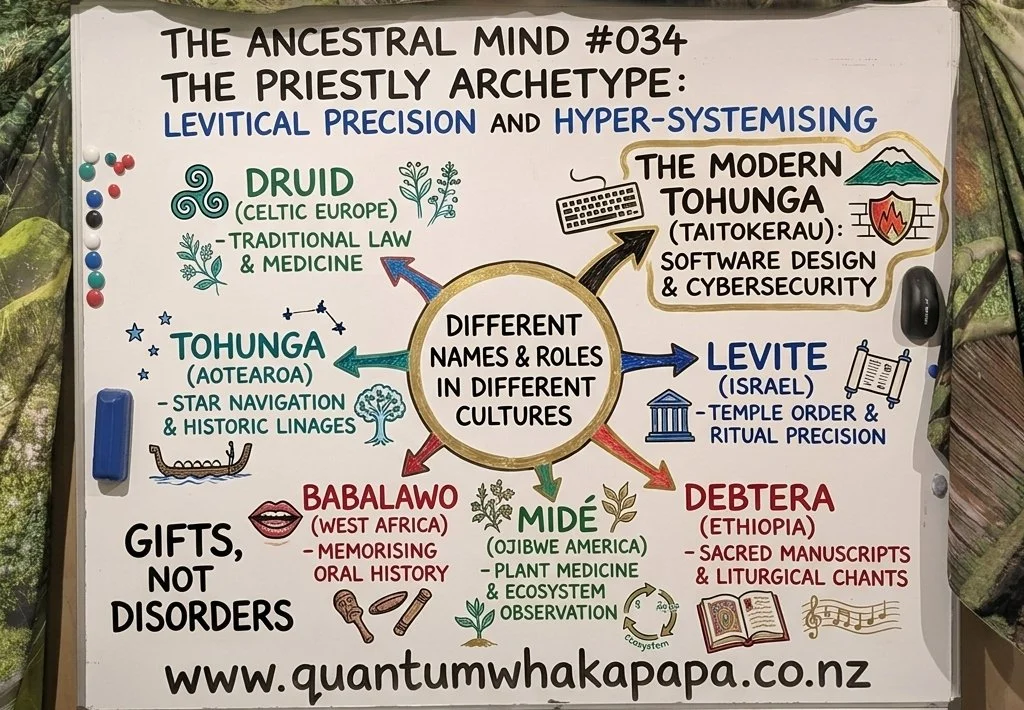
THE ANCESTRAL MIND #034 - THE PRIESTLY ARCHETYPE: THE DEEP FOCUS MINDS ARE SACRED GUARDIANS
The pressure of perfection
In our modern workplaces and schools across Taitokerau, having an intense attention to detail, a deep need for predictability, or a strict daily routine is often labeled as a major flaw. If a young person lines up their things perfectly, focuses entirely on one single topic for days, or struggles when a plan changes unexpectedly, the system quickly calls it an impairment or a medical disorder. But when we look at our tamariki and whanau with real common sense and historical clarity, we see something entirely different. These exact same traits were never seen as broken by our ancestors, they were respected as vital community strengths.
Ancient global guardians
When we look across human history, long before modern industrial systems tried to standardise human behavior, communities all over the world always set apart specific individuals to look after their sacred spaces. In West Africa, the Yoruba people turned to the Babalawo as the wise keepers of secrets to memorise vast oral histories. In ancient Europe, the Celtic Druids spent decades in training to completely master laws and plant medicine without writing anything down. In South America, the Inca Willaq Umu precisely tracked solar cycles to protect agriculture, while in ancient India, Brahmin scholars used repetitive chanting to pass down texts with absolute accuracy across generations.
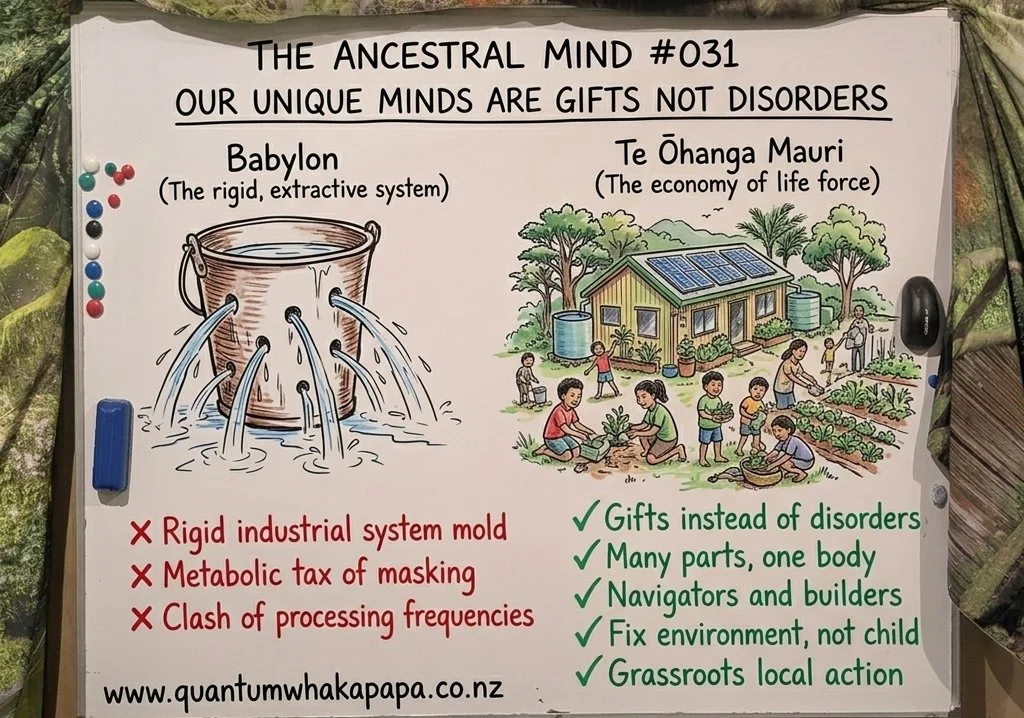
THE ANCESTRAL MIND #031 - OUR UNIQUE MINDS ARE GIFTS NOT DISORDERS
Real talk about labels
Let us be completely honest about what is happening to our kids here in Taitokerau. Every single week, parents across Taitokerau are completely exhausted and stressed out because their child has been sent home from school again or labeled as a major problem in the classroom. We are told by outside experts and official agencies that conditions like Takiwātanga, what people call Autism, or Aroreretini, known as ADHD, are behavioral disorders that need to be managed with medication or special clinics. But looking closely at our families, I see a much simpler truth. The problem is not with our children, it is with a rigid system that expects every single mind to work exactly the same way.
This post marks the start of a plain-spoken, ten-part series about our ancestral mind. Over the coming weeks, we are going to look at the hard realities of our community, from classrooms that feel like cages to the genuine need for practical skills on our land and in technology. I’m not interested in grand, wishy-washy academic theories. What we need is real, grassroots solutions that make sense to everyday people.
The industrial assembly line
The modern education and work system was built over a century ago to turn people into productive workers for factories. It relies entirely on standardisation, strict clock-time, and forcing children to sit perfectly still for hours on end. When a child with an active, fast-moving mind does not fit that narrow mold, the system protects itself by calling the child broken. It is a very lazy way of explaining human differences, and it is causing real harm to our whānau.