
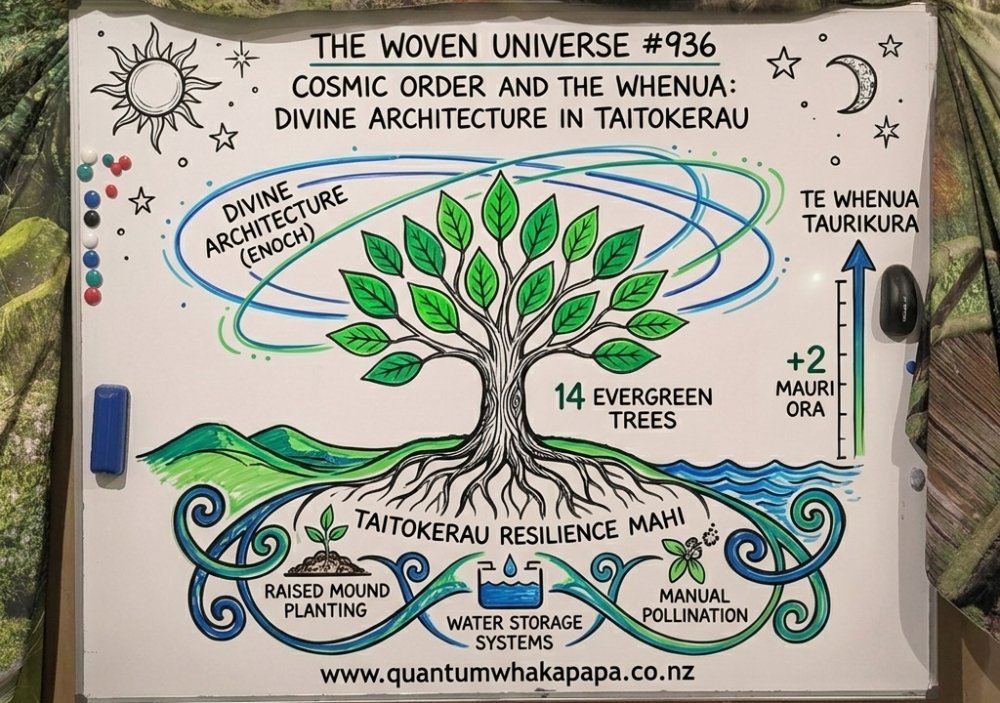
THE WOVEN UNIVERSE #936 - COSMIC ORDER AND THE WHENUA: DIVINE ARCHITECTURE IN TAITOKERAU
The Fixed Laws
In the ancient Ethiopian books of Enoch and Jubilees, we find a detailed cosmology that reveals the universe is not a collection of random accidents, but a divinely ordered masterpiece. The Book of Enoch describes the fixed paths of the sun, the moon, and the stars, promising that the natural laws ordained by God will not fail. This celestial order acts as a "Kidan" or covenant, binding the Creator to His creation in a promise of stability and continuity. Even when the weather feels chaotic, there is an underlying architecture intended for the preservation of all life.
Kia ora e te whānau. It is a joy to continue our journey into the deep wisdom of the ancients and how it grounds us right here in the North. When we look at the challenges facing our whenua, it is easy to feel overwhelmed by the shifting seasons and the storms that seem to grow more intense each year. But there is a divine order that holds us together, a "Woven Universe" that ensures we are never truly lost.
Sacred Environmental Rhythms
The Book of Jubilees reinforces this by showing that time itself is a participant in the covenant. The rhythms of the seasons and the sacredness of rest are woven into the very fabric of history through a solar calendar. This resonates deeply with our own Māori maramataka, where we align our planting, fishing, and communal activities with the natural cycles of the environment. For us in Taitokerau, this provides a theological basis for resilience, teaching us that our sustainable management is a way of honouring the divine rhythm of the land.
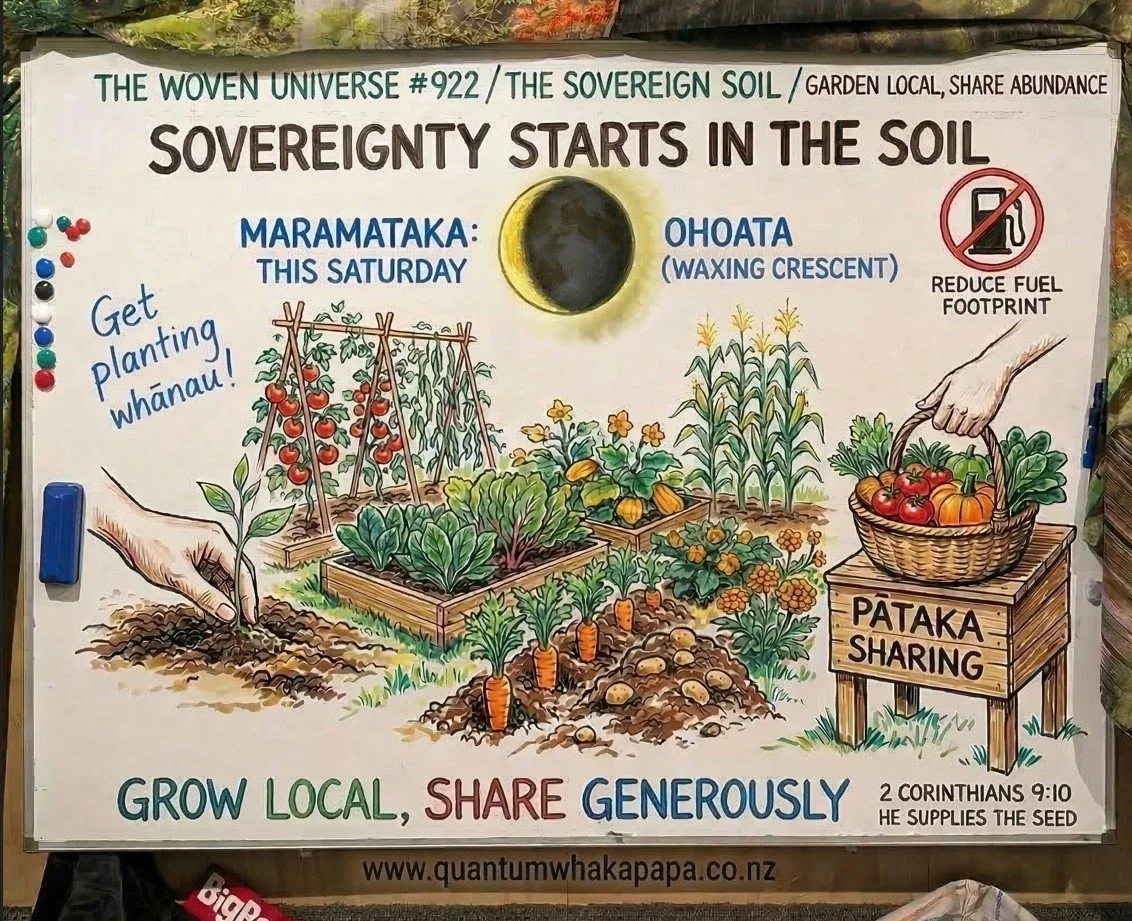
THE WOVEN UNIVERSE #922 - THE SOVEREIGN SOIL: RECLAIMING YOUR GARDEN
The Oil Spike and the Local Solution
We are currently witnessing a significant spike in global oil prices, which impacts every part of our lives. When fuel costs rise, the price of everything transported to us rises too. One of the most effective ways to push back against this pressure is to bring production as close to the point of consumption as possible. By growing food in your own backyard, you are not just saving money, you are drastically reducing the fuel footprint required to keep you fed.
In Research Report #253, we explore the transition from being a consumer to becoming a steward. Stewardship starts with the soil. When you plant a garden, you are stepping out of a system that relies on high-energy transport and into a system that relies on the natural intelligence of the earth. It is a simple, powerful shift in frequency.
Generosity and the Pātaka
A garden is a living system of abundance. If you find yourself in a position to grow more than you need, we encourage you to use that extra to strengthen your community. You might choose to sell your surplus at a local market, share it over the fence with your neighbours, or place it in a community pātaka (food pantry).
In the Woven Universe, resources are meant to flow. When you share from your garden, you are strengthening the Whanaungatanga of your rohe.