
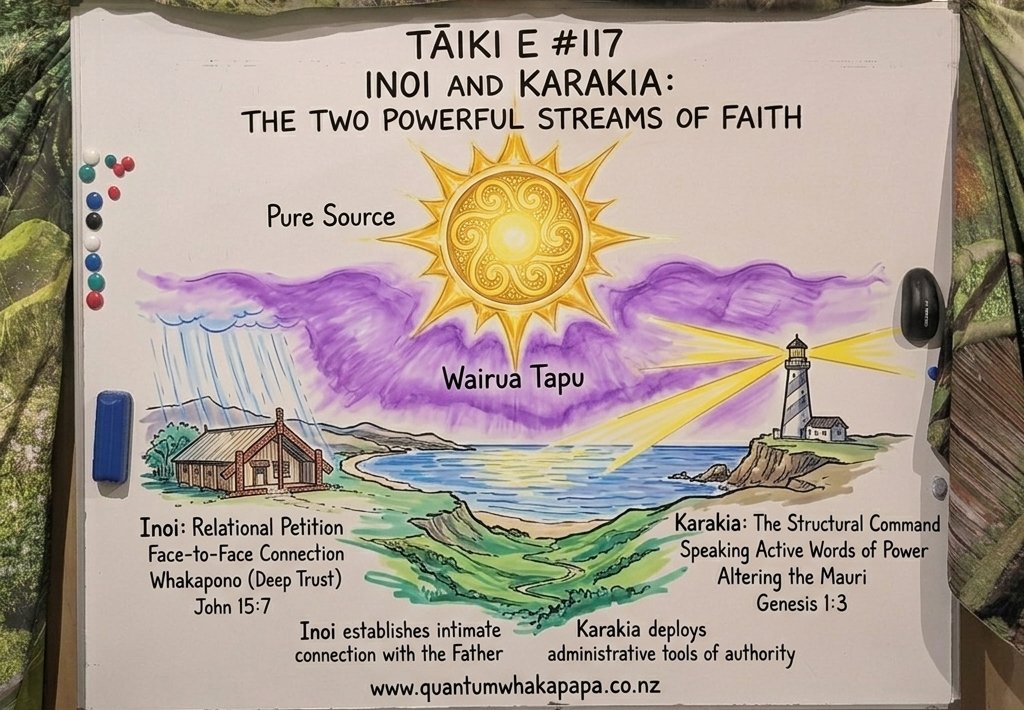
TĀIKI E #117 - INOI AND KARAKIA: THE TWO POWERFUL STREAMS OF FAITH
Two Distinct Streams
Kia ora e te whānau. Here in Taitokerau, we are on a long-term journey to fix the soil of our communities and build a better society. To achieve this holistic well-being, we must understand the spiritual blueprints left for us. A common point of confusion in our daily mahi is the difference between inoi and karakia. Many people treat them as interchangeable words for prayer, but when we look closely at our linguistic history and the translation architecture of the 1868 Paipera Tapu, we see they represent two completely different streams of spiritual reality designed to work in perfect harmony. I too previously confused these terms in my earlier writing, lumping them together under the broad umbrella of prayer. Following some valuable feedback, I’ve researched and reflected on the true architectural blueprints of our language, and will do my best to use the terms correctly in future.
Long before the gospel came to our shores, our ancestors practised karakia. It was a foundational part of life, a way of interacting with the spiritual forces and the mauri, or life force, of the environment. When the early missionaries arrived, they used existing words to map out scriptural truths. The core concept of karakia was never a pagan mistake that needed to be discarded, it actually reflects a profound, active spiritual technology that has been recorded in the Bible since the very beginning of time.
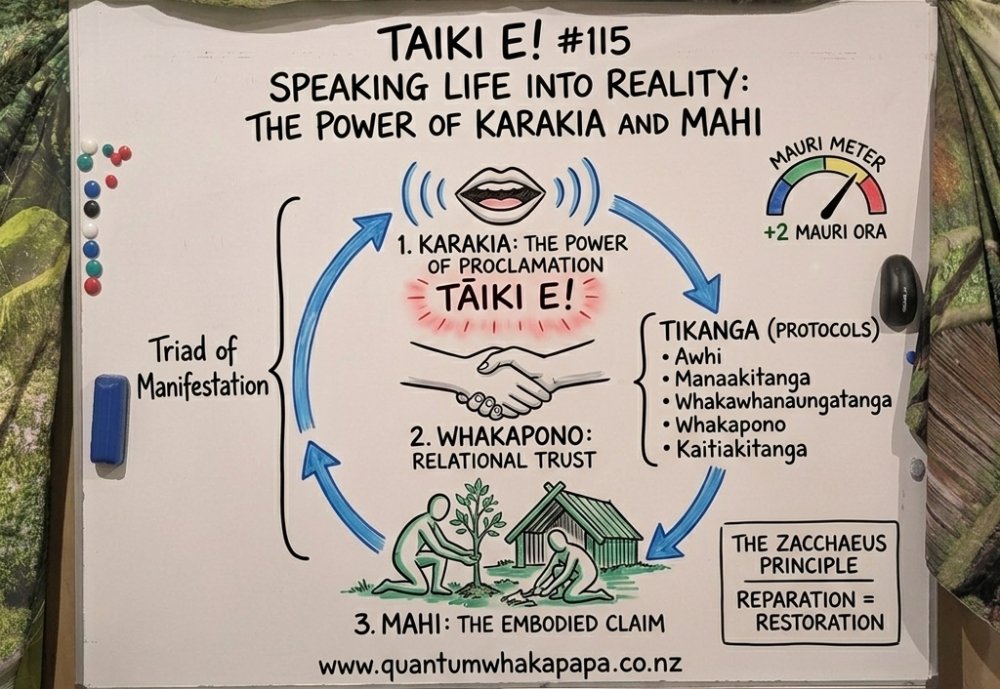
TAIKI E! #115 - SPEAKING LIFE INTO REALITY: THE POWER OF KARAKIA AND MAHI
The Power of Proclamation
In Te Ao Māori, we understand that language is a gift from God, used to express His glory. To "claim" a divine promise, we must first speak it into existence. This is the heart of karakia. While traditional karakia were formulaic chants, our Christian karakia are petitions to a gracious God, a primary way of communicating with the Atua. We use te reo Māori because its soft and flowing nature facilitates a deep communion with the Spirit.
Kia ora e te whānau. It is time to get practical about how we walk out these ancient truths in our daily lives. We have looked at the 81 books of the Ethiopian canon and seen how they mirror our own history, but the real wero is how we bring those promises from the page into our homes, our marae, and our whenua.
A Fence of Life
Karakia should be constant, early in the morning, before our meals, and during our mahi. It acts as a "fence of life" that protects our house and our soul from the hardships brought by the enemy. When we finish a karakia with words like "Tūturu ka whakamaua kia tina, tina! Haumi e, hui e, tāiki e!" we are not just being poetic. We are "fixing" the promise into our reality, sealing the word so it becomes a firm foundation for our lives.