
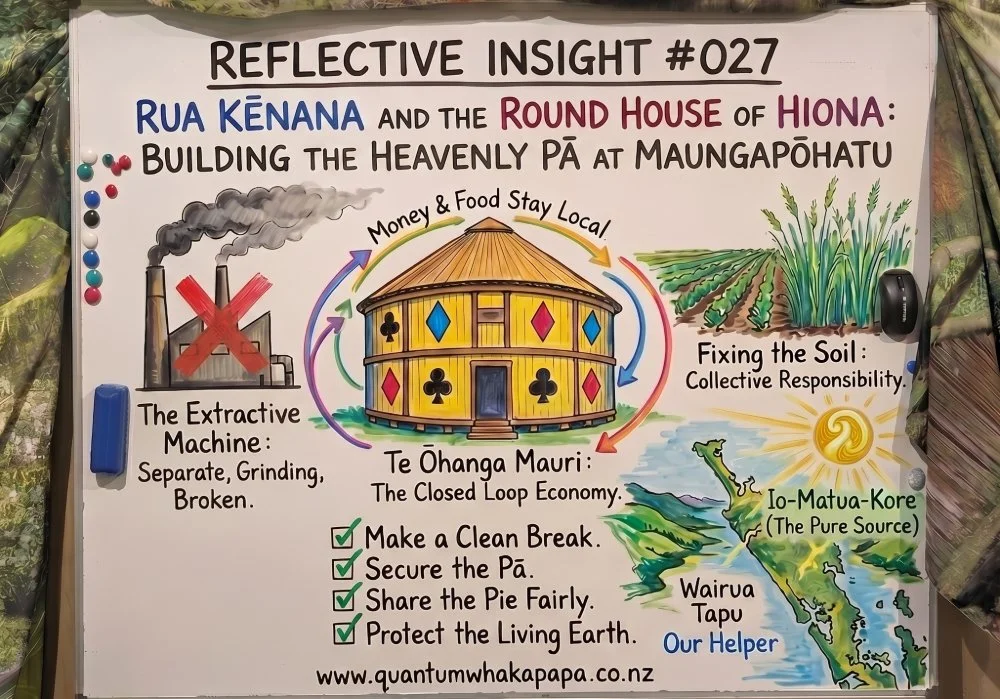
REFLECTIVE INSIGHT #027 - RUA KĒNANA - BUILDING THE HEAVENLY PĀ AT MAUNGAPŌHATU
A Vision of Hope
In the misty, rugged heart of the Urewera forest, there is a powerful story of hope and heartache that every single one of us should hold close to our hearts. It is the story of Rua Kēnana Hepetipa and the beautiful, safe community he built for his people at Maungapōhatu. Following a deep spiritual guidance and the older prophecies of Te Kooti, Rua led his followers, known as the Iharaira, away from the distractions and pressures of the outside world. Together, they cleared the bush to build a dedicated city of God right on the steep slopes of their sacred mountain.
Escaping the Machine Mindset
For Rua, this massive hill community was not just about religion or hiding away, it was a practical way to protect the true standing and well-being of his people. He saw clearly how the colonial system was set up to turn local people into cheap workers on their own ancestral land. Rua decided to make a clean break from that broken path. He imagined a safe home where daily work and deep faith lived together as one, where families looked after each other, and where the future was decided by the community around the table, not by a cold bureaucracy in a distant city.