
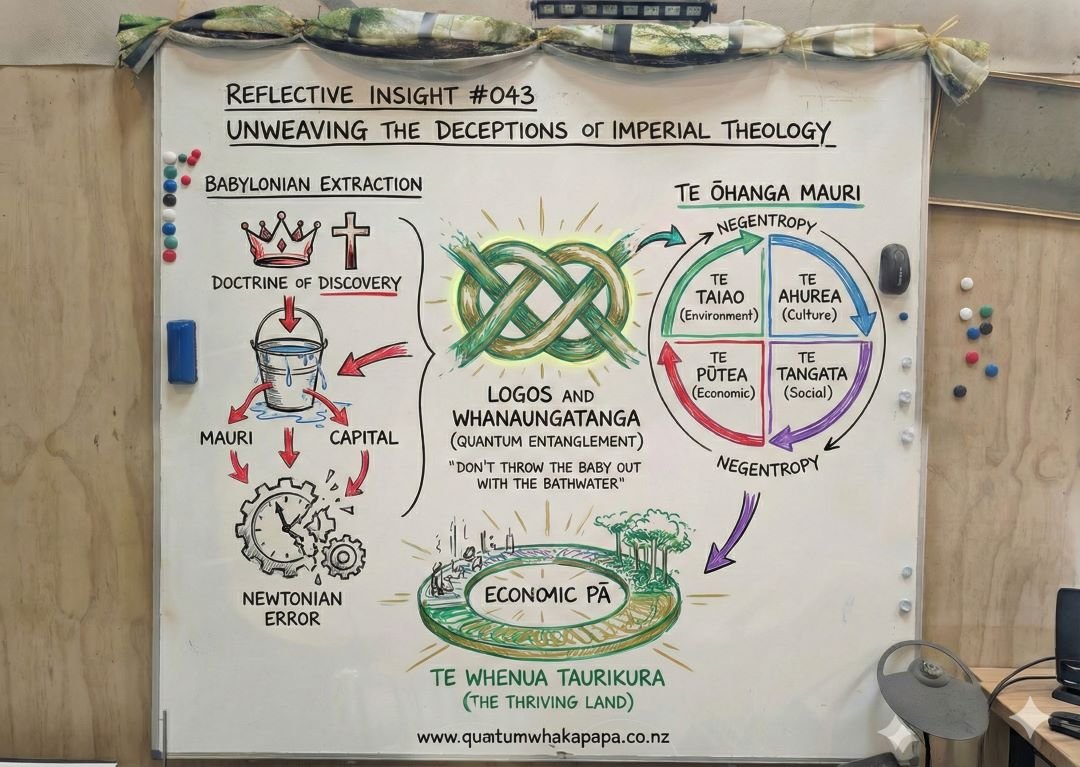
REFLECTIVE INSIGHT #043 - UNWEAVING THE DECEPTIONS OF IMPERIAL THEOLOGY
A Hijacked Faith
Kia ora e te whānau. Pull up a chair and let’s have a real talk for a moment. 🌿 We often think of our faith or our deepest beliefs as a direct, unedited download from the heavens, a fixed rock that has never changed. But if we look at the whakapapa of history, we start to see the fingerprints of men where we expected the hand of the Divine. Much of what we call "standard doctrine" in Te Tai Tokerau was forged in the fires of political survival and the needs of empire.
In the language of the Quantum Whakapapa Project, many of these "rules" are "Bad Explanations", ideas that are easy to vary because they served a specific person’s power rather than the universal truth of the Woven Universe. When we look at how theology changed around the Doctrine of Discovery, slavery, and lending with interest, we see a pattern of "Babylonian" deception designed to support "Chrematistics", the accumulation of money for its own sake, over "Ekonomia", the stewardship of the household.
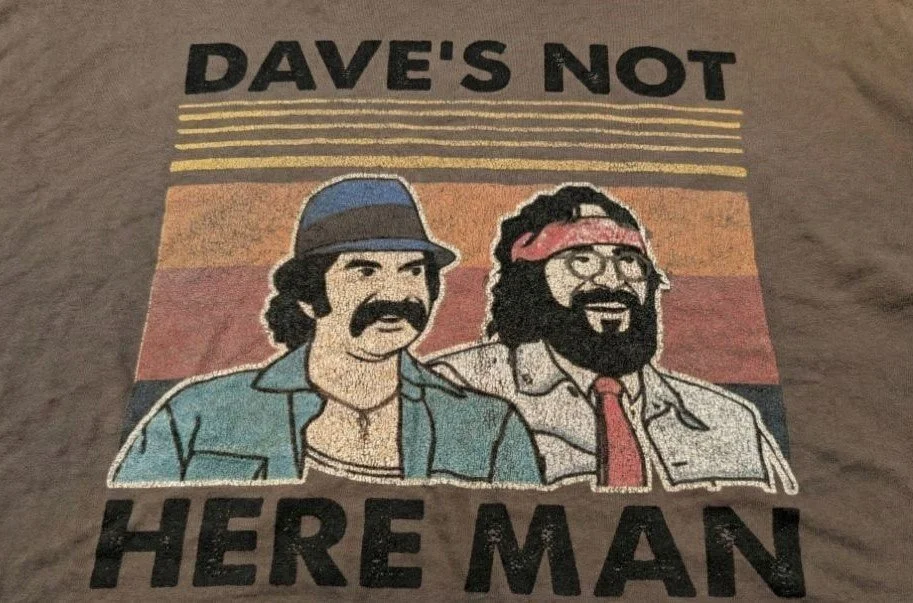
REFLECTIVE INSIGHT #042 - DAVE'S NOT HERE, MAN: WHY SOME OF US IN THE NORTH NEED TO BACK OFF THE WEED
The Checked-Out Reality
We’ve all heard the old Cheech and Chong bit where one's knocking on the door and the other keeps saying, "Dave’s not here, man." It’s a classic, but when I look around our beautiful Taitokerau, I see too many of our tāne and rangatahi living in that punchline. They are physically present, but the "Universal Constructor", the part of the human spirit designed to transform reality, has effectively left the building.
My Favourite Shirt
Now, I’m not wearing it today, but my favourite shirt actually has that exact quote on it. It’s funny, but when the laughter fades, we have to look at the truth. To move from a "Static Society" to a regenerative one, we need our "Universal Explainer" capability to be sharp. When our senses are dulled, we lose the Mana required to collapse the wave function of potential into a reality of abundance.

REFLECTIVE INSIGHT #022 - HAUORA IN TAITOKERAU - HEALING THE FLOW OF MAURI
In the quiet of a Taitokerau morning, before the world wakes up to the noise of the "Babylonian" grind, there is a moment of pure clarity. You can feel the breath of the land—the Mauri—moving through the trees and the mist. In our traditional way of seeing, health isn’t just about the absence of sickness; it is about the state of this breath. Hauora is the "breath of life" shared between us, our tūpuna, and the whenua. When that breath is restricted, we feel it in our bodies, our minds, and our whānau.
For too long, we’ve been told that health is a private matter or a line item in a government budget. This is the "Newtonian Error" at work—treating people like separate parts in a machine. If a part breaks, we try to fix it in isolation, often ignoring the toxic soil it’s planted in. In the Babylonian system, we see health as something to be managed by "experts" in far-off buildings, usually after the damage is already done. This extractive model creates social entropy—a state of disorder where we are lonely, stressed, and disconnected from the very things that give us life.
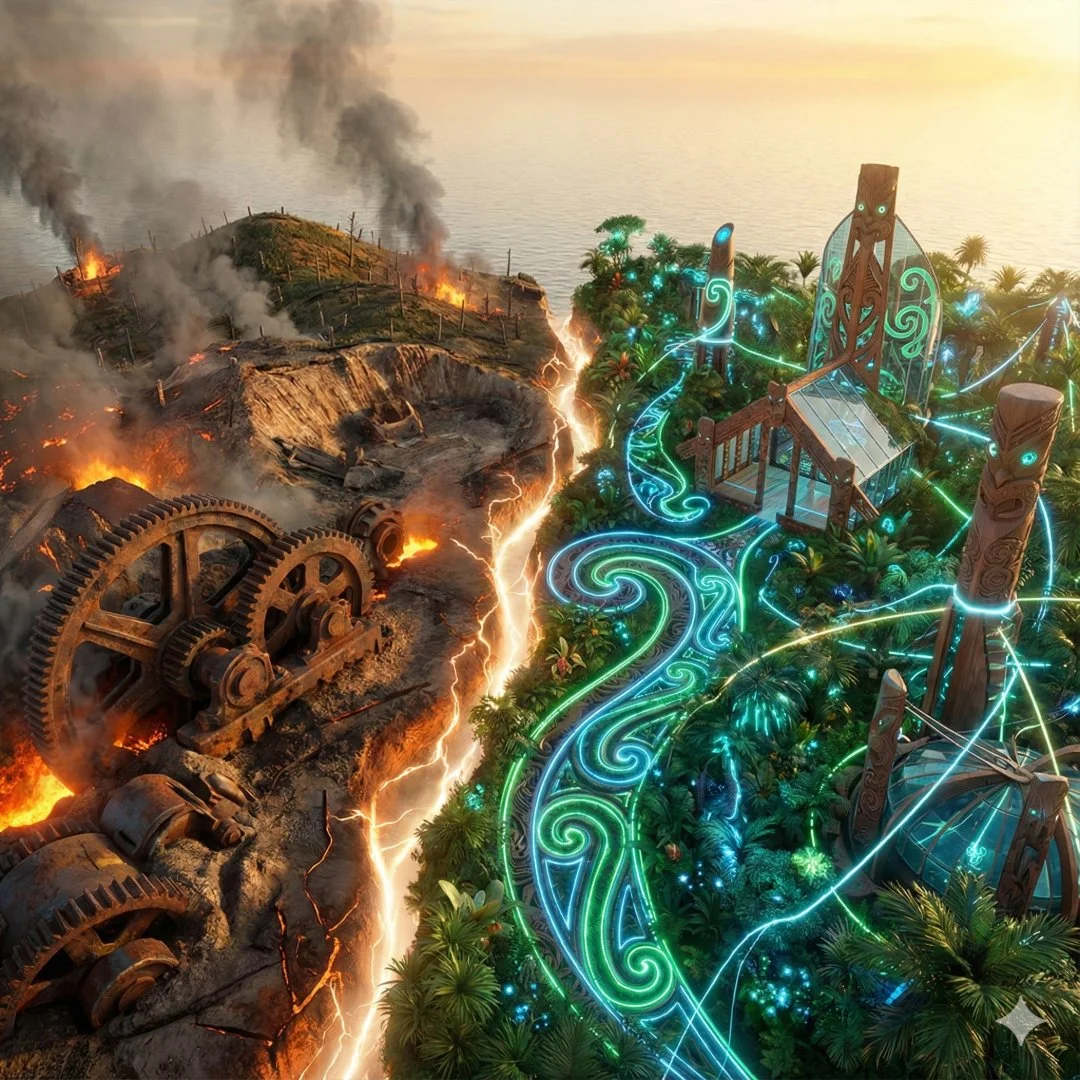
REFLECTIVE INSIGHT #020 - THE FIRE FRONT - WHAT MADEIRA TEACHES US ABOUT BABYLON
Long before the "Leaky Bucket" economy hit our shores in the North, the blueprint for extraction was drawn on a tiny island in the Atlantic called Madeira. In the 15th century, Portuguese settlers looked at a sub-tropical paradise and didn't see an ancestor; they saw a commodity. They named it "Madeira"—literally meaning "wood"—and then they proceeded to burn and fell every tree in sight to fuel the world’s first great sugar boom.
This was the birth of "Babylonian" capitalism. It wasn't just about trade; it was about the "boom-bust-quit" cycle. Using slave labour and "free" natural wealth, they achieved unimaginable productivity. But it was thermodynamically unsound. It took 60kg of wood to refine just 1kg of sugar. Within decades, the forests were gone, the soil was exhausted, and the "embodied energy" of the island had been exported to the banks of Europe. When the Mauri of the island was depleted, the capital simply "quit" and moved to Brazil and the Caribbean, leaving behind a high-entropy residue of social and ecological disorder.
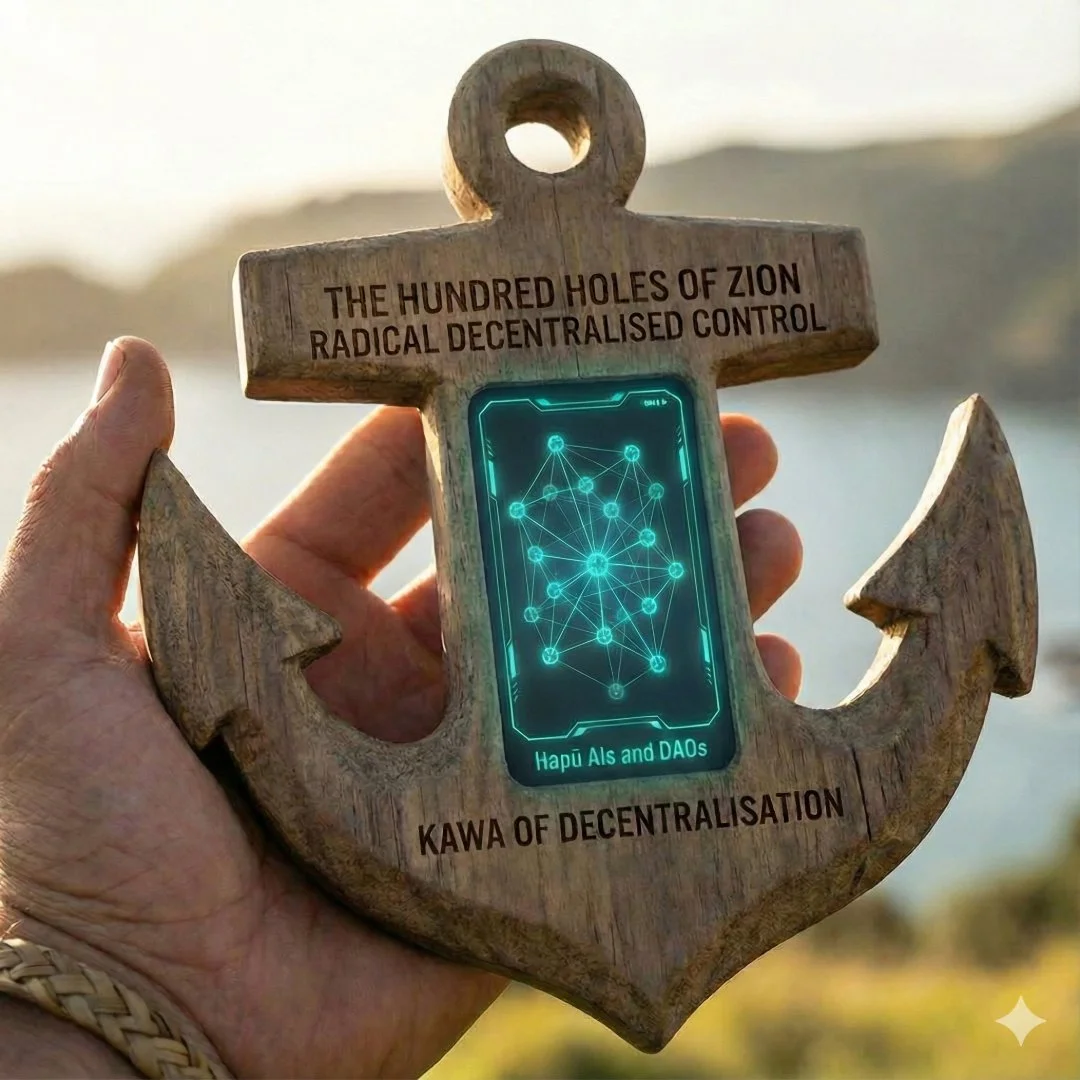
REFLECTIVE INSIGHT #014 - THE HUNDRED HOLES OF ZION - THE POWER OF RADICAL DECENTRALISED CONTROL
For nearly two centuries, we have been told that order must be imposed from the top down. Whether it’s a government department in Wellington or a centralised trust board, the message is the same: the "centre" knows best. But in Taitokerau, we know this is a "Bad Explanation" that has left our regions drained and our people waiting for permission to thrive.
The Insight: The Entropy of the Centre
Centralised systems—what I call the "Babylonian" model—are thermodynamically broken. In physics, trying to force order from a single point into a complex system creates massive "entropy" or disorder. Think of the "Runanga" or "Trust Board" models often imposed on us; they often create a "Brown Bureaucracy" that mimics the Crown, separating the resources from the actual flax-roots need.
When power is centralised, information gets lost. The managers at the top can never have the granular, local knowledge held by the whānau at the "edge" of the network. This leads to sub-optimal decisions, high energy costs for bureaucracy, and a system so fragile that one bad policy at the top propagates disorder everywhere.