
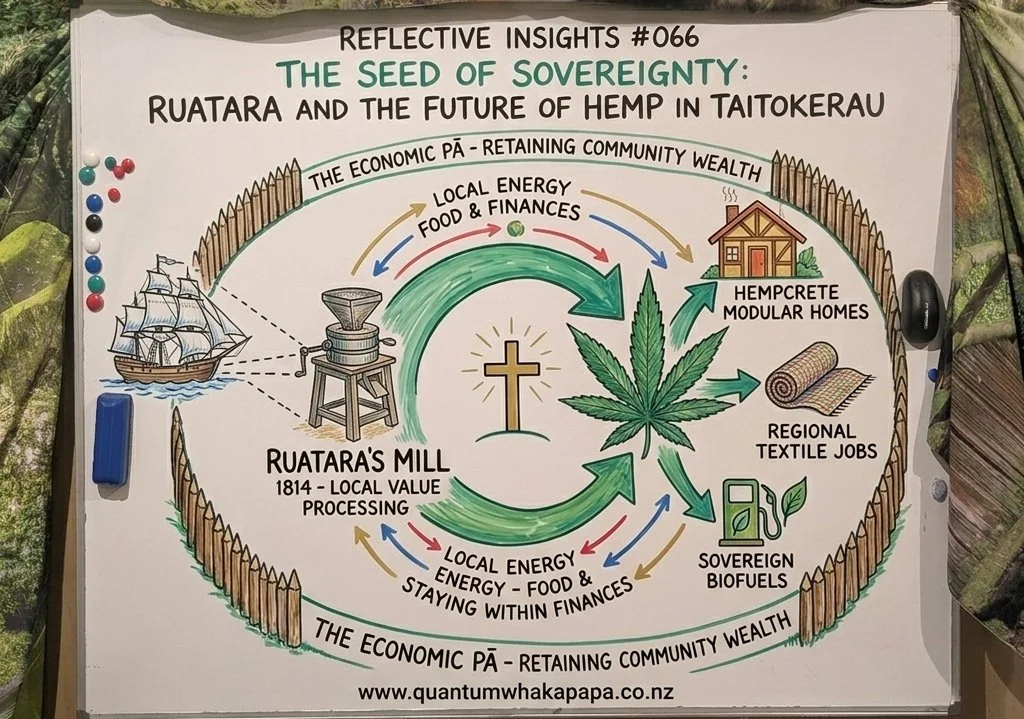
REFLECTIVE INSIGHT #066 - THE SEED OF SOVEREIGNTY: RUATARA AND THE FUTURE OF HEMP IN TAITOKERAU
A Vision of Abundance
When we walk upon the whenua of Te Tai Tokerau, we are walking on land destined for abundance. Real progress does not come from waiting for central government handouts or large offshore corporations to invest in our towns. It begins at the roots, right in the soil, through the collective action of our whānau, hapū, and iwi. For too long, our local economy has relied on sending our raw resources away, while our families miss out on the long term benefits. True equity is about how the pie is shared, ensuring that our social investment creates a lasting return for the community. The blueprint for this self-reliance was given to us generations ago by our ancestors, who understood that our environment and our well-being are completely intertwined.
To anchor our agricultural path forward, we look to the original instructions of creation left for us in the sacred scriptures:
"And God said, 'Behold, I have given you every herb yielding seed, which is on the surface of all the earth, and every tree, which bears fruit yielding seed; to you it shall be for meat.'" - Ethiopian Orthodox Bible (Genesis 1:29)
Ge'ez text: ወይቤሎሙ፡ እግዚአብሔር፡ ናሁ፡ ወሀብኩክሙ፡ ኵሎ፡ ሣዕረ፡ ዘይዘራዕ፡ ዘርአ፡ ዘውስተ፡ ኵሉ፡ ገጸ፡ ምድር፡ ወኵሎ፡ ዕፀወ፡ ዘቦቱ፡ ፍሬ፡ ዘርዕ፡ ዘይዘራዕ፡ ለክሙ፡ ይዅን፡ መብልዕ።
Te Reo Maori, Paipera Tapu, 1868 translation: A i mea te Atua, Na, kua hoatu e ahau ki a koutou nga otaota katoa e whai hua ana, i runga i te mata o te whenua katoa, me nga rakau katoa, he hua rakau tona huri e whai hua ana; hei kai ma koutou.
The Legacy of Ruatara
We carry a proud history of innovation in the North. We see this clearly in the story of Ruatara, a visionary young Ngāpuhi leader from the Bay of Islands. In the early 1800s, Ruatara traveled the world on whaling ships, enduring incredible hardships, starvation, and severe mistreatment from dishonest captains. Despite these trials, his heart remained fixed on the prosperity of his people. He spent months studying European farming techniques, carpentry, and practical trades. When he finally returned to Rangihoua around 1812, he brought with him tools and precious seed wheat, determined to establish a self-sustaining food supply and a valuable export crop for the North.