REFLECTIVE INSIGHT #068 – KO WAI AU: STEPPING OUT TO BUILD TAITOKERAU HEMP
Kia ora koutou e te whānau,
Since I started the Quantum Whakapapa Project in December 2025, I've intentionally stayed fairly anonymous. My "ko wai au" is on the website, which I point people to if they ask, but I've avoided being the "face" of Quantum Whakapapa. That's partly because I felt the kaupapa's not about me, I'm just a mouthpiece. But also because I work behind the scenes and that's how I like it. I've supported several businesses and community organisations, and have been building skills including finance and admin, governance, supply chain and operational management.
But now that I'm building a company and will be asking people around Te Tai Tokerau to trust me with their land, income needs and housing needs, that needs to shift.
So I just wanted to share a bit about my background and relevant experience, how I came to start Taitokerau Hemp, and my vision for the future.
Ko wai au?
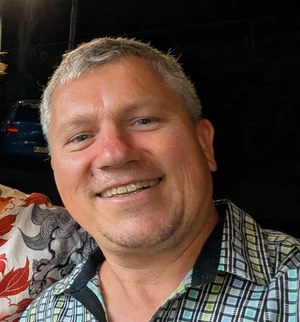
Ko Dave Hovell ahau. I'm an uri of Ngāpuhi, descended from Rāhiri via my 4 x great-grandfather Pōmare I, the original rangatira of Ngāti Manu. I also whakapapa to Ngāti Porou (Te Araroa) and Tainui (Paeroa and Ngāruawāhia) by blood, and to Ngāti Raukatauri / Tamaterā (Kennedy Bay / Papaaroha) by whāngai.
On my mother's side, I descend from the Albertlanders, non-conformist English settlers who came to the Kaipara in the 1860s to build a "New Zion" based on cooperation and shared values.
It's widely recognised that people's foundational value structures are formed in their first ten years of life. For me that was in rural Te Tai Tokerau, moving around as my parents were teachers. First Manukau and Mitimiti in the Hokianga, then Te Hāpua for my primary school years. For me this was a mix of kōhanga reo, school life, church life (Māori Evangelical Fellowship and Rātana), marae life (admittedly mostly in the whare kai), and of course the great outdoors. Some key figures who came out of Te Hāpua include Saana Murray, Matiu Rata and Meremere Penfold. It's also where Dame Whina Cooper's 1975 land march started, so political activism was normal. There wasn't much money around but as far as I was concerned everyone had what they needed and life was rich and full of aroha. We left in 1989.
Jump forward almost thirty years: my first career was in supply chain and logistics for corporates including National Foods Australia, Fletcher Building, and Refining NZ (Marsden Point oil refinery). It was working there, studying accounting and learning about global economics, that it became clear to me that we live under a broken economic system. My accounting, economics and business law lecturers at NorthTec taught me not just the academic stuff but also helped me realign to my values, so that by the time I graduated I didn't want to be working in the corporate world putting my life energy into lining oil company shareholders' pockets.
So I shifted into the community not-for-profit sector. My first job was as general manager of Taimahi Trust, running a $2 million Provincial Growth Fund project to set up a training academy for people with disabilities. That was a really steep learning curve. I learned a lot of things the hard way, but I'm really proud of what was achieved and the good work that organisation continues to do. I oversaw the establishment of a hothouse, commercial kitchen and fruit and veggie shop, which are still running and continuing to grow.
I then worked for Taitokerau Education Trust as Executive Officer, getting Chromebooks and internet connections to whānau in need, and as Finance Manager for 155 Whare Āwhina, which included Taitokerau Community Law, Whakaora Kai Food Rescue and Open Arms. It was working there that I really got exposed to the homelessness crisis that Te Tai Tokerau faces.
Now my day job is as Finance Manager for Te Hau Āwhiowhio o Ōtangarei Trust, a group of three organisations including Ōtangarei Papakāinga Limited and Āwhiowhio Property Group. We run a Whānau Hauora Centre in Whangārei, social services including justice and youth services and community housing. We are currently building a 32-unit urban papakāinga in Ōtangarei.
I also have an accounting and consultancy company on the side, through which I'm the Financial Controller for Te Waiariki, Ngāti Kororā, Ngāti Takapari Hapū Iwi Trust and do work for other values-aligned organisations.
Finally, I run my blog, The Quantum Whakapapa Project, which is where I attempt to "lift the lid" on the universe through research and prayer, understand what's going on spiritually and how it applies to us here in modern-day Te Tai Tokerau, and share what I learn. To be transparent, I went through a tough period in Te Pō, a time of real personal struggle, which led me to start this project. If you'd met me then, you would have met a different version of me.
It was through this research that I came to believe our government, under the current system, isn't going to solve Te Tai Tokerau's homelessness crisis on its own. So it's up to the private sector and community groups to step up and do something. I started blogging about this, including the potential for hempcrete housing to be part of the solution.
It was through one of these posts that I was approached by a long-time champion of hemp in Te Tai Tokerau, who's working on another part of the supply chain through her own business. Taitokerau Hemp aims to address a different part, which is getting people growing and building with hemp remotely on a small scale. Taitokerau Hemp is piloting a model that enables whānau and hapū in remote Te Tai Tokerau, places like Hokianga and Muriwhenua where I grew up, to grow their own building materials.
Hempcrete houses are warm, dry, pest-proof and last for generations. They can reduce the cost of housing by using locally grown and processed materials, cutting freight costs, and using local labour and contractors. What's more, whānau can keep growing hemp for income long beyond when their house is finished, enabling whānau and hapū to live independently of government handouts and set their own destiny.
So that's the vision. I will end with a whakataukī from the Book of Proverbs:
"Kia takoto pai to mahi i waho, kia rite ano hoki hei meatanga mau i te mara; muri iho ka hangā e koe to whare."
"Put your outdoor work in order and get your fields ready; after that, build your house."
Proverbs 24:27 NIV