
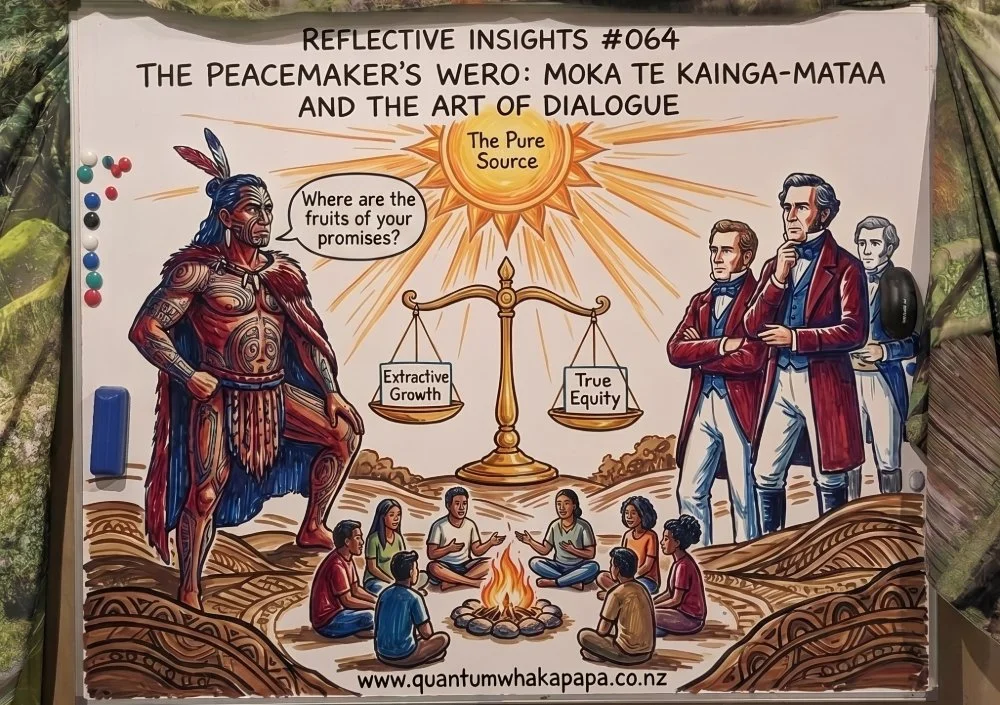
REFLECTIVE INSIGHTS #064 - THE PEACEMAKER’S WERO: MOKA TE KAINGA-MATAA AND THE ART OF DIALOGUE
Standing Firm on Truth
When you look closely at the true history of Taitokerau, you quickly realise that our greatest victories didn’t come from staying quiet or backing down to keep the peace. The real turning points for our people always happened right on the grassroots soil of the marae, where bold, unfiltered truth was spoken straight into the face of raw power. Today, we are leaning into the fierce legacy of Moka Te Kainga-mataa, the great Patukeha chief who looked past the smooth talking colonial promises at Waitangi in 1840 and demanded an honest audit of the system before anyone dared to sign a piece of paper.
Channelling the True Signal
Moka stood up in front of Governor Hobson and famously questioned the smooth-talking promises being made. He pointed out the pre-existing land purchases and actions of European settlers that had already left his people squeezed. Moka was not trying to cause conflict, he was practicing the art of dialogue, holding a mirror up to power to see if the actions matched the words. This level of visionary pragmatism is exactly what we need today. It directly matches the model left to us by Ihu (Yeshua's name in the Paipera Tapu), who walked into spaces of intense systemic pressure and always prioritised the weightier matters of justice, mercy, and truth.
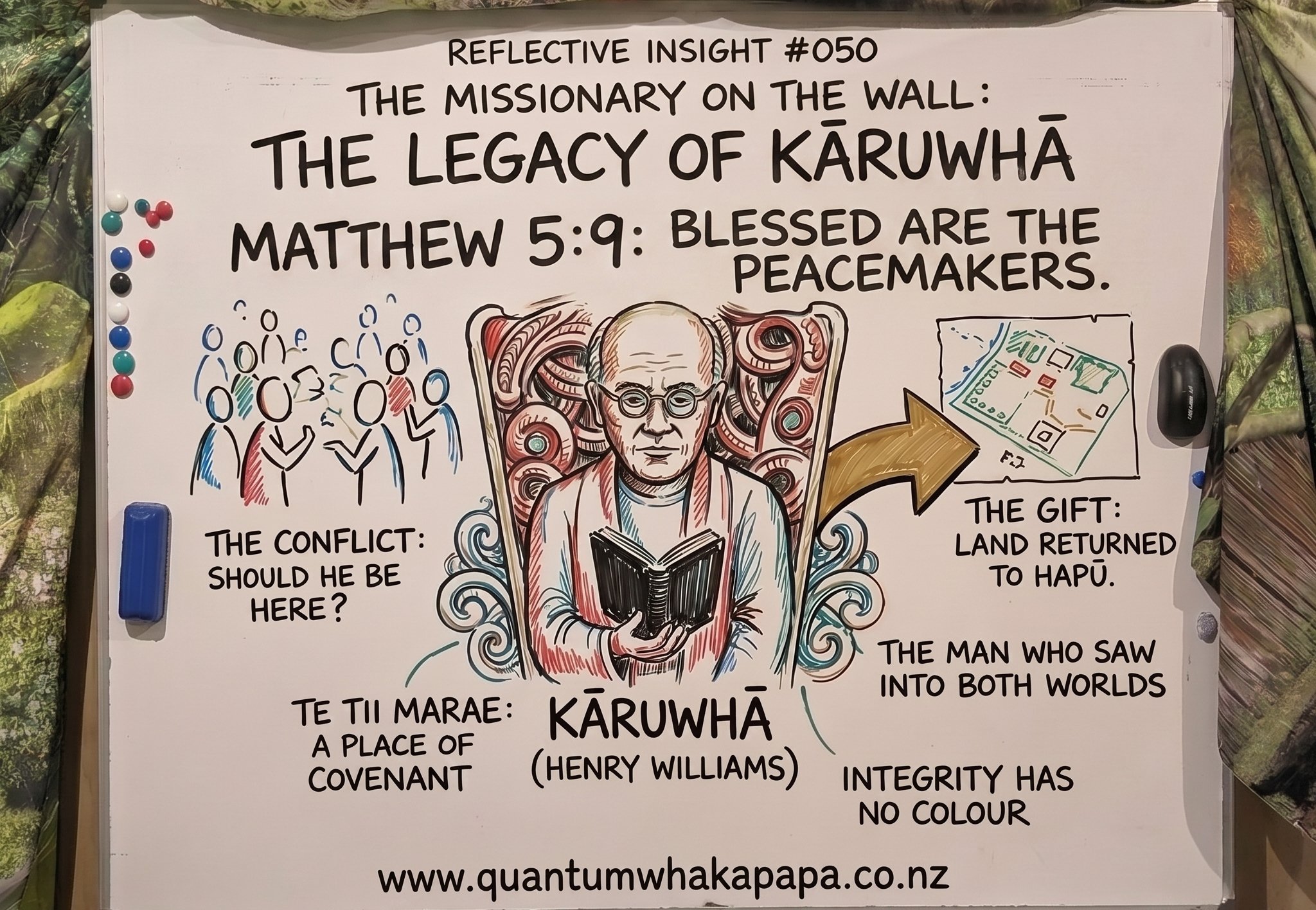
REFLECTIVE INSIGHT #050 - THE MISSIONARY ON THE WALL: THE LEGACY OF KĀRUWHĀ
A Personal Discovery
Kia ora. Even though I was born and raised right here in Taitokerau, I only had my first pōwhiri onto Te Tii Marae last month. It was a huge privilege to finally stand in that space and learn about the history and the conflict surrounding a very specific carving.
When you walk into the wharenui at Te Tii, your eyes are often drawn to the back wall. Sitting in a place of great honour is a carving of a bald Pākehā man with glasses, holding a Bible. For many, this is a point of debate. Why is a European man in a space usually reserved for Māori ancestors?
The Man Known as Kāruwhā
The man in the carving is the Reverend Henry Williams. Our ancestors called him Kāruwhā (Four Eyes) because of his glasses. He wasn’t just a visitor, he lived among Ngāpuhi for over 40 years. He was a translator, a peacemaker, and a man who navigated the difficult waters between the British Crown and the Rangatira of the North.