
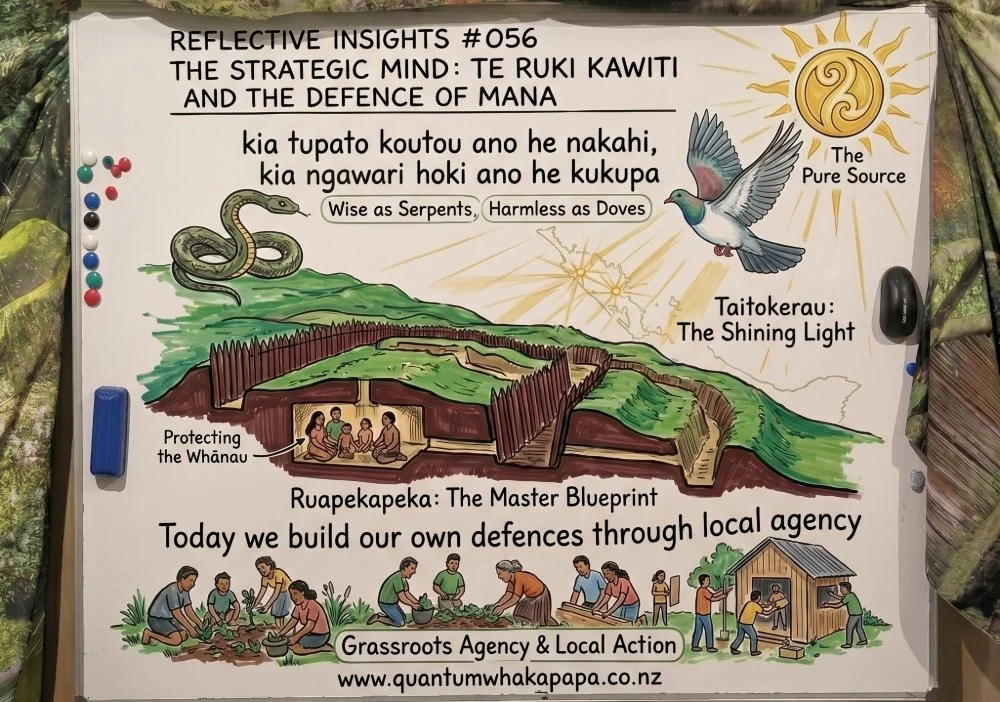
REFLECTIVE INSIGHT #056 - THE STRATEGIC MIND: TE RUKI KAWITI AND THE DEFENCE OF MANA
The Master Planner
As we journey deeper into the lives of our ancestors, we come to a man of quiet brilliance and incredible foresight. Te Ruki Kawiti, the great chief of Ngāi Hine, is often remembered alongside Hone Heke as a warrior. But Kawiti was much more than a fighter, he was a master planner. He possessed a strategic mind that understood how to protect the people, how to outsmart a bigger enemy, and how to preserve our mana when it was under direct attack.
A Shield for the Whānau
When the colonial government pushed its way into the North, Kawiti did not just rush into battle blindly. He looked at the heavy weapons and the massive resource of the British military, what we recognise as the Babylonian system, and he designed a way to keep his people safe. He invented a brand-new type of fortress at places like Ōhaeawai and Ruapekapeka. He built deep underground bunkers, complex trenches, and thick walls made of puriri logs and flax. He did not build these to conquer others, he built them as a shield to protect the collective well-being of his whānau and hapū.
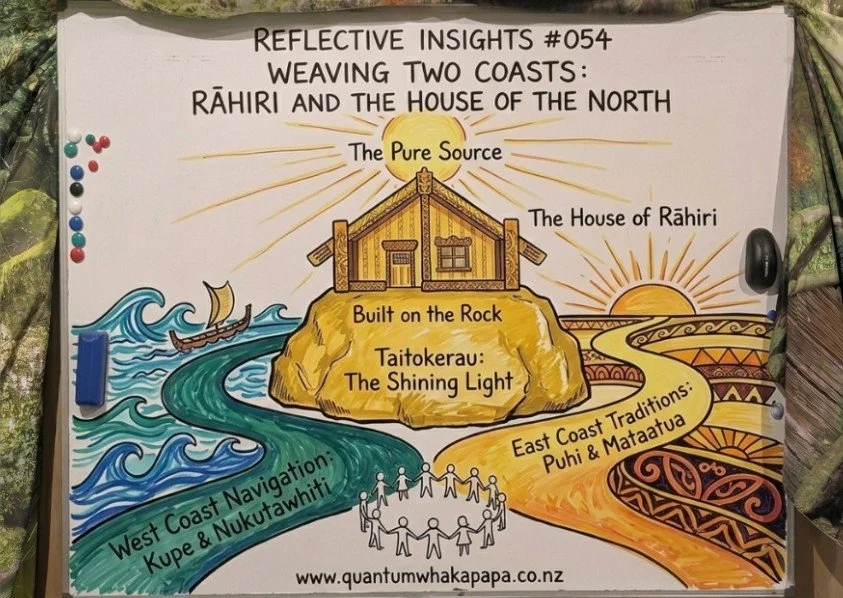
REFLECTIVE INSIGHT #054 - WEAVING TWO COASTS: RĀHIRI AND THE HOUSE OF THE NORTH
The Meeting of Rivers
When we look at the life of our great ancestor Rāhiri, we are looking at the very foundation of who we are as a people. He was born at Whiria pā, right near Opononi in the Hokianga. His life tells a story about bringing different worlds together. He wasn't just a leader of one small area, he was the bridge between the west coast and the east coast. The House We Live In
Rāhiri represents a beautiful coming together of family lines. His father, Tauramoko, descended from Kupe and Nukutawhiti, the great ocean navigators of the west. His mother, Te Hauangiangi, was the daughter of Puhi, the captain of the Mataatua canoe from the east. Because he carried the blood of both sides, he became the anchor for all of us. There is an old saying in the North that reminds us of this truth: “Mehemea he uri koe no Ngāpuhi, kahore koe i heke ia Rāhiri, he hoiho koe! “ (If you are Ngāpuhi and do not descend from Rāhiri, then you are a horse!) He built the house that shelters all our families today.
A Firm Foundation
To build a house that lasts for hundreds of years, you need a foundation that cannot be shaken. This is a law that comes from the highest place. Ihu (Yeshua's name in the Paipera Tapu) taught us that the strength of any structure depends entirely on what it is built upon. If we build our communities on pride or division, they will wash away when the storms come. But if we build on love, unity, and shared identity, we stand firm.
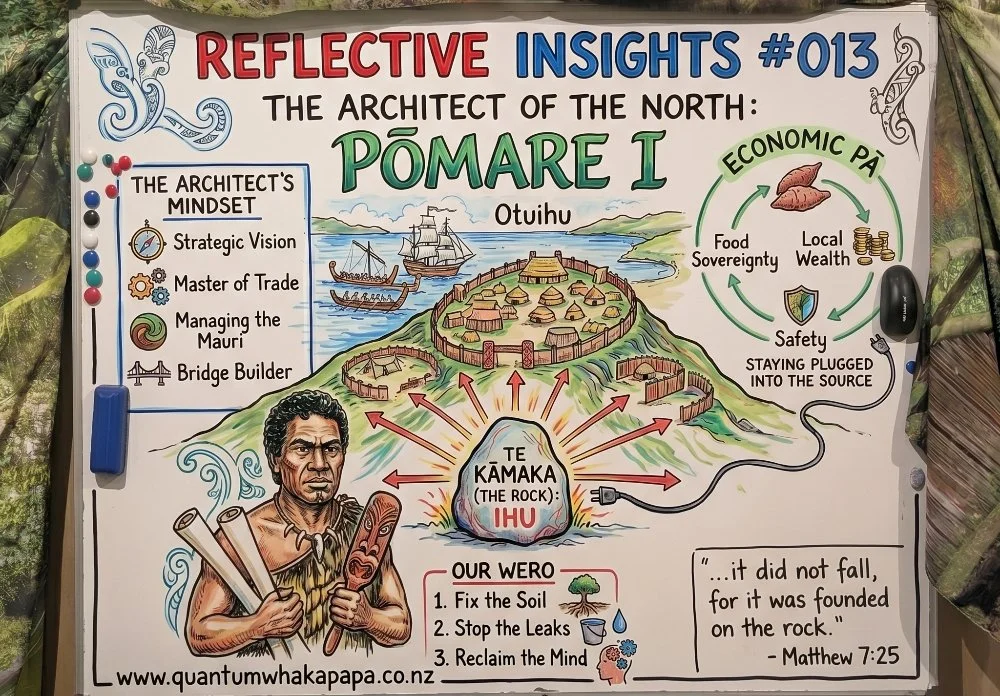
REFLECTIVE INSIGHT #013 - THE ARCHITECT OF THE NORTH - POMARE I
A Legacy of Vision
When we talk about the history of Te Tai Tokerau, the name Pōmare I often brings to mind images of a fierce warrior and a leader of the Ngāti Manu people. But if we only see him as a man of war, we miss the most important part of his story. Pōmare was, in truth, an architect. He wasn't just building a tribe; he was building a future. He was a strategic thinker who understood how to manage the mauri of his people during a time of massive change, showing us what it looks like to be a "Navigator" of two worlds.
The Economic Pā Blueprint
Pōmare lived in a time when the "Babylonian" world was first reaching our shores. Instead of just reacting to the static of colonial influence, he leaned into his own authority. He established the Pā at Otuihu as a thriving center of trade and diplomacy. This was a prototype for what we now call the "Economic Pā", a place where wealth is created, resources are managed, and the community is kept safe and sovereign. He understood that to protect his whānau, he had to be a master of the new "software" of commerce without losing the "hardware" of his whakapapa.