
OLD - TAITOKERAU STRATEGY (This has been replaced with an updated version)
SUMMARY OF RESEARCH REPORT #218
Of all the research carried out so far, we believe this is the most valuable, hence a simplified summary has been given its own page.
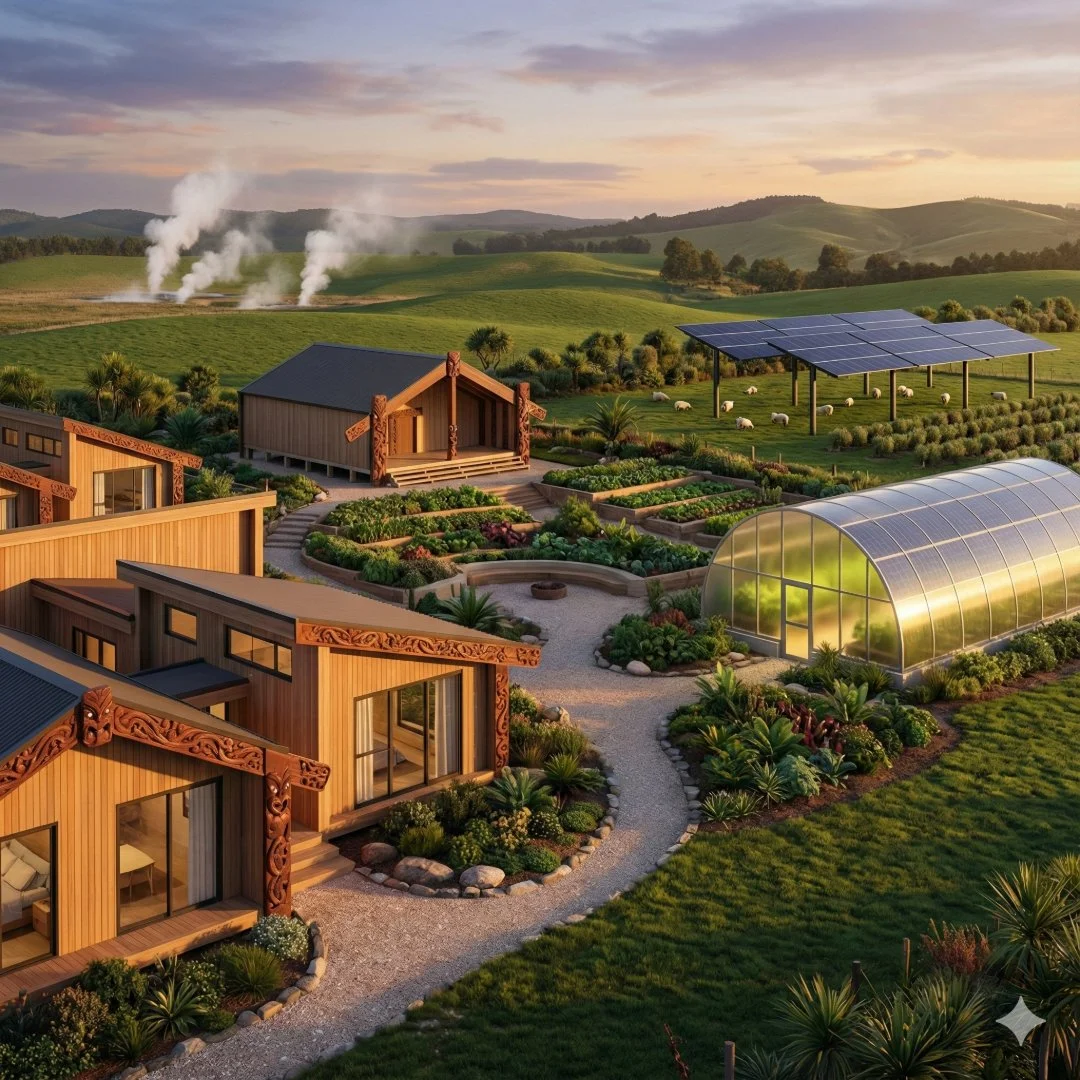
A new plan to make Te Tai Tokerau (Northland) a place where everyone can thrive by using both modern science and ancient Māori wisdom.
The 6,000-word report is titled: “The Quantum Whakapapa Nexus - A Unified Field Theory For The Retrofitting Of Te Tai Tokerau”. The research synthesises David Deutsch’s quantum epistemology with Reverend Māori Marsden’s Woven Universe ontology. The synthesised body of knowledge has many potential practical applications, one of which is to establish a theoretical and operational blueprint for transitioning the economy of Te Tai Tokerau from "Babylonian" entropy to "Zionist" negentropy.
Please refer to the Glossary for an explanation of terms which may be unfamiliar.
Here is a simplified breakdown of the main ideas:
1. The "Operating System" Upgrade
For a long time, the region has been using a "Babylonian" system that treats the earth like a machine to be used up. The report says it’s time to upgrade to a "Zionist" system, which treats the land and people like a family that needs to be cared for.
The Leaky Bucket: Right now, Northland is like a leaky bucket—it sends raw logs and energy away and gets back money that doesn't stay in the community.
The Economic Pā: The goal is to build an "Economic Pā," a community that keeps its wealth, energy, and smart ideas inside to help the people who live there.
2. Everything is Connected
The report uses Quantum Physics to show that Māori ideas about Whanaungatanga (relationships) are actually scientific facts.
The River and Me: When people say "I am the river and the river is me," it’s not just a story. In science, this is called "entanglement"—if the river gets sick, the people get sick too because they are part of the same system.
The Power of Thinking: Just by changing how we look at things (the "Observer Effect"), we can change what happens in real life.
3. The Life-Force Scorecard (The Mauri Model)
Instead of just checking if a project makes money, leaders will use the Mauri Model to see if it makes the "life-force" of the world stronger or weaker.
The Scale: Projects get a score from +2 (making life better) to -2 (destroying life).
Four Areas: They check the environment, the culture, the people, and the money. If a project hurts the water or the culture, it’s considered a bad deal even if it makes lots of money.
4. Real-World Super-Tech
The report shows three examples of how this is already working:
Ngāwhā Innovation Park: This park uses heat from deep underground to dry wood, grow food in glasshouses, and make electricity. It even catches waste gas (CO2) to help plants grow faster.
Solar Sheep: At Papareireia, they put solar panels over sheep paddocks. The panels make clean power from the sun while the sheep stay cool in the shade.
Tupu Tonu: This is a special fund that buys land and orchards in Northland so that the money made from the land stays with the local people forever.
5. Protecting the Truth
To have a great future, you have to know your true history.
The First People: The report proves that Māori were the very first people to live in Aotearoa. It explains that stories about "white settlers" being here before Māori are not true and are based on bad information.
Digital Guardians: Since our information is now online, the report says we need to be "Digital Kaitiaki" (guardians) to make sure big tech companies don't take Māori language and knowledge without asking.
WHY THIS RESEARCH IS IMPORTANT
This research is important because it provides a new "instruction manual" for how to look after the people and the land in Te Tai Tokerau (Northland). For a long time, the region has used an old system that often results in high unemployment and damage to nature.
Here is why this new plan matters:
1. It Proves Everything is Connected
The research uses modern science to show that Māori ideas about Whanaungatanga (relationships) are actually scientific facts. It explains that when we hurt the environment, we are actually hurting ourselves because we are "entangled"—like two parts of the same machine. This helps people understand that protecting nature is a necessity for our own survival.
2. It Switches from "Taking" to "Growing"
The report says the old way of doing things was like a "Leaky Bucket": the region would send away its best resources (like timber) and get very little back in return. This new research creates an "Economic Pā", which acts like a shield to keep wealth, energy, and smart ideas inside the community so they can grow and help everyone.
3. It Uses a Better "Scorecard"
Normally, success is only measured by how much money is made. This research introduces the Mauri Model, which gives every project a "life-force" score.
Mauri Ora (+2): The project is helping life flourish and building order.
Mauri Mate (-2): The project is destroying the environment or the community and should be stopped.
4. It Reclaims History
To build a strong future, you have to know the truth about the past. The research uses forensic data—like DNA and archaeology—to prove that Māori were the first people here. This stops false stories from being used to take away the rights and "mana" of the people.
5. It Prepares for the Future
The research isn't just about old stories; it’s about "Ancestral Futurism". It shows how to use high-tech tools—like Artificial Intelligence and solar power—in a way that respects Māori culture and keeps the region's information safe from being stolen by big global companies.
The Potential of the Observer Effect:
We are infinitely capable problem solvers, provided that the problem is solvable within the laws of physics. According to the “Observer Effect”, if enough of us believe it can happen, it will.
Please join me in declaring: Let it be fulfilled.