
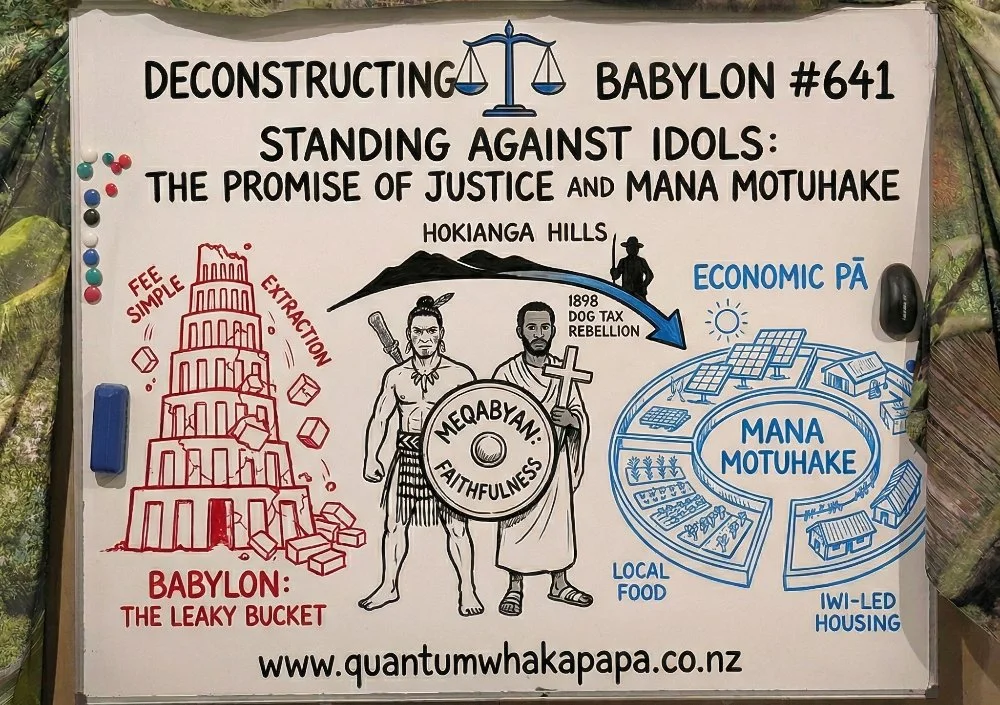
DECONSTRUCTING BABYLON #641 - STANDING AGAINST IDOLS: THE PROMISE OF JUSTICE AND MANA MOTUHAKE
Resisting the Colonial Machine
In our research, we define "Babylon" not as a place, but as a colonial operating system built on extraction and the "Newtonian Error" of seeing ourselves as separate from the world. This system behaves like a "Leaky Bucket," exporting our timber, our talent, and our Mauri, while leaving us with the waste. To dismantle this, we look to the three books of Meqabyan, unique to the Ethiopian canon, which tell the stories of those who refused to bow to idols or corrupt earthly kings.
Kia ora e te whānau. It is time to speak some hard truths about the systems that have tried to fence in our spirit and our whenua. In our journey through the Ethiopian canon, we find tools not just for prayer, but for the brave work of decolonisation. We are looking at a history of resistance that links the martyrs of old with our own rangatira here in the North.
Faithfulness Under Oppression
The Meqabyan books focus on maintaining spiritual integrity when the surrounding system demands total submission. They promise that God is the "true judge" over corrupt rulers and that "earthly kings will not be honoured" in the day of final accountability. For us in Taitokerau, this resonates with our commitment to mana motuhake, the inherent right to determine our own path and manage our own resources without the interference of a foreign "Babylonian" logic.
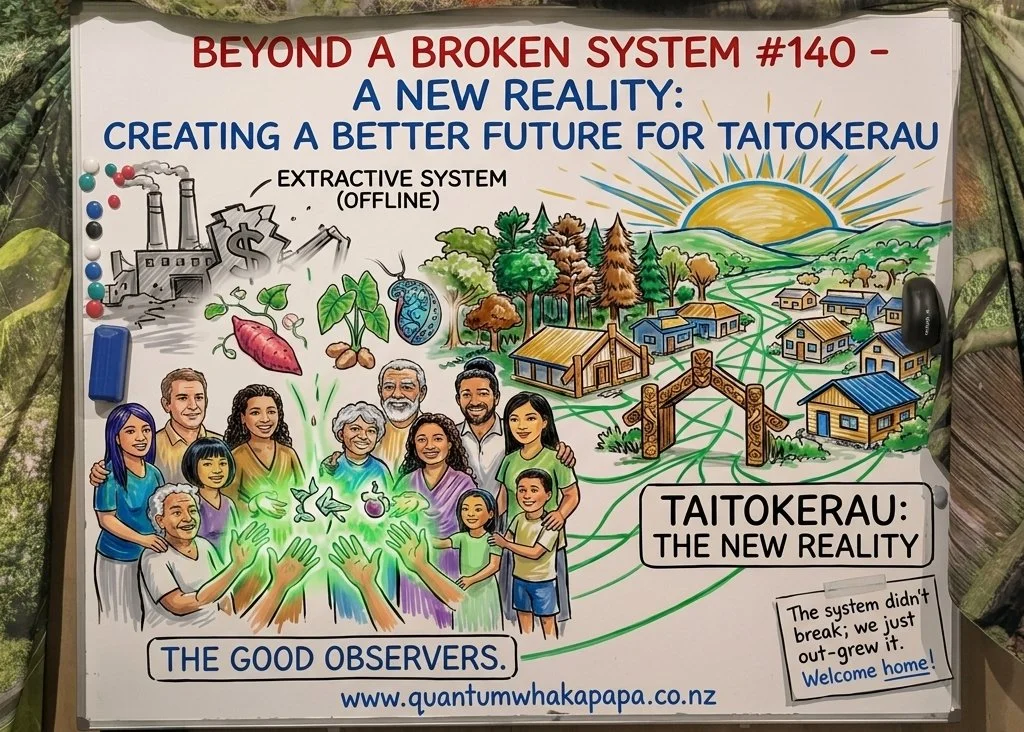
BEYOND A BROKEN SYSTEM #140 - A NEW REALITY: CREATING A BETTER FUTURE FOR TAITOKERAU
Trapped in Manufactured Helplessness
The final and most empowering realisation of this entire journey is that we are not helpless victims trapped inside an unchangeable machine. The Babylonian operating system wants us to believe that its rules are permanent, that its bureaucracies hold all the power, and that places like Taitokerau must accept being poor, struggling regions dependent on state handouts. But both science and our ancestral wisdom tell us otherwise.
When a community accepts negative labels, relies on outside banks, lets its money leak out, isolates its people, and fills out endless paperwork, it remains trapped in high entropy, a continuous state of decay, disorder, and chaos. This artificial breakdown is how imperial systems maintain control, by convincing local whānau that they lack the power to shape their own reality.
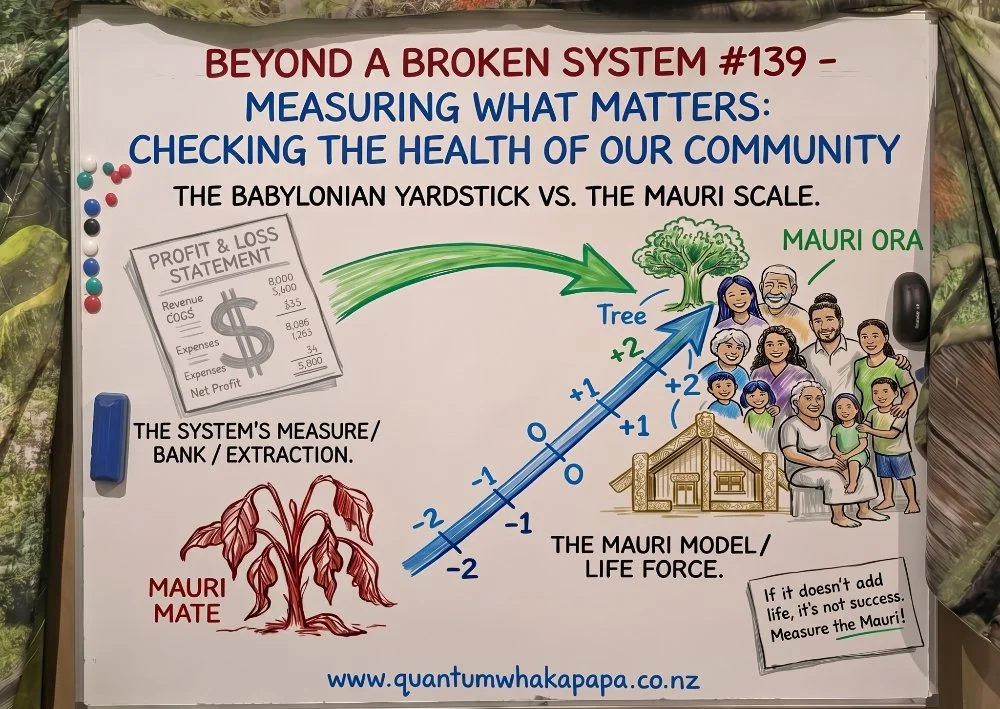
BEYOND A BROKEN SYSTEM #139 - MEASURING WHAT MATTERS: CHECKING THE HEALTH OF OUR COMMUNITY
The Blind Scorecard
How do we actually know if our community is succeeding or failing? The Babylonian system keeps score using dangerously flawed metrics like Gross Domestic Product (GDP), financial profit balances, and corporate cost-benefit reports. These standard scorecards are completely blind to real life.
For example, if a logging company clear-cuts an entire native forest, strips the topsoil, and ships the raw timber overseas, standard economic metrics register a massive success. The bank balance grows, so the economy supposedly "grew". The corporate scorecard completely ignores the fact that the native birds lost their home, the local river was choked with toxic mud and logging debris, coastal fish stocks died, and local whānau lost a sacred natural shelter. The system counts the cash gained, but ignores the life destroyed.
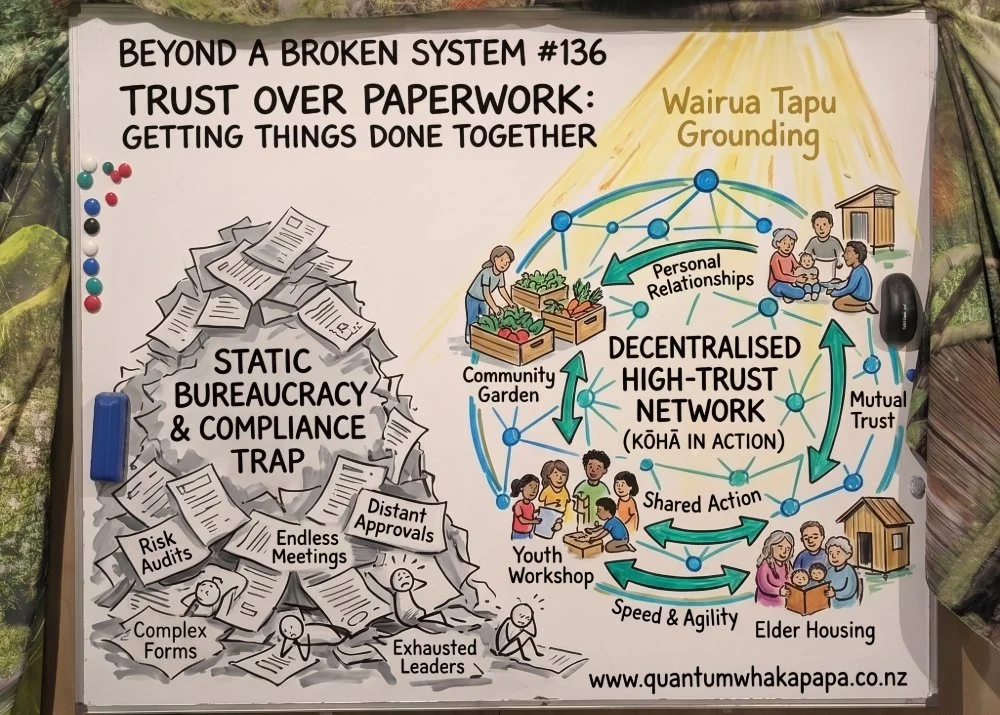
BEYOND A BROKEN SYSTEM #136 - TRUST OVER PAPERWORK: GETTING THINGS DONE TOGETHER
The Trap of Static Bureaucracy
Another way the Babylonian system drains community energy and stops real progress is through static bureaucracy and the compliance trap. Because the entire Babylonian system is built on the false idea that everyone is an isolated, self-interested individual, it cannot function on personal trust. Instead, it assumes that everyone is constantly trying to cheat the system. To manage this deep suspicion, institutions create mountains of administrative red tape, rigid eligibility checks, risk audits, and endless meetings about meetings.
This creates an exhausting weight for local communities. When a local marae group, small business, or volunteer team wants to build something urgently needed, like a community garden, a youth workshop, or housing for elders, they are immediately buried in paperwork. They are forced to spend months or years filling out complex funding applications, proving their worthiness to distant officials, and waiting for permission from people who have never set foot in their town. This bureaucracy exhausts community leaders, consumes precious time, and causes good projects to collapse under administrative weight.