
BEYOND A BROKEN SYSTEM #137 - HEALING TOGETHER: WHY RESTORING RELATIONSHIPS BEATS PUNISHMENT
The Trap of Punitive Justice
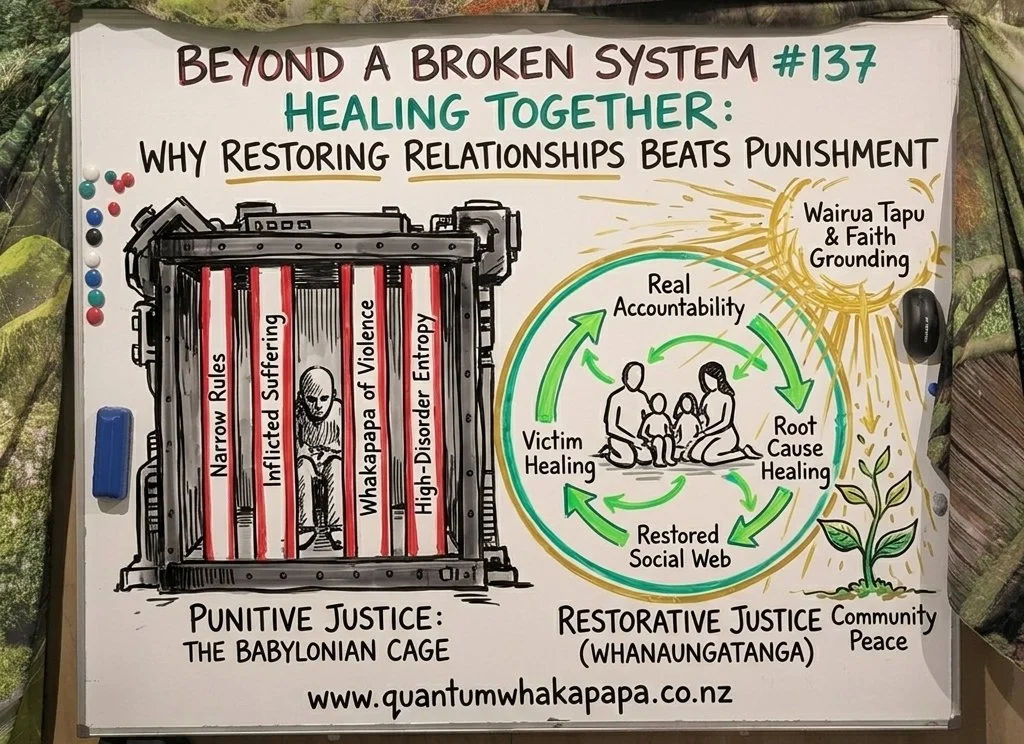
When harm occurs in a community, whether it is property damage, conflict, or crime, the Babylonian system unleashes its most destructive mechanism: punitive justice. The modern court and prison system is a mechanical, high-disorder machine. When someone commits a wrong, the system immediately isolates them, strips them away from their whānau, and locks them in a metal cage. This legal process asks only two narrow questions: which official rule was broken, and how much suffering should we inflict on this offender?
This mechanical approach fails everyone involved. It fails the victim because it offers no direct apology, emotional healing, or real repair. It fails the offender because locking people in hostile environments doubles down on their isolation, deepens their trauma, and teaches them to be more bitter. And it fails the community because it costs millions of dollars while returning unhealed individuals right back into the same broken environment. In Aotearoa, history proves that taking children into state care and putting people into institutions created a "whakapapa of violence," where system abuse directly drove generations of people into the prison pipeline.
BEYOND A BROKEN SYSTEM #136 - TRUST OVER PAPERWORK: GETTING THINGS DONE TOGETHER
The Trap of Static Bureaucracy
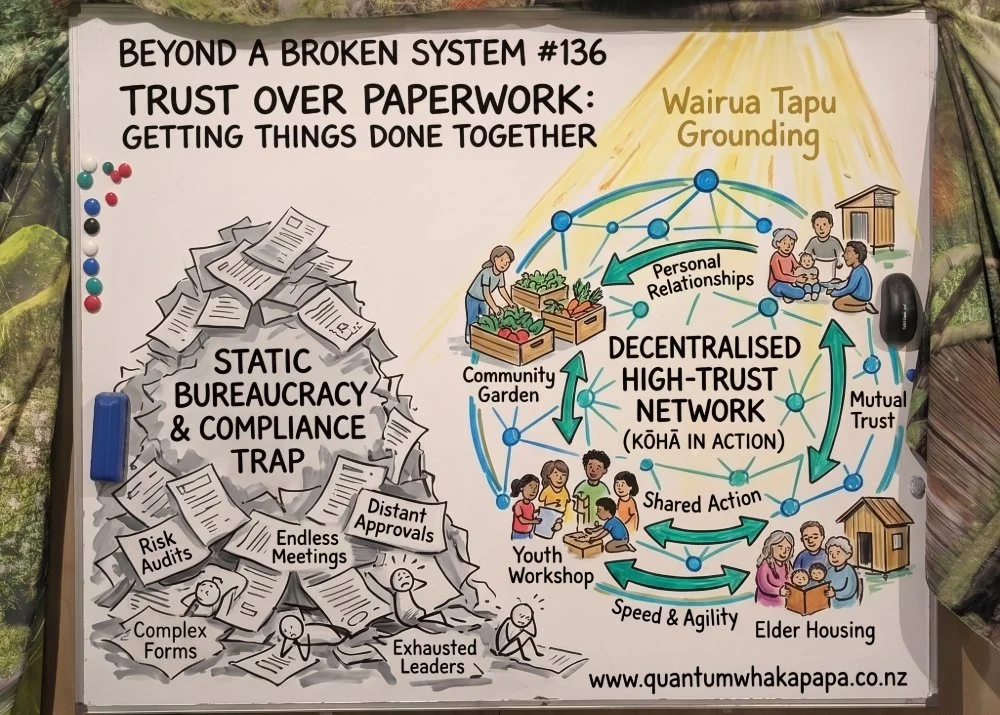
Another way the Babylonian system drains community energy and stops real progress is through static bureaucracy and the compliance trap. Because the entire Babylonian system is built on the false idea that everyone is an isolated, self-interested individual, it cannot function on personal trust. Instead, it assumes that everyone is constantly trying to cheat the system. To manage this deep suspicion, institutions create mountains of administrative red tape, rigid eligibility checks, risk audits, and endless meetings about meetings.
This creates an exhausting weight for local communities. When a local marae group, small business, or volunteer team wants to build something urgently needed, like a community garden, a youth workshop, or housing for elders, they are immediately buried in paperwork. They are forced to spend months or years filling out complex funding applications, proving their worthiness to distant officials, and waiting for permission from people who have never set foot in their town. This bureaucracy exhausts community leaders, consumes precious time, and causes good projects to collapse under administrative weight.